
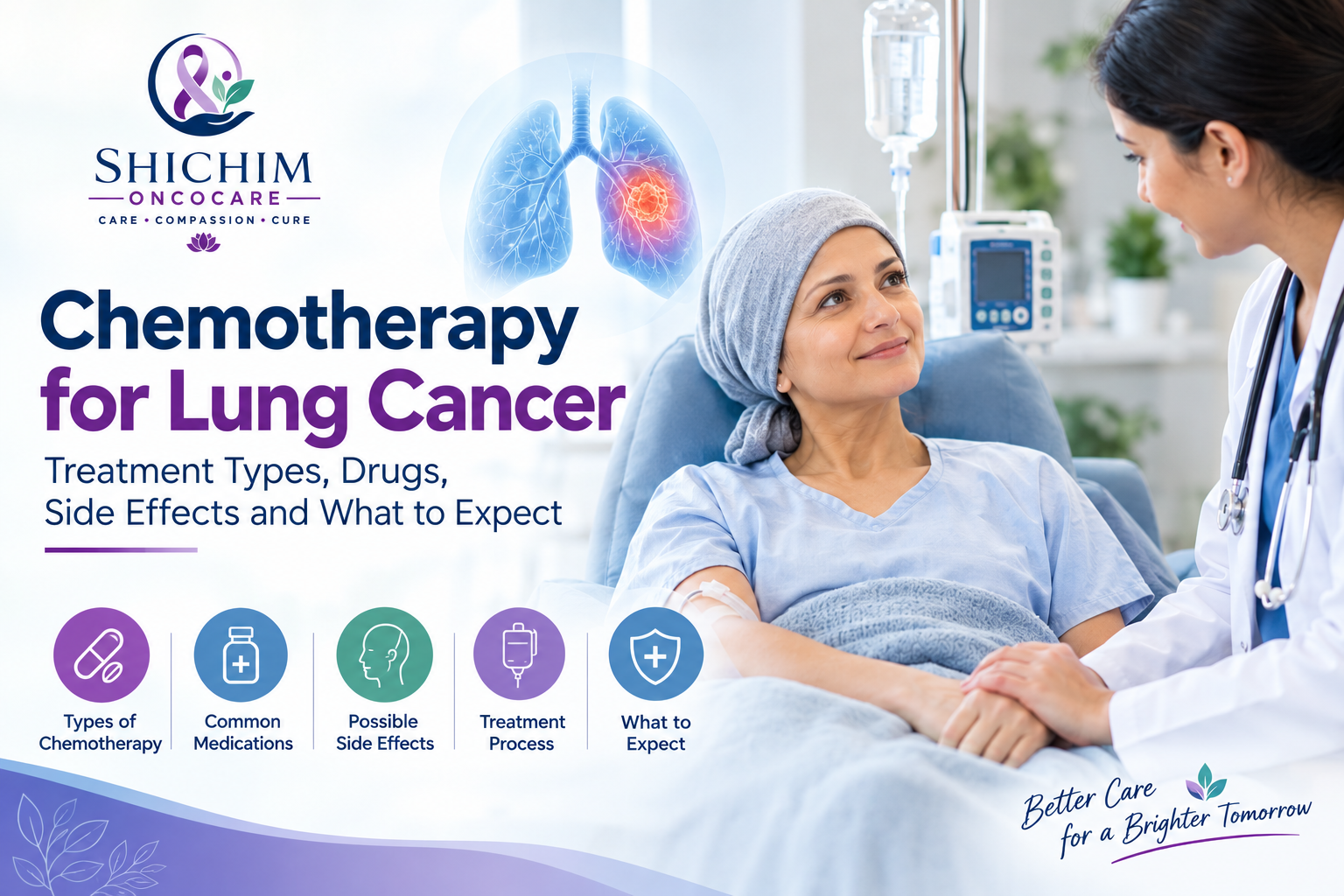
Chemotherapy for lung cancer uses medicines to destroy cancer cells or slow their growth. It may be recommended before surgery, after surgery, alongside radiation therapy, or to control cancer that has spread to other parts of the body. The right treatment depends on the type and stage of lung cancer, the patient's overall health, and the results of tumour testing.
Understanding chemotherapy medications for lung cancer can help patients and their families prepare for treatment. Although chemotherapy can cause side effects, doctors monitor patients throughout treatment and provide supportive care to manage symptoms.
What Is Chemotherapy for Lung Cancer?
Chemotherapy is a systemic cancer treatment, meaning its medicines travel through the bloodstream and can reach cancer cells in different parts of the body. Most chemotherapy drugs interfere with cell division or damage processes cancer cells need to grow and survive.
However, chemotherapy can also affect healthy cells that divide quickly, including cells in the bone marrow, digestive tract, and hair follicles. This explains why some patients experience fatigue, nausea, hair loss, or changes in blood cell counts.
Not everyone with lung cancer needs chemotherapy. Depending on the diagnosis, surgery, radiation therapy, targeted therapy, immunotherapy, or a combination of treatments may be more appropriate.
When Is Chemotherapy Recommended for Lung Cancer?
An oncologist may recommend chemotherapy for several reasons, depending on the patient's diagnosis and treatment goals.
Before or After Surgery
Chemotherapy may be given before surgery to shrink a tumour and help make it easier to remove. After surgery, it may be recommended to destroy remaining cancer cells and reduce the risk of recurrence in selected patients.
Alongside Radiation Therapy
Chemotherapy may be combined with radiation therapy, particularly for certain patients with locally advanced lung cancer. The combination can improve cancer control, although it may also increase the risk of side effects.
For Advanced Lung Cancer
When cancer has spread beyond the lungs, chemotherapy may help shrink tumours, slow disease progression, and relieve symptoms. In advanced cases, treatment may focus on extending survival and maintaining quality of life rather than curing the disease.
Types of Lung Cancer and Their Treatment
The two main types of lung cancer are non-small cell lung cancer (NSCLC) and small cell lung cancer (SCLC). Treatment choices differ because these cancers grow and respond to treatment differently.
Non-Small Cell Lung Cancer (NSCLC)
NSCLC is the most common type of lung cancer. It includes adenocarcinoma, squamous cell carcinoma, and large cell carcinoma.
Chemotherapy may be used before or after surgery, with radiation therapy, or for advanced disease. Treatment commonly includes a platinum-based medicine, such as cisplatin or carboplatin, combined with another chemotherapy drug.
For some patients, chemotherapy is combined with immunotherapy. Molecular and biomarker testing may also identify patients who could benefit from targeted therapy.
Small Cell Lung Cancer (SCLC)
Small cell lung cancer generally grows and spreads more quickly than NSCLC. Chemotherapy is an important treatment because the disease may have spread beyond the original tumour by the time it is diagnosed.
A common treatment for extensive-stage SCLC combines platinum-based chemotherapy, such as carboplatin or cisplatin, with etoposide and immunotherapy for eligible patients. Limited-stage disease may be treated with chemotherapy alongside radiation therapy.
The final treatment plan depends on the cancer stage, overall health, and response to treatment.
Common Chemotherapy Drugs for Lung Cancer
Doctors select chemotherapy drugs according to the cancer type, treatment goal, previous therapies, and the patient's ability to tolerate specific medicines.
| Chemotherapy drug | Common use | Important considerations |
|---|---|---|
| Cisplatin | Used in treatment combinations for NSCLC and SCLC | May affect kidney function, hearing, and nerves |
| Carboplatin | Used in combinations for NSCLC and SCLC | Can lower blood cell counts and increase infection or bleeding risk |
| Pemetrexed | Used for certain types of NSCLC, particularly nonsquamous disease | Folic acid and vitamin B12 supplementation are generally required |
| Paclitaxel | Used in selected NSCLC treatment combinations | May cause hair loss, nerve symptoms, and low blood counts |
| Docetaxel | Used in selected NSCLC regimens, including some after previous treatment | May cause fatigue, low blood counts, and fluid retention |
| Gemcitabine | Used in selected NSCLC combinations | May cause fatigue and reduced blood cell counts |
| Etoposide | Commonly used in SCLC treatment combinations | May suppress bone marrow function and increase infection risk |
These are examples of chemotherapy medications for lung cancer, not recommendations for individual patients. Some drugs are used together, and the appropriate combination depends on the diagnosis and treatment plan.
How Is Chemotherapy for Lung Cancer Given?
Chemotherapy is commonly administered in cycles. Each cycle includes a treatment period followed by time for the body to recover.
Intravenous Chemotherapy
Many medicines are delivered through a vein at a hospital or infusion centre. Treatment may take from a short visit to several hours, depending on the prescribed drugs.
Oral Medicines
Some cancer treatments are taken by mouth. However, not all oral cancer medicines are traditional chemotherapy; some are targeted therapies. Patients should follow their prescription instructions carefully.
Treatment Schedule
Chemotherapy may be given every few weeks or according to another schedule specific to the medicines being used. A course may last several months, depending on the treatment goal, response, and side effects.
Before each cycle, doctors may review symptoms and blood test results to determine whether treatment can safely continue.
Common Lung Cancer Chemotherapy Side Effects
Lung cancer chemotherapy side effects vary depending on the medicines, doses, and the patient's overall health. Some people experience mild symptoms, while others need treatment adjustments or additional supportive care.
Common side effects include:
-
Fatigue: Feeling unusually tired or weak during treatment.
-
Nausea and vomiting: These symptoms can often be reduced with prescribed anti-nausea medicines.
-
Hair loss: Some chemotherapy drugs cause temporary hair thinning or loss.
-
Low blood cell counts: Reduced white blood cells can increase infection risk, while low red blood cells may cause anaemia and fatigue. Low platelets can increase bruising or bleeding.
-
Appetite changes: Patients may experience reduced appetite, taste changes, or weight loss.
-
Mouth sores: Irritation can make eating and drinking uncomfortable.
-
Digestive changes: Constipation or diarrhoea may occur.
-
Nerve problems: Certain drugs can cause tingling, numbness, or pain in the hands and feet.
-
Kidney or hearing problems: These are important potential risks with cisplatin and may require specific monitoring.
Not everyone experiences every side effect. Some symptoms improve after treatment ends, while others may take longer to resolve.
When Should Patients Contact Their Doctor?
A fever during chemotherapy may indicate a serious infection. Follow the oncology team's instructions about temperature monitoring and emergency contact. A temperature of 38°C (100.4°F) or higher is commonly treated as an urgent warning sign during cancer treatment.
Seek urgent medical advice for fever, chills, unusual bleeding, persistent vomiting, or signs of dehydration. Severe breathlessness, chest pain, or confusion may require emergency care.
How Can Patients Manage Chemotherapy Side Effects?
Supportive care can help patients remain comfortable and manage treatment more safely.
-
Follow medication instructions: Take prescribed anti-nausea and other supportive medicines as directed.
-
Maintain nutrition and hydration: Eat small, frequent meals if appetite is reduced, and ask for help if weight loss continues.
-
Reduce infection risks: Follow medical advice about hand hygiene, avoiding infectious contacts, and reporting fever.
-
Balance activity and rest: Gentle activity may help when tolerated, but adequate rest is important.
-
Track symptoms: Record new symptoms and report them to the oncology team.
-
Attend follow-up appointments: Blood tests and other assessments help doctors monitor side effects and determine whether treatment can continue safely.
Consult the oncology team before taking supplements, herbal remedies, or over-the-counter medicines because some products may interfere with cancer treatment.
How Do Doctors Know Whether Chemotherapy Is Working?
Doctors assess treatment response using imaging, clinical examinations, symptoms, and other tests when appropriate.
CT scans or other imaging tests may show whether tumours are shrinking, remaining stable, or growing. The medical team also considers changes in symptoms, daily functioning, and blood test results.
If chemotherapy is not controlling the cancer or side effects become difficult to manage, the oncologist may recommend adjusting the regimen or considering another treatment.
Patients should discuss scan results with their doctor because treatment decisions depend on the complete clinical picture rather than one result alone.
What Should Patients Consider Before Starting Chemotherapy?
Before treatment begins, patients should discuss several important points with their oncologist:
-
Treatment goal: Is chemotherapy intended to cure the cancer, reduce recurrence risk, shrink a tumour, or control symptoms?
-
Expected benefits: What outcomes are realistic for the cancer type and stage?
-
Alternative treatments: Could surgery, radiation therapy, immunotherapy, or targeted therapy be appropriate?
-
Side-effect management: Which risks are most relevant to the proposed medicines?
-
Practical arrangements: How often will treatment occur, and will transportation or help with daily activities be needed?
-
Existing health conditions: Could kidney problems, hearing difficulties, or nerve symptoms affect the treatment choice?
For lung cancer, molecular and biomarker testing can be particularly important because some patients may benefit from targeted medicines or immunotherapy. Ask whether the proposed treatment plan reflects the pathology results and disease stage.
Conclusion
Chemotherapy for lung cancer is an important treatment option for both NSCLC and SCLC. It may be used before or after surgery, alongside radiation therapy, or to control advanced disease. The medicines, schedule, and expected benefits depend on the cancer's characteristics and the patient's overall health.
Although chemotherapy can cause fatigue, nausea, low blood counts, and other side effects, regular monitoring and supportive care can help manage many treatment-related problems. Patients should discuss their options with an oncologist and report concerning symptoms promptly.