
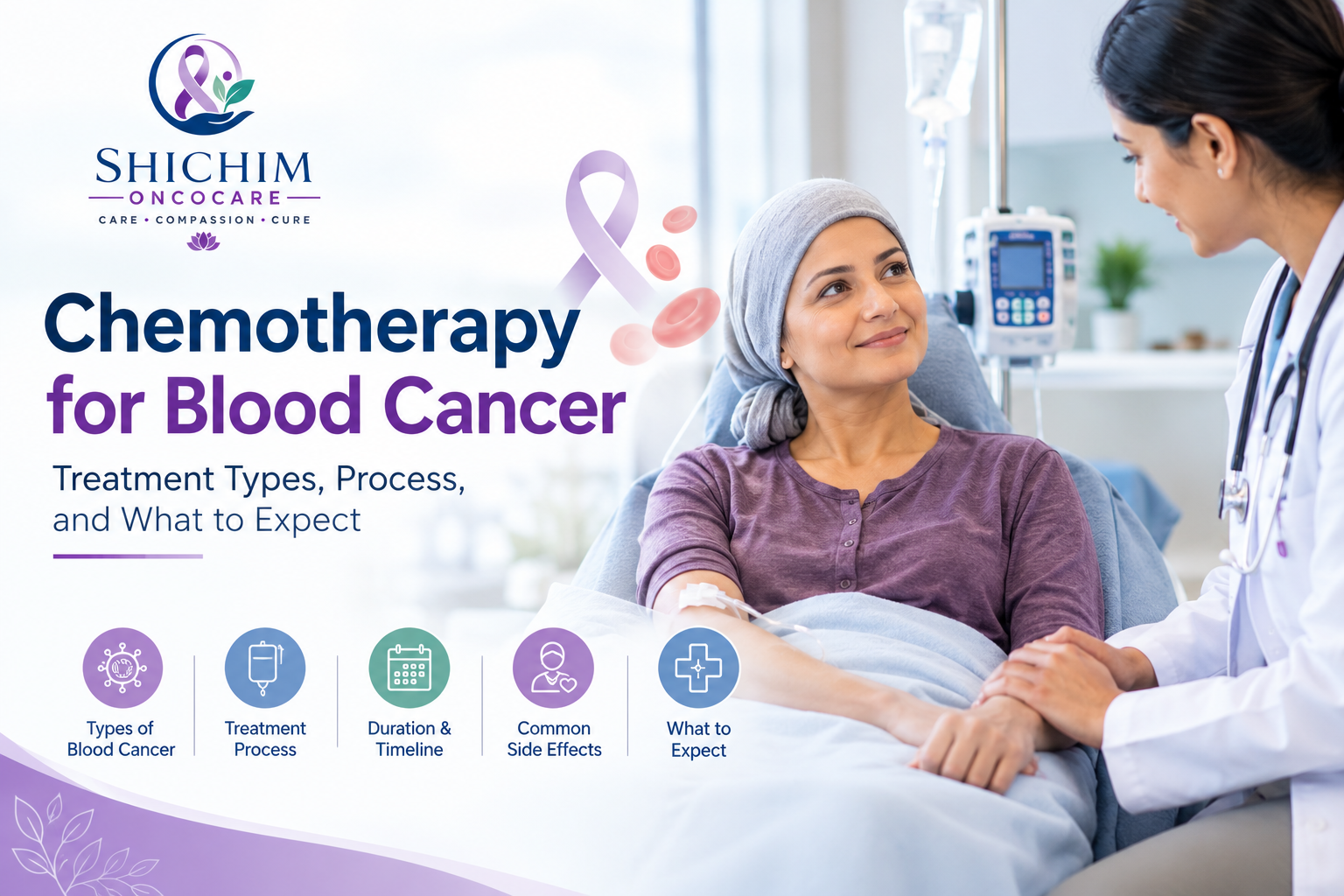
Chemotherapy for blood cancer uses medicines to destroy cancer cells or stop them from growing and multiplying. It is commonly used to treat certain types of leukaemia and lymphoma, although the treatment plan depends on the exact diagnosis, disease stage, and patient's overall health.
Unlike many solid tumours, blood cancers affect blood-forming tissues, bone marrow, lymphatic tissues, or immune cells. Therefore, treatment often needs to target cancer cells throughout the body rather than a single tumour.
Understanding chemotherapy can help patients and their families learn why it is recommended, how treatment is administered, how long it may take, and what side effects to expect. Some blood cancers can be cured with chemotherapy-based treatment, while others require a combination of medicines or alternative therapies. An oncologist or haematologist determines the most appropriate treatment based on the patient's condition.
What Is Chemotherapy for Blood Cancer?
Chemotherapy is a cancer treatment that uses medicines to damage cancer cells, prevent them from dividing, or cause them to die. Many conventional chemotherapy drugs target rapidly dividing cells, making them useful against several types of blood cancer.
Blood cancers develop when abnormal blood or immune cells grow uncontrollably. These cells may interfere with normal blood cell production, immune function, or the movement of blood cells through the body.
Chemotherapy medicines may be administered through an intravenous (IV) infusion, injection, or oral medication. Because many of these medicines travel through the bloodstream, they can reach cancer cells in different parts of the body.
Treatment may aim to achieve remission, control disease progression, prepare a patient for a stem cell transplant, or reduce the risk of cancer returning. Remission means that signs of cancer have decreased or become undetectable using appropriate tests. It does not always mean the cancer has been permanently cured.
Not every blood cancer requires conventional chemotherapy. Some patients may receive targeted therapy, immunotherapy, or other treatments, either alone or alongside chemotherapy.
How Does Chemotherapy Work Against Blood Cancer?
Chemotherapy works by interfering with processes cancer cells need to survive and multiply. Depending on the medicine, it may damage DNA, prevent DNA replication, or disrupt cell division.
The treatment process generally involves several steps:
-
Medicine administration: The patient receives the prescribed drug through an IV infusion, injection, or oral medication.
-
Targeting cancer cells: The medicine circulates through the body and reaches susceptible cancer cells.
-
Interrupting cell growth: The drug damages cancer cells or prevents them from multiplying normally.
-
Monitoring the response: Doctors evaluate blood counts, bone marrow findings, symptoms, and other relevant tests.
-
Adjusting treatment: The medical team may continue, modify, or change treatment depending on the response and side effects.
Chemotherapy can also affect healthy cells, particularly those in the bone marrow that produce red blood cells, white blood cells, and platelets. This is why regular blood tests and close medical monitoring are essential throughout treatment.
Chemotherapy for Different Types of Blood Cancer
Blood cancer includes several diseases, and each may require a different treatment approach. Leukaemia and lymphoma are two important categories, but their subtypes also influence the choice of medicines.
1. Leukaemia Chemotherapy
Leukaemia develops in blood-forming tissues, particularly the bone marrow, and involves abnormal white blood cells or their precursors. These cells can interfere with the production of healthy blood cells.
Leukaemia chemotherapy is used for several forms of the disease, but the treatment approach depends on whether the condition is acute or chronic and on its specific subtype.
Acute leukaemias often require prompt treatment. Chemotherapy may be used to achieve remission, followed by additional treatment to reduce the risk of relapse. Some patients may also need targeted medicines, immunotherapy, or a stem cell transplant.
Chronic leukaemias may be treated differently. For certain subtypes, targeted medicines are commonly preferred over conventional chemotherapy as the main treatment.
During chemotherapy for leukaemia, doctors regularly monitor blood counts and may examine bone marrow samples to evaluate the response. Supportive care may also be needed to manage infections, anaemia, or low platelet counts.
2. Chemotherapy for Lymphoma
Lymphoma develops in lymphocytes, a type of white blood cell involved in the immune system. It commonly affects lymph nodes but may also involve other organs or tissues.
Chemotherapy for lymphoma may be used alone or in combination with immunotherapy, targeted therapy, radiation therapy, or other treatments.
The treatment plan depends on the lymphoma subtype, its stage, how quickly it is growing, and the patient's health. Some lymphomas require prompt treatment, while selected slow-growing lymphomas may initially be monitored without immediate therapy.
Hodgkin's Lymphoma Chemotherapy
Hodgkin's lymphoma is a type of lymphoma that often responds well to appropriately selected treatment. Chemotherapy is a major treatment option, and the regimen depends on the stage and other clinical factors.
Some patients receive chemotherapy alone, while others may need radiation therapy or additional treatments. Doctors assess the response through examinations and imaging, including PET scans when appropriate.
The duration and intensity of treatment vary, so patients should discuss their individual plan with their oncology team.
Non-Hodgkin Lymphoma Chemotherapy
Non-Hodgkin lymphoma includes many different diseases, ranging from slow-growing forms to aggressive lymphomas.
Some types are treated with chemotherapy combined with immunotherapy, while others may be managed with targeted medicines, radiation therapy, cellular therapies, or other approaches.
The treatment decision depends on the exact subtype, disease extent, symptoms, and expected benefits and risks. Not every patient with non-Hodgkin lymphoma needs the same treatment.
How Do Treatment Approaches Differ?
The following table summarises the general role of chemotherapy in common blood cancer diagnoses. It is a guide to understanding treatment, not an individual medical recommendation.
| Blood cancer type | Role of chemotherapy | Important considerations |
|---|---|---|
| Acute leukaemia | Often a central part of treatment | Remission assessment, blood counts, infection prevention, and possible additional therapy |
| Chronic leukaemia | Used in selected situations | Targeted therapy may be preferred for certain subtypes |
| Hodgkin's lymphoma | A major treatment option | Disease stage, treatment response, and possible additional therapy |
| Non-Hodgkin lymphoma | Used for several subtypes | Treatment depends on the subtype and growth pattern |
| Multiple myeloma | May be included in combination treatment | Treatment often uses several types of medicines, including targeted therapies |
The important point is that blood cancer covers multiple conditions. A treatment suitable for one diagnosis may not be appropriate for another. Accurate diagnosis and subtype identification are essential before treatment begins.
How Long Does Chemotherapy for Blood Cancer Take?
The duration of treatment varies according to the cancer type, prescribed medicines, treatment goals, and response.
Some treatment plans involve several cycles over weeks or months. Acute leukaemia may require intensive initial treatment followed by additional therapy, while lymphoma treatment may involve a planned number of cycles. Certain chronic blood cancers may require a different long-term management approach.
Chemotherapy is often administered in cycles. Each cycle includes treatment sessions and, when appropriate, a recovery period.
These intervals can give healthy cells time to recover and allow doctors to monitor blood counts and side effects. The oncology team determines when the next cycle can safely begin.
The time required to see results also varies. Changes in blood counts may occur before the full treatment response becomes clear. Depending on the diagnosis, doctors may need bone marrow tests, imaging, or other investigations to assess progress.
Patients should not compare their treatment duration with another person's experience, even if both have blood cancer.
What Side Effects Can Patients Experience?
Chemotherapy may affect healthy cells along with cancer cells. Because blood cancer treatment can affect the bone marrow, certain side effects require close monitoring.
Common side effects include:
-
Fatigue: Treatment and low red blood cell counts can contribute to tiredness.
-
Nausea and vomiting: Some medicines affect the digestive system, although supportive medicines may help.
-
Hair loss: Certain chemotherapy drugs affect hair follicles.
-
Low white blood cell counts: This can increase the risk of infection.
-
Low platelet counts: This may increase bruising or bleeding.
-
Anaemia: Reduced red blood cell levels can cause weakness, dizziness, or breathlessness.
-
Mouth sores and appetite changes: These can make eating and drinking more difficult.
Not every patient experiences all these effects. Their severity depends on the medicines, doses, and individual response.
Doctors may recommend anti-nausea medication, blood tests, transfusions when indicated, infection-prevention measures, or dose adjustments to manage treatment-related problems.
Fever during chemotherapy requires urgent attention. Contact the oncology team immediately if a fever develops and follow its instructions for emergency assessment. Do not wait for the next appointment, because infections can become serious when white blood cell counts are low.
Uncontrolled bleeding, severe breathlessness, confusion, or other serious symptoms also require urgent medical assessment.
How Do Doctors Know Whether Chemotherapy Is Working?
Doctors assess treatment response using tests appropriate to the specific blood cancer. Symptoms alone cannot reliably determine whether chemotherapy is successful.
Monitoring may include:
-
Complete blood counts: These measure red blood cells, white blood cells, and platelets.
-
Bone marrow examination: This may be used to evaluate leukaemia and certain other blood cancers.
-
Imaging tests: CT or PET scans may help assess lymphoma response.
-
Disease-specific laboratory tests: These may detect abnormal cells, proteins, genetic changes, or other relevant indicators.
-
Clinical assessment: Doctors review symptoms, physical findings, and treatment tolerance.
The medical team combines these results to determine whether the cancer is responding, whether remission has been achieved, and whether further treatment is needed.
If the cancer does not respond as expected, doctors may reassess the diagnosis and consider a different treatment regimen or alternative approach.
What Should Patients Discuss Before Starting Treatment?
Before beginning chemotherapy, patients should understand the purpose of treatment, its expected benefits, potential risks, and available alternatives.
Important topics to discuss with the oncology team include:
-
The exact type and subtype of blood cancer.
-
The goal of treatment and how success will be measured.
-
The expected treatment schedule and duration.
-
Possible short-term and long-term side effects.
-
Infection-prevention measures and emergency contact instructions.
-
The need for hospital admission, transfusions, or additional therapies.
-
Whether targeted therapy, immunotherapy, or stem cell transplantation may be appropriate.
Patients should also inform their doctors about existing medicines, supplements, allergies, and other health conditions. Appropriate nutrition, rest, emotional support, and regular monitoring can help patients manage the treatment process.
Conclusion
Chemotherapy for blood cancer plays an important role in treating leukaemia, Hodgkin's lymphoma, and several forms of non-Hodgkin lymphoma. However, the medicines, treatment duration, and expected outcomes depend on the exact diagnosis.
While some blood cancers can be cured, others require long-term management or a combination of treatments. Blood tests, bone marrow examinations, imaging, and other assessments help doctors monitor progress and manage complications.
The most important step is to receive an accurate diagnosis and discuss an individualised treatment plan with a qualified oncology or haematology team.