
How Is Chemotherapy Done? Step-by-Step Treatment Guide
Chemotherapy is a cancer treatment that uses powerful medicines to destroy cancer cells or stop their growth. If you or a family member is preparing for treatment, understanding how is chemotherapy done can help you feel more informed about the procedure.
Chemotherapy is commonly administered through an intravenous (IV) infusion, although some medicines are available as tablets, capsules, or injections. Treatment may take place in a hospital, oncology clinic, or specialised day-care centre.
The chemotherapy process involves medical consultation, treatment planning, medicine administration, monitoring, and recovery. The exact procedure depends on the cancer type, stage, prescribed medicines, and patient's overall health.
What Happens During Chemotherapy?
During chemotherapy, anticancer medicines enter the body and target cells that grow and divide rapidly. These medicines help destroy cancer cells or prevent them from multiplying.
Unlike surgery, which removes cancer from a specific location, most chemotherapy medicines travel through the bloodstream and can reach cancer cells throughout the body.
Chemotherapy may be recommended:
-
Before surgery: To shrink a tumour.
-
After surgery: To reduce the risk of cancer returning.
-
Alongside other treatments: To support a combined cancer treatment plan.
-
For advanced cancer: To control cancer growth and relieve symptoms.
Not every cancer patient requires chemotherapy. An oncologist determines whether it is appropriate.
Chemotherapy Procedure: Step-by-Step Explanation
The chemotherapy procedure follows several stages to ensure medicines are administered appropriately and patients are monitored throughout treatment.
Step 1: Medical Consultation and Evaluation
Before chemotherapy begins, an oncologist reviews the patient's medical history, cancer diagnosis, and overall health.
The assessment may include:
-
Blood tests to evaluate blood cell counts.
-
Kidney and liver function tests.
-
Imaging investigations.
-
Biopsy and pathology reports.
-
Review of existing medical conditions and medications.
Additional investigations may be required depending on the prescribed chemotherapy medicines.
The doctor also explains treatment goals, possible side effects, and available treatment options.
Step 2: Personalised Treatment Planning
After evaluation, the oncologist develops a treatment plan based on the cancer type, stage, and individual medical requirements.
The plan specifies chemotherapy medicines, dosage, treatment frequency, and expected number of cycles.
Chemotherapy is usually administered in cycles, allowing the body time to recover between treatment sessions.
Some regimens are given weekly, while others follow two-week, three-week, or different schedules.
Step 3: Preparing for Chemotherapy
Before each session, healthcare professionals confirm whether the patient is medically ready for treatment.
Blood tests may be performed to check blood counts and organ function.
Patients may receive medicines to prevent nausea or reduce the risk of certain treatment reactions.
The healthcare team explains the procedure and answers questions before administration begins.
Step 4: Chemotherapy Administration
For intravenous chemotherapy, a healthcare professional inserts a small cannula into a vein or accesses an existing central venous device.
The prescribed medicine is administered through an infusion system.
Some medicines take a short time to administer, while others require several hours.
During treatment, nurses monitor the patient for discomfort, allergic reactions, or other complications.
Patients should immediately report pain, burning, swelling, dizziness, or breathing difficulties.
Step 5: Monitoring and Recovery
After chemotherapy administration, the healthcare team assesses the patient's condition and provides home-care instructions.
Some patients require additional observation before leaving.
Patients receiving suitable day-care chemotherapy may return home on the same day without overnight hospital admission.
Follow-up appointments help doctors monitor side effects, blood counts, and treatment response.
How Is Chemotherapy Given? Different Methods
Chemotherapy can be administered through different routes depending on the prescribed medicine and treatment requirements.
| Method | How it is administered | Common consideration |
|---|---|---|
| Intravenous chemotherapy | Medicine enters a vein through a cannula or vascular access device | Common for many chemotherapy regimens |
| Oral chemotherapy | Tablets, capsules, or liquid medicines are swallowed | Requires careful adherence to instructions |
| Injection | Medicine is injected under the skin or into a muscle | Used for selected medicines |
| Intrathecal chemotherapy | Medicine enters cerebrospinal fluid | Used for specific cancer-related indications |
| Intraperitoneal chemotherapy | Medicine is delivered into the abdominal cavity | Used in selected treatment situations |
The oncologist determines the most appropriate administration method.
How Long Does a Chemotherapy Session Take?
The duration of chemotherapy varies according to the medicines prescribed.
Some infusions take less than an hour, while others require several hours. Certain treatments may involve longer administration periods.
The total appointment time may include blood tests, preparation, supportive medicines, chemotherapy administration, and observation.
A complete chemotherapy course may last several weeks or months, depending on the treatment plan.
Patients should ask their oncology team about the expected session duration and treatment schedule.
Is Chemotherapy Painful?
Many patients wonder whether chemotherapy causes pain during administration.
Intravenous chemotherapy is not usually painful beyond the temporary discomfort associated with needle insertion.
However, certain medicines may irritate veins or surrounding tissues.
Patients should immediately inform healthcare professionals if they experience burning, swelling, or pain around the infusion site.
Some patients may develop fatigue, nausea, or other symptoms during or after treatment.
The experience varies depending on the medicines and individual response.
What Are the Common Side Effects of Chemotherapy?
Chemotherapy can affect healthy cells alongside cancer cells, causing temporary or sometimes longer-lasting symptoms.
Common side effects include:
-
Fatigue: Persistent tiredness or weakness.
-
Nausea and vomiting: Digestive discomfort.
-
Hair loss: Hair thinning or loss with certain medicines.
-
Mouth sores: Painful inflammation inside the mouth.
-
Appetite changes: Reduced appetite or altered taste.
-
Reduced blood counts: Increased risk of infection, anaemia, or bleeding.
-
Peripheral neuropathy: Tingling or numbness in the hands and feet.
Not every patient experiences these symptoms.
A fever of 38°C (100.4°F) or higher during chemotherapy requires immediate medical assessment, as it may indicate a serious infection.
How Should Patients Prepare for Chemotherapy?
Preparing for chemotherapy can help patients manage treatment more comfortably.
Follow medical instructions: Complete recommended tests and take prescribed medicines as directed.
Maintain balanced nutrition: Eat nutritious meals containing adequate protein and essential nutrients.
Stay hydrated: Drink sufficient fluids unless the doctor recommends restrictions.
Arrange transportation: Consider having a family member accompany you, especially during the first session.
Discuss concerns: Ask about treatment duration, expected side effects, medications, and emergency precautions.
Patients should inform their oncology team about existing medicines, allergies, and supplements.
What Happens After Chemotherapy?
After chemotherapy, patients may experience fatigue, nausea, appetite changes, or other treatment-related symptoms.
Recovery varies depending on the medicines received and individual health conditions.
Patients should follow prescribed medication schedules, maintain nutrition, stay hydrated, and attend follow-up appointments.
Doctors may recommend blood tests or imaging investigations to monitor treatment response.
Some patients recover quickly between cycles, while others require additional supportive care.
Severe vomiting, breathing difficulties, unusual bleeding, or persistent symptoms should be reported promptly.
Can Chemotherapy Be Done Without Hospital Admission?
Yes, many chemotherapy regimens can be administered in a day-care oncology centre.
Day-care chemotherapy allows medically suitable patients to receive treatment and return home the same day.
However, some patients require hospital admission because of prolonged treatment, complications, or additional monitoring requirements.
The treating oncologist determines whether day-care chemotherapy is appropriate.
Conclusion
Understanding how chemotherapy is done helps patients prepare for treatment and recognise what to expect during each stage.
The process generally includes medical evaluation, personalised treatment planning, medicine administration, monitoring, and recovery.
Treatment schedules, administration methods, and side effects vary according to the cancer diagnosis and individual medical needs.
Regular communication with the oncology team helps patients receive appropriate support throughout their treatment journey.
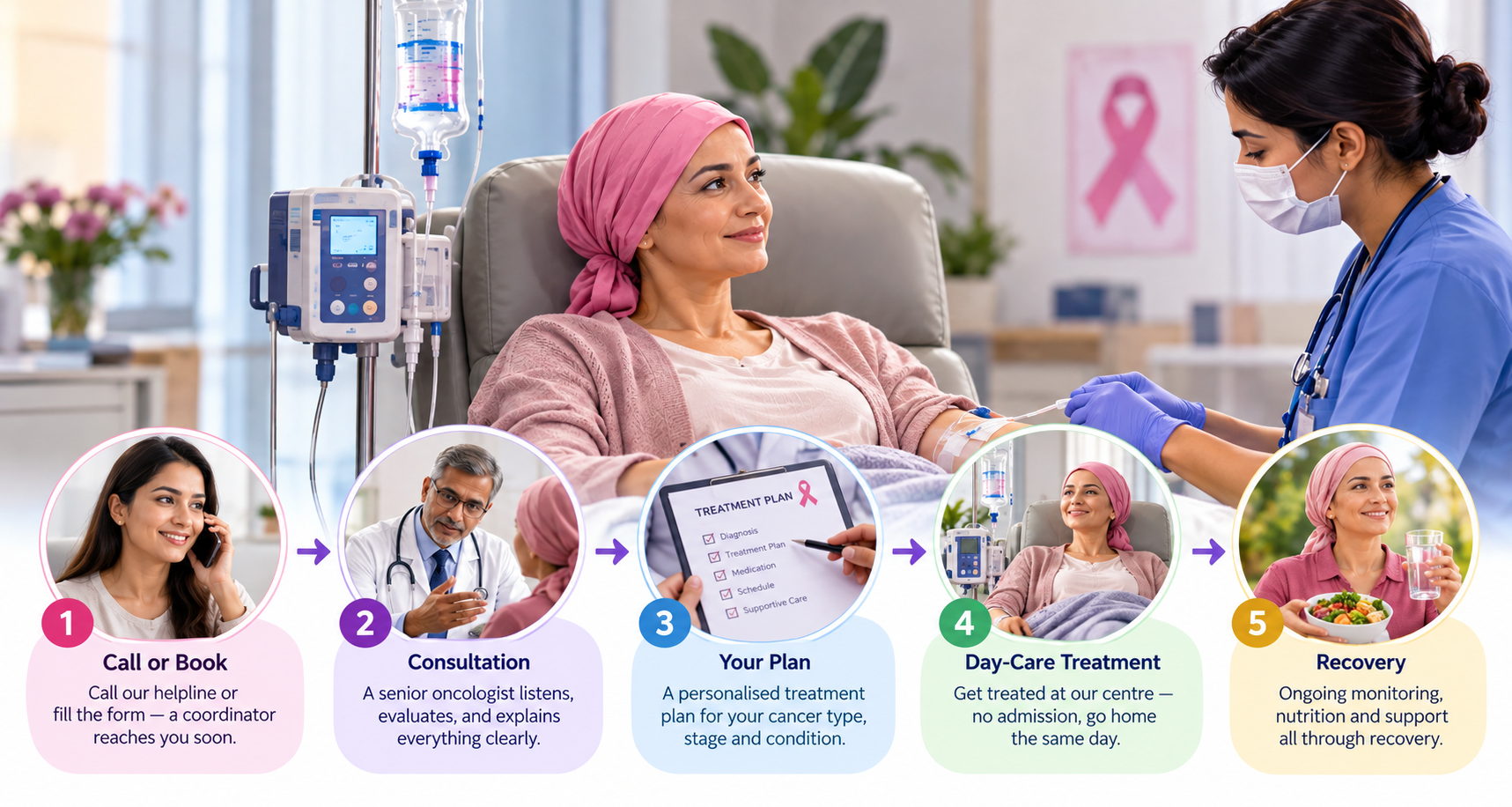
Chemotherapy Consultation and Day-Care Treatment at Shichim Oncocare
Shichim Oncocare provides a structured oncology care process involving consultation, personalised treatment planning, day-care treatment, and recovery support.
Patients can begin by calling the helpline or submitting a booking request. A coordinator assists with the next steps.
A senior oncologist evaluates the patient's condition and explains the recommended treatment approach.
For suitable patients, Shichim offers day-care treatment without overnight hospital admission.
The care process also includes ongoing monitoring, nutritional guidance, and recovery support.
Want to understand your chemotherapy treatment options?
Visit Shichim Oncocare to request an oncology consultation and discuss your treatment requirements.