
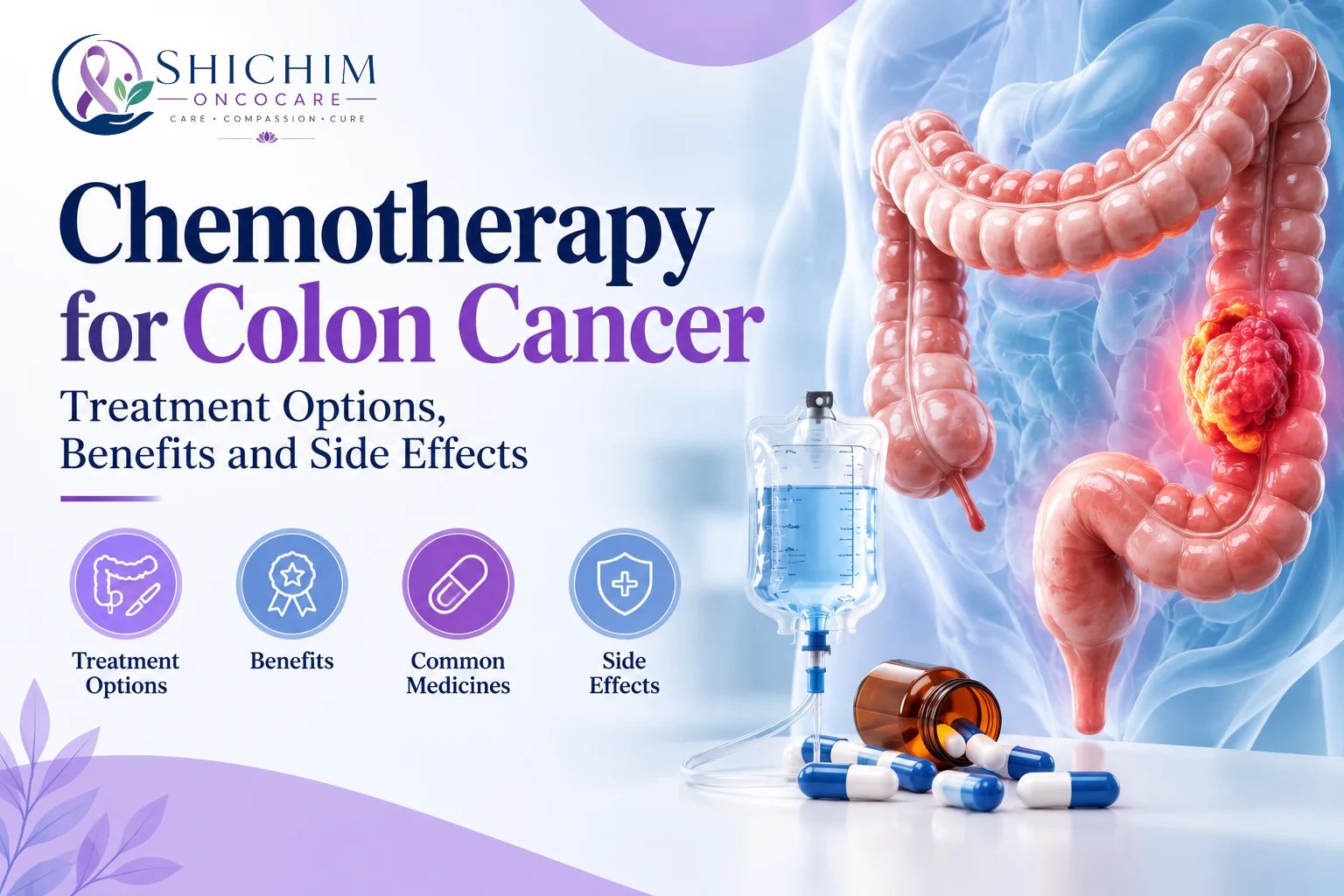
Colon cancer develops in the large intestine and may require different treatments depending on its stage, location and spread. Chemotherapy for colon cancer uses medicines to destroy cancer cells or slow their growth. It may be recommended alongside surgery or as part of treatment for advanced disease.
Some patients need chemotherapy to reduce the risk of cancer returning, while others receive it to control cancer that has spread to other organs. Understanding treatment options, possible side effects and the expected duration can help patients prepare for discussions with their oncologist.
This guide explains colon cancer treatment, common chemotherapy medicines, oral treatment options and side effects associated with stage 3 colon cancer.
What Is Chemotherapy for Colon Cancer?
Chemotherapy uses medicines that target rapidly growing cells, including cancer cells. These medicines may travel through the bloodstream to reach cancer cells in different parts of the body.
Doctors may recommend chemotherapy to:
-
Reduce the risk of cancer returning following surgery.
-
Help shrink a tumour in selected cases.
-
Treat cancer that has spread to other organs.
-
Slow cancer growth and manage symptoms in advanced disease.
Chemotherapy is not required for every patient. The oncologist considers the cancer stage, pathology report, lymph node involvement and the patient's overall health before recommending treatment.
Colon Cancer Treatment Based on Cancer Stage
The treatment plan depends on how far the cancer has progressed and whether it has spread beyond the colon.
Stage 1 Colon Cancer
Surgery is generally the main treatment for stage 1 colon cancer. The affected section of the colon is removed, along with nearby lymph nodes when appropriate.
Most patients with stage 1 disease do not require chemotherapy. Further treatment depends on the surgical findings and pathology report.
Stage 2 Colon Cancer
Surgery is usually the primary treatment for stage 2 colon cancer. Chemotherapy may be considered when certain high-risk features are present, such as specific tumour characteristics or complications.
The decision depends on the estimated risk of recurrence and the potential benefits and side effects of treatment.
Stage 3 Colon Cancer
Stage 3 colon cancer means the disease has spread to nearby lymph nodes but has not reached distant organs.
Treatment commonly involves surgery followed by adjuvant chemotherapy. This treatment aims to destroy cancer cells that may remain in the body even when they cannot be detected through routine tests.
Common regimens include FOLFOX and CAPOX. The choice depends on the patient's health, cancer characteristics and ability to tolerate treatment.
Stage 4 Colon Cancer
Stage 4 colon cancer has spread to distant organs, such as the liver or lungs.
Treatment may include chemotherapy, targeted therapy, immunotherapy or a combination of these options. Doctors consider tumour biomarkers, symptoms and the extent of the disease when selecting treatment.
In certain cases, surgery or other local treatments may also be appropriate.
Common Chemotherapy Medicines for Colon Cancer
Several medicines are used to treat colon cancer. They may be given individually or in combinations.
1. Fluorouracil (5-FU)
Fluorouracil, commonly called 5-FU, interferes with processes cancer cells need to grow and divide. It is often administered intravenously and combined with other medicines.
2. Capecitabine
Capecitabine is an oral chemotherapy medicine that the body converts into a substance similar to 5-FU. It may be used alone in selected cases or combined with oxaliplatin.
3. Oxaliplatin
Oxaliplatin is commonly combined with 5-FU and leucovorin or with capecitabine. Possible side effects include tingling, numbness and sensitivity to cold.
4. Irinotecan
Irinotecan is used in certain colorectal cancer treatment regimens, particularly for advanced disease. Diarrhoea and reduced blood cell counts are possible side effects.
5. Leucovorin
Leucovorin is used with 5-FU to enhance its activity. It is generally part of a combination regimen rather than a standalone chemotherapy treatment.
The oncologist selects medicines and doses according to the cancer stage, treatment objective and patient's clinical condition.
What Is Oral Chemotherapy for Colon Cancer?
Oral chemotherapy for colon cancer involves taking cancer-treatment medicines by mouth instead of receiving every medicine through an intravenous infusion.
Capecitabine is a commonly used example. It may be prescribed alone in selected situations or combined with oxaliplatin as part of the CAPOX regimen.
Oral chemotherapy offers flexibility because patients can take prescribed doses at home. However, it requires careful monitoring and strict adherence to the treatment schedule.
Patients should:
-
Take medicines exactly as prescribed.
-
Follow instructions about meal timing and dosage.
-
Never double a missed dose unless instructed by their care team.
-
Report severe diarrhoea, vomiting or mouth sores.
-
Attend scheduled blood tests and follow-up appointments.
-
Inform their oncologist about other medicines and supplements.
Oral chemotherapy is not automatically safer or more effective than intravenous treatment. The most suitable option depends on individual clinical needs.
Common Colon Cancer Chemo Side Effects
Colon cancer chemo side effects vary depending on the medicines, dosage, treatment schedule and the patient's general health.
Fatigue and Weakness
Patients may feel tired or have less energy during treatment. Fatigue can be associated with chemotherapy, anaemia, sleep changes or reduced food intake. Persistent weakness should be discussed with the oncology team.
Nausea and Vomiting
Some chemotherapy medicines can cause nausea and vomiting. Doctors may prescribe anti-nausea medicines to prevent or manage these symptoms. Repeated vomiting can cause dehydration and requires medical advice.
Diarrhoea
Diarrhoea may occur with medicines such as capecitabine and irinotecan. Severe or persistent diarrhoea can lead to dehydration, so patients should follow their prescribed management plan and contact their care team when symptoms worsen.
Mouth Sores
Chemotherapy can cause soreness or ulcers inside the mouth. Gentle oral hygiene and suitable mouth-care products may help reduce discomfort. Severe pain or difficulty drinking should be reported.
Hair Changes
Some patients experience hair thinning or hair loss, depending on the chemotherapy regimen. Not every medicine causes significant hair loss.
Low Blood Cell Counts
Chemotherapy can reduce white blood cells, red blood cells or platelets. Low white blood cell counts increase infection risk, while low red blood cell counts may cause tiredness and breathlessness.
A temperature of 38°C (100.4°F) or higher during chemotherapy may indicate a serious infection. Contact the oncology team immediately and follow its emergency instructions.
Numbness and Tingling
Oxaliplatin may cause numbness, tingling or increased sensitivity to cold. Patients should report new or worsening symptoms because the oncologist may need to adjust the treatment plan.
Chemotherapy for Colon Cancer Stage 3 Side Effects
Chemotherapy for colon cancer stage 3 side effects are an important concern for patients receiving treatment following surgery.
Common regimens include FOLFOX, which combines 5-FU, leucovorin and oxaliplatin, and CAPOX, which combines capecitabine and oxaliplatin.
Possible side effects include fatigue, nausea, diarrhoea, changes in blood cell counts and nerve-related symptoms. Their severity varies from person to person.
To manage treatment safely, patients should maintain adequate fluid intake, eat balanced meals as tolerated, attend recommended blood tests and report symptoms promptly. Persistent diarrhoea, severe weakness or increasing numbness may require medical assessment.
Patients should not stop chemotherapy or change their dosage without consulting their oncologist.
Comparing Colorectal Cancer Treatment Options
Chemotherapy is one part of colorectal cancer treatment. The appropriate approach depends on the cancer stage, pathology results and tumour characteristics.
| Treatment | When it may be used | Main purpose |
|---|---|---|
| Surgery | Localised colon cancer | Remove the tumour |
| Adjuvant chemotherapy | Stage 3 and selected high-risk stage 2 cases | Reduce recurrence risk |
| Neoadjuvant treatment | Selected cases where treatment before surgery is appropriate | Help manage or shrink the tumour |
| Chemotherapy for advanced disease | Cancer that has spread | Control disease and symptoms |
| Targeted therapy | Selected cancers with relevant biomarkers | Target specific cancer-related pathways |
| Immunotherapy | Selected cancers with particular biomarkers | Help the immune system attack cancer cells |
Colon cancer and rectal cancer may require different treatment approaches. A specialist should confirm the diagnosis and recommend an appropriate plan.
How Long Does Chemotherapy for Colon Cancer Last?
The duration depends on the cancer stage, treatment regimen, response and side effects.
For stage 3 colon cancer, adjuvant chemotherapy commonly lasts around 3 to 6 months. Some patients may receive a shorter course, while others require a longer schedule based on their treatment plan.
Treatment for stage 4 disease may continue for a different period depending on the cancer's response and how well the patient tolerates the medicines. Doctors may adjust doses or change medicines when clinically necessary.
Patients should ask their oncologist about the planned number of cycles, visit frequency, blood tests and potential reasons for treatment adjustments.
When Should Patients Contact Their Oncologist?
Medical advice is important when symptoms become severe or unusual during chemotherapy.
Contact the treatment team urgently for:
-
Fever of 38°C (100.4°F) or higher.
-
Severe or persistent diarrhoea.
-
Repeated vomiting or inability to drink fluids.
-
New or worsening breathlessness.
-
Unusual bleeding or bruising.
-
Severe abdominal pain.
-
Signs of dehydration, such as dizziness or very little urine.
Follow the emergency instructions provided by the cancer centre. Do not wait for a routine appointment when a potentially serious symptom develops.
Questions to Ask Before Starting Chemotherapy
Patients can discuss the following questions with their oncologist:
-
What is my exact stage of colon cancer?
-
Why is chemotherapy recommended in my case?
-
Which medicines will I receive?
-
How many treatment cycles are planned?
-
Which side effects require urgent medical attention?
-
Will I need regular blood tests?
-
Are targeted therapy or immunotherapy relevant to my tumour results?
-
How will the treatment response be assessed?
These discussions help patients understand their options and prepare for treatment.
Conclusion
Chemotherapy for colon cancer can help reduce recurrence risk, control cancer growth and manage advanced disease. Treatment options include intravenous medicines, oral chemotherapy and selected targeted treatments based on the cancer's characteristics.
Understanding possible side effects, following medical instructions and reporting symptoms promptly can help patients receive appropriate support. Every treatment plan should be personalised by a qualified oncology team.