
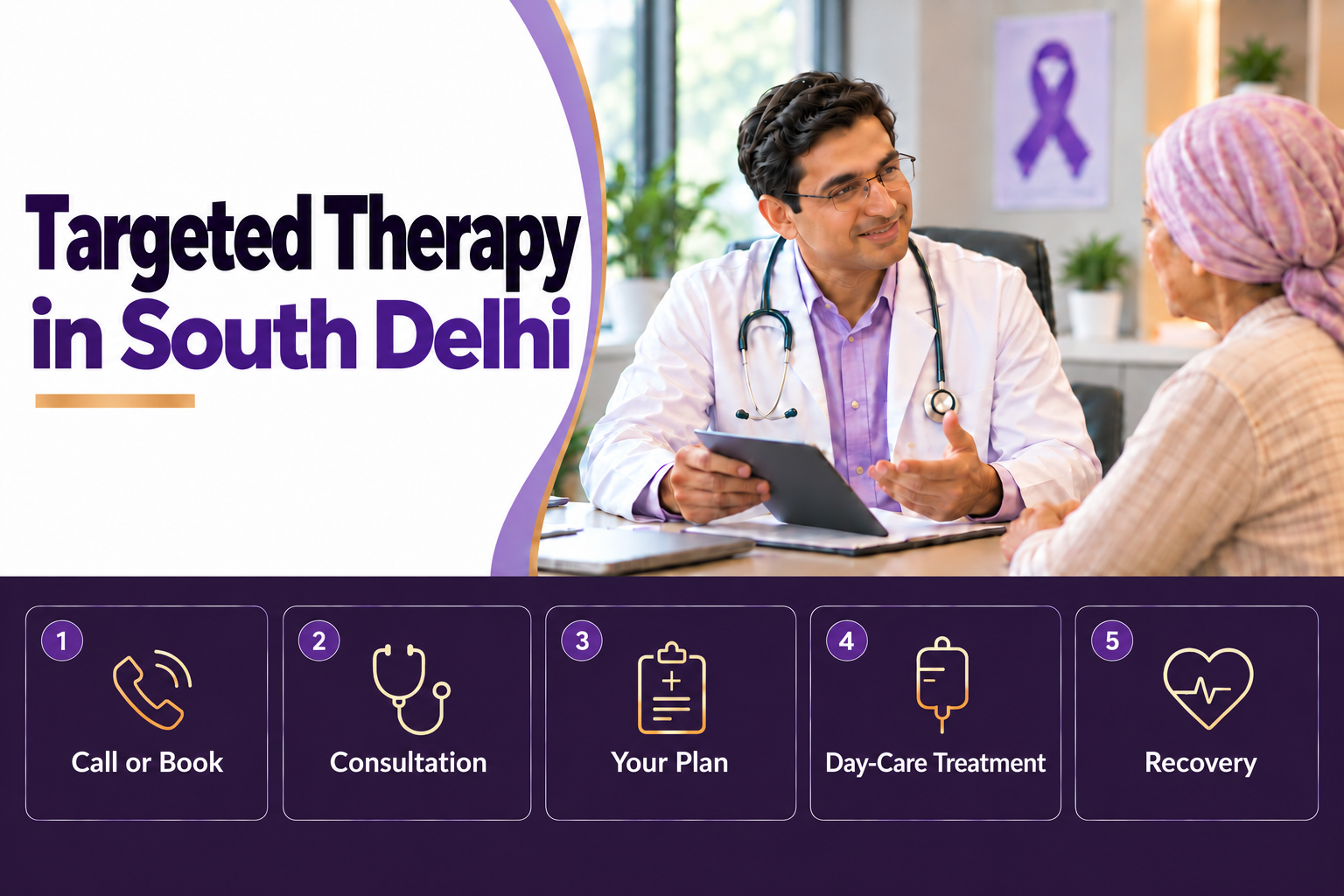
Cancer treatment is becoming more personalised as doctors learn more about the molecular and biological characteristics of different cancers. Targeted therapy in South Delhi is one such approach that focuses on specific proteins, genes, receptors, or pathways involved in the growth and survival of certain cancer cells.
Unlike conventional chemotherapy, which generally affects rapidly dividing cells, targeted therapy is designed to act on particular features of cancer. However, it is not suitable for every patient. Its use depends on cancer type, stage, biomarker results, previous treatment, overall health, and other clinical factors.
At SHICHIM, patients considering targeted cancer therapy South Delhi receive specialist evaluation followed by personalised treatment planning. When clinically appropriate, treatment may be provided through a day-care model with ongoing monitoring, nutrition, recovery guidance, and support.
What Is Targeted Therapy in South Delhi?
Targeted therapy in South Delhi is a form of cancer treatment designed to interfere with specific biological processes that help certain cancer cells grow, divide, or survive.
Cancer cells can develop molecular changes that cause abnormal growth. In some cancers, testing can identify a particular mutation, protein, receptor, or pathway that can be targeted with a specific medicine.
This approach is closely connected with precision cancer treatment South Delhi because treatment selection may be based on the individual biological characteristics of the tumour rather than only its location in the body.
The presence of a molecular target does not automatically mean a particular treatment will be appropriate. An oncologist must interpret test results together with the patient's complete medical situation.
How Does Targeted Therapy Work?
Cells use complex signalling pathways to control growth and survival. Cancer can develop when changes in these pathways allow cells to grow uncontrollably.
Targeted medicines are designed to interfere with specific parts of these processes. Some treatments block proteins that send growth signals. Others interfere with blood-vessel formation, particular receptors, or other mechanisms cancer cells use to survive.
Because different cancers have different biological characteristics, targeted therapy for cancer South Delhi should be selected only after appropriate clinical evaluation.
This is one reason molecular and biomarker testing has become increasingly important in modern oncology.
Importance of Biomarker Testing
Biomarker testing can help doctors understand important characteristics of a tumour.
Depending on the cancer, testing may look for specific genetic mutations, proteins, receptors, or other molecular changes. If a clinically relevant target is identified, an oncologist can determine whether an appropriate targeted medicine exists.
However, not every molecular alteration has an established treatment. Test results therefore require specialist interpretation.
Biomarker testing is an important part of precision cancer treatment South Delhi, helping move cancer care toward more individualised treatment decisions.
Major Types of Targeted Therapy
Small-Molecule Medicines
Small-molecule drugs can enter cells and interfere with specific proteins or enzymes involved in cancer growth.
Some of these medicines are taken orally. Even when treatment is taken at home, regular oncology monitoring remains essential.
Monoclonal Antibodies
Monoclonal antibodies are laboratory-developed proteins designed to recognise specific targets.
Depending on the medicine, they may block cancer-growth signals, interact with particular receptors, or support other anti-cancer mechanisms.
Some antibody-based treatments are administered intravenously under professional supervision.
Angiogenesis Inhibitors
Cancer cells require a blood supply for oxygen and nutrients. Certain targeted therapies interfere with signals involved in developing new blood vessels.
These treatments have roles in selected cancers and should be used according to the patient's individual clinical situation.
Who May Be Suitable for Targeted Therapy?
Not every cancer patient is suitable for targeted therapy in South Delhi.
The oncologist first evaluates the exact cancer type, stage, pathology, previous treatment, overall condition, organ function, and treatment objectives.
Molecular or biomarker testing may then be recommended when relevant.
Even when testing identifies a potential target, the oncologist must determine whether available evidence supports using a corresponding medicine.
Two patients with the same general cancer diagnosis can therefore receive different treatment plans because their tumours may have different biological characteristics.
Targeted Therapy Treatment Journey at SHICHIM
Call or Book
The care journey begins with booking. A coordinator reaches out to guide the patient through the next steps.
Patients can prepare pathology reports, biopsy results, scans, blood investigations, previous treatment records, prescriptions, and current medication details.
Consultation
A senior oncologist listens to the patient's concerns and evaluates the available medical information.
The cancer type, stage, previous treatment, current condition, and relevant reports are reviewed. Additional molecular or biomarker testing may be recommended when clinically appropriate.
Your Personalised Plan
After evaluation, a personalised treatment plan is developed according to the cancer type, stage, molecular findings, overall health, and other clinical factors.
If targeted therapy is appropriate, the oncologist can explain the treatment approach, monitoring requirements, possible side effects, and available alternatives.
Day-Care Treatment
Some targeted treatments require supervised administration.
Eligible patients may receive suitable therapies through SHICHIM's day-care model. When clinically appropriate, patients can complete treatment and return home the same day after the required observation and medical clearance.
Recovery and Monitoring
Cancer care continues after treatment administration.
SHICHIM provides ongoing monitoring, nutrition, recovery guidance, and support throughout the treatment journey.
Targeted Therapy vs Chemotherapy
| Factor | Targeted Therapy | Chemotherapy |
|---|---|---|
| Treatment approach | Focuses on specific molecular targets | Primarily affects rapidly dividing cells |
| Selection | Often influenced by biomarkers | Based on cancer type and treatment protocol |
| Precision | Targets particular biological features | Uses a broader cellular mechanism |
| Testing | Molecular testing may be required | Not always dependent on molecular testing |
| Administration | May be oral or supervised | May be oral or intravenous |
| Monitoring | Target-specific effects and treatment response | Blood counts, organ function and response |
| Combination | Can be combined with other therapies | Frequently combined with other treatments |
Neither treatment is universally better. Some patients may benefit from targeted therapy, while others may require chemotherapy, immunotherapy, surgery, radiation, or a combination of treatments.
Potential Benefits of Targeted Cancer Therapy
The major advantage of targeted cancer therapy South Delhi is its personalised approach.
When a clinically relevant target is identified, treatment can be selected according to specific biological characteristics of the tumour.
Targeted therapy may also offer flexibility. Depending on the cancer and medicine, it can sometimes be used alone or combined with other treatments.
Some targeted medicines are available as oral therapies, while others require supervised administration.
The real value lies in matching the appropriate treatment with the appropriate patient rather than assuming one treatment will work for everyone.
Side Effects and Limitations
Targeted therapy can still cause side effects.
Depending on the medicine, patients may experience fatigue, digestive symptoms, skin changes, changes in blood pressure, liver abnormalities, or other treatment-specific effects.
Cancer cells can also change over time and develop resistance to targeted medicines. A treatment that initially controls cancer may become less effective later.
If this happens, the oncologist may consider additional investigations, repeat molecular testing, or an alternative treatment strategy.
Patients should never stop or modify treatment without discussing it with their oncology team.
Monitoring During Targeted Therapy
Regular monitoring is an important part of targeted therapy in South Delhi.
The oncology team may use blood investigations, imaging, physical examinations, and symptom assessments to evaluate treatment response and safety.
Monitoring can help identify treatment-related effects and determine whether the cancer is responding as expected.
Patients should report new or worsening symptoms promptly instead of waiting until their next scheduled appointment.
Nutrition and Recovery During Treatment
Cancer and its treatment can affect appetite, digestion, body weight, energy levels, and nutritional needs.
There is no single diet that improves targeted therapy for every patient. Nutrition recommendations should be personalised according to the patient's treatment and overall condition.
Patients should also discuss supplements and herbal products with their oncology team because some products may interact with cancer medicines.
At SHICHIM, nutrition and recovery support are integrated into the broader care pathway.
How to Choose a Targeted Therapy Centre South Delhi
When selecting a targeted therapy centre South Delhi, patients should consider the complete quality of oncology care rather than treatment availability alone.
The process should begin with specialist evaluation and accurate diagnosis. Appropriate molecular testing should be considered when relevant, and results should be interpreted by an oncology professional.
Patients should also look for personalised treatment planning, professional administration, regular monitoring, side-effect management, supportive care, and clear communication.
A reliable treatment pathway should help patients understand why a particular therapy is being recommended and how its effectiveness will be monitored.
Why Choose SHICHIM for Targeted Therapy?
Patients exploring targeted therapy in South Delhi can benefit from SHICHIM's structured approach to personalised cancer care.
The journey begins with booking and consultation with a senior oncologist. The patient's cancer diagnosis, stage, previous treatments, current condition, and relevant reports are evaluated.
When appropriate, biomarker or molecular information can be considered when developing the treatment strategy.
Eligible patients may receive suitable treatments through a day-care model without routine overnight admission when medically appropriate.
SHICHIM also provides ongoing monitoring, nutrition, recovery guidance, and support, helping maintain continuity throughout the cancer-care journey.
Future of Precision Cancer Treatment South Delhi
Precision oncology continues to develop as researchers identify new molecular targets and improve cancer testing.
Advanced molecular diagnostics may help doctors understand individual tumours in greater detail and identify additional treatment possibilities for selected patients.
Research is also focused on understanding why cancers develop resistance to targeted medicines and how different treatments can be combined more effectively.
These advances may expand the role of precision cancer treatment South Delhi, but specialist clinical judgement will remain essential when deciding which treatment is appropriate.
Conclusion
Targeted therapy in South Delhi represents an important advancement in personalised cancer treatment. By focusing on specific molecular features involved in cancer growth, targeted medicines may provide an appropriate treatment option for selected patients.
However, targeted therapy is not suitable for everyone. Appropriate biomarker testing, specialist interpretation, personalised treatment planning, and regular monitoring are essential.
Patients considering targeted cancer therapy South Delhi, a targeted therapy centre South Delhi, precision cancer treatment South Delhi, or targeted therapy for cancer South Delhi should focus on comprehensive oncology care.
SHICHIM provides a structured pathway from specialist consultation and personalised planning to day-care treatment when appropriate, followed by monitoring, nutrition, recovery, and ongoing support. If targeted therapy is being considered, an oncology consultation can help determine whether it has an appropriate role in your personalised cancer treatment plan.