
Oncologist in Saket: Personalised Cancer Care with Shichim
Finding an oncologist in Saket can feel overwhelming when you are also trying to understand reports, symptoms, and treatment choices. A helpful consultation should make your situation clearer and explain what needs to happen next.
Cancer care involves diagnosis, treatment planning, symptom management, and follow-up. The right specialist considers your medical needs alongside your preferences and daily responsibilities.
For Saket residents exploring nearby options, Shichim lists a Hauz Khas location. Its stated approach includes specialist consultation, personalised planning, eligible day-care treatment, and recovery support. Confirm current appointment availability and services before visiting.
What Does an Oncologist Do?
An oncologist is a doctor trained in diagnosing and treating cancer. They review findings, explain the diagnosis, and recommend suitable treatment or further investigations.
Your care may involve several specialists working together. An oncologist can help you understand which treatment comes first and how different parts of your care fit together.
When choosing a cancer specialist, Saket residents should consider relevant experience, communication, and arrangements for coordinated care. A useful consultation leaves you understanding the recommendation and its purpose.
Different Types of Cancer Specialists
Medical Oncologist
A medical oncologist treats cancer using medicines such as chemotherapy, targeted therapy, immunotherapy, and hormone therapy.
If you are considering a medical oncologist, Saket-based patients should ask whether the doctor regularly manages their cancer type. This specialist also reviews treatment response and helps manage medicine-related side effects.
Surgical Oncologist
A surgical oncologist performs operations to diagnose or treat cancer. Surgery may remove a tumour or obtain tissue for laboratory examination.
An operation is not appropriate for every patient. Suitability depends on the cancer, its extent, and the person's overall health.
Radiation Oncologist
A radiation oncologist plans treatment using radiation to target cancer cells. Radiation may be recommended alone, alongside other treatments, or to relieve certain symptoms.
This treatment requires specialised equipment and careful planning. Ask where treatment would take place if it forms part of your care.
Other Specialist Support
Some diagnoses require additional expertise, such as a haematologist for blood cancers. Nutrition professionals, nurses, and supportive-care teams may also contribute according to individual needs.
Comparing Specialist Roles
| Specialist | Main focus | When their input may help |
|---|---|---|
| Medical oncologist | Cancer medicines and response monitoring | Planning chemotherapy or other drug treatments |
| Surgical oncologist | Cancer-related operations | Assessing whether surgery is appropriate |
| Radiation oncologist | Radiation treatment planning | Treating a specific area or relieving symptoms |
| Haematologist | Blood and bone marrow disorders | Assessing and managing blood cancers |
These roles often complement one another. Patients should not have to choose between them without guidance about their diagnosis.
When Should You Arrange a Consultation?
An oncology appointment may be recommended after a biopsy confirms cancer, imaging shows a concerning finding, or another doctor requests specialist assessment.
A consultation can also help when you need an explanation of an existing treatment plan or want a second opinion.
An abnormal report does not automatically mean cancer. A doctor must interpret it alongside your history and other findings.
If you are seeking an oncology consultation, Saket residents can start by clarifying the referral reason and collecting relevant records.
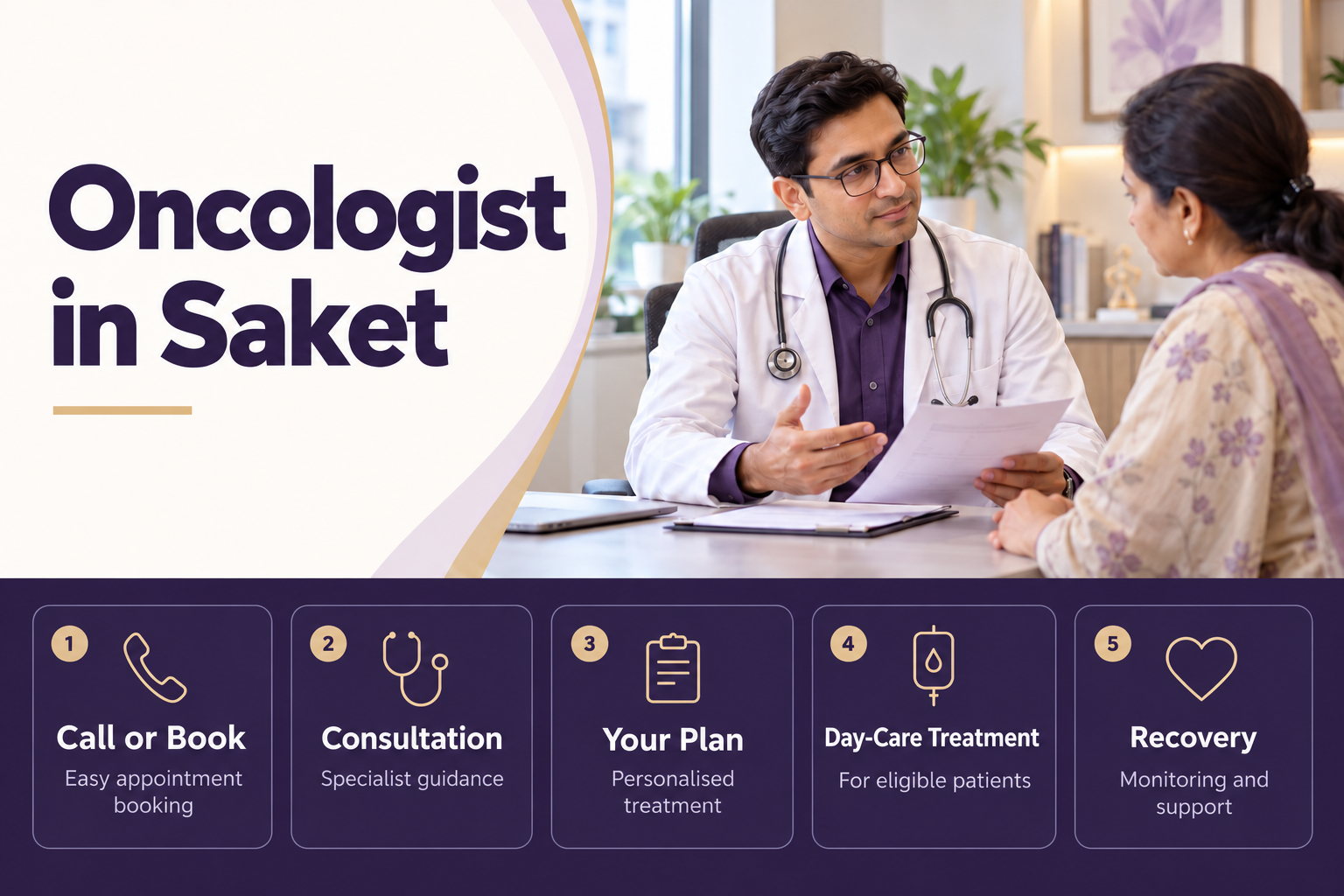
Your Care Journey with Shichim
1. Call or Book
Request an appointment and ask what information the coordinator needs. Confirm the location, available specialist, and documents required.
2. Consultation
A senior oncologist reviews your history and reports, listens to your concerns, and explains the findings. Ask which questions can be answered now and whether further tests are necessary.
3. Your Personalised Plan
Treatment planning considers the cancer type, stage, and health condition. Discuss expected benefits, possible harms, alternatives, and how progress will be assessed.
4. Day-Care Treatment
Eligible patients may receive suitable treatment without an overnight stay. Returning home depends on medical assessment, the prescribed regimen, and the response that day.
5. Recovery and Monitoring
Follow-up reviews address treatment response, symptoms, nutrition, and recovery needs. Ask how to raise concerns between appointments and when further reviews are due.
Preparing for Your First Appointment
Bring organised records so the doctor can understand your situation efficiently:
-
Biopsy and pathology reports.
-
Scan reports and available scan images.
-
Recent blood test results.
-
Previous treatment summaries and prescriptions.
-
Details of medicines, supplements, and allergies.
Write down your symptoms and main concerns. A trusted companion can help take notes if you wish.
For example, someone advised to have chemotherapy after surgery can ask what benefit it offers, when it should begin, and which recovery needs might affect timing.
Before leaving, request a clear explanation of the next step.
A family member can help organise paperwork, but your own priorities should remain central. Tell the team what matters most to you, including comfort, independence, communication preferences, and practical support at home.
Understanding Your Treatment Plan
A treatment plan should connect each recommendation with a clear goal. Depending on your diagnosis, that goal may be cure, reducing recurrence risk, controlling disease, or relieving symptoms.
Ask your oncologist to explain what is known, what remains uncertain, and which decisions need to be made first. You do not need to understand every medical term immediately.
Useful discussion points include:
-
Why this treatment is recommended for your diagnosis.
-
Whether other reasonable options exist.
-
Which side effects could affect daily activities.
-
How the team will assess treatment response.
-
What might lead to a change in the plan.
For example, a patient balancing appointments with work may need advice about likely recovery time. Someone caring for children may need help planning transport and support. Sharing these responsibilities helps the team understand your circumstances.
Day-Care Support and Hospital-Based Treatment
Day-care services can suit selected treatments for patients who are medically stable. They may allow patients to receive scheduled care and recover at home after clearance.
However, a convenient setting is useful only when it matches the prescribed treatment and monitoring needs. Some procedures, intensive regimens, or complications require hospital facilities.
Before choosing a service, discuss emergency arrangements and how referrals are managed. Ask whether your existing specialist will receive treatment updates and who should be contacted if your condition changes.
A practical plan should explain both routine appointments and situations requiring additional assessment. Patients and caregivers should leave with the same understanding of these arrangements.
Choosing an Oncology Doctor Near Saket
When comparing an oncology doctor, Saket families should look beyond proximity. Ask about relevant qualifications, experience with the diagnosis, and access to required treatment facilities.
Good communication matters. You should feel able to discuss concerns and understand why a recommendation is being made.
Before choosing a cancer doctor, Saket residents can ask:
-
Who will coordinate my treatment?
-
Which services are available onsite?
-
How are urgent concerns managed?
-
Will other specialists review my case?
-
What follow-up will I need?
A second opinion can clarify options. Coordinate its timing with your treating doctor so necessary care is not delayed.
Making Follow-Up Visits More Useful
Follow-up is an opportunity to discuss how treatment affects your everyday life. Keep a short record of symptoms, appetite changes, medicines taken, and questions that arise between appointments.
Bring updated reports and mention care received elsewhere. This helps avoid gaps when several clinicians are involved.
Do not assume an appointment is unnecessary because you feel better. Your team may need to review results or reassess the next treatment step.
If travelling from Saket becomes difficult, ask whether any discussions can happen remotely. Some reviews still require examination, tests, or treatment in person.
Before ending each visit, confirm the next appointment, necessary investigations, and instructions for seeking help. Written notes can make these details easier to remember.
Benefits, Limitations, and Common Mistakes
A structured care plan can clarify appointments, responsibilities, and monitoring. Day-care treatment may reduce disruption for eligible patients, but it cannot replace hospital admission when intensive support is required.
Avoid comparing your treatment directly with someone else's experience. Even similar diagnoses can require different plans.
Do not change prescribed medicines, start supplements, or skip reviews without discussing them. Report new symptoms using your team's instructions.
Why Consider Shichim?
Shichim describes a journey that connects consultation, individual planning, suitable treatment, and recovery support. This gives families specific stages to discuss when organising care.
Ask how these services apply to your diagnosis and who provides each part. The value of coordinated care lies in understanding responsibilities, maintaining continuity, and receiving clear guidance that reflects your changing medical needs.
Future Directions in Oncology
Biomarker testing can help select treatments for certain cancers. It may identify relevant targeted medicines, immunotherapy options, or clinical trials.
However, testing does not always reveal a suitable treatment. Ask whether a proposed test would change your care. Newer approaches should be assessed against evidence and individual needs.
Conclusion
Choosing an oncologist in Saket begins with finding clear guidance, relevant expertise, and reliable follow-up. Shichim's stated consultation and day-care approach offers a nearby option for Saket residents to explore.
Request a consultation with Shichim to review your reports, discuss treatment suitability, and understand your next steps. Build a care plan around your diagnosis, wellbeing, and daily life.