
Oncologist in Greater Kailash: Personalised Cancer Care with Shichim
Finding an oncologist in Greater Kailash can feel overwhelming when you are trying to understand reports, treatment choices, and the next steps. A useful consultation should help you understand your situation and make informed decisions about care.
Cancer treatment involves more than selecting a medicine. It includes confirming the diagnosis, considering suitable options, monitoring progress, and supporting recovery. Your existing health conditions, preferences, and daily responsibilities also matter.
For Greater Kailash residents exploring nearby services, Shichim lists a centre in Hauz Khas. Its website currently indicates an upcoming opening. Confirm operational status, consultation availability, and required services before arranging a visit.
What Does an Oncologist Do?
An oncologist is a doctor trained in diagnosing and treating cancer. Depending on their speciality, they may recommend medicines, perform cancer surgery, or plan radiation treatment.
They also help explain test findings, discuss treatment goals, and assess whether care needs adjustment. Several specialists may contribute when treatment involves different approaches.
When choosing a cancer specialist, Greater Kailash residents should look for relevant expertise and clear communication. You should understand what the recommendation involves, why it is appropriate, and what questions remain unanswered.
When Should You See an Oncologist in Greater Kailash?
An oncology consultation may follow a confirmed cancer diagnosis, a concerning investigation, or a referral from another doctor. It can also help patients review an existing plan or seek another opinion.
An abnormal report does not automatically mean cancer. Findings need to be interpreted alongside symptoms, examination, and other investigations.
If you have a referral, ask why it was recommended and how urgently you should be seen. Bring existing reports so the specialist can assess what information is already available.
Different Types of Cancer Specialists
Medical Oncologist
A medical oncologist treats cancer using medicines such as chemotherapy, immunotherapy, targeted therapy, and hormone therapy. They review treatment response and help manage related side effects.
When considering a medical oncologist, Greater Kailash patients should ask about experience with their particular diagnosis. The appropriate medicine and schedule depend on the cancer and individual health needs.
Surgical Oncologist
A surgical oncologist evaluates and performs cancer-related operations. Surgery may remove a tumour, obtain tissue for diagnosis, or address a specific complication.
An operation is not suitable for every patient. Its role depends on the disease, its extent, and the person's overall condition.
Radiation Oncologist
A radiation oncologist plans treatment using radiation. It may be used to treat a particular area, complement other treatments, or relieve certain symptoms.
Radiation requires specialised equipment. Ask where treatment would take place and how the team would coordinate appointments and reports.
Other Specialist Support
Some patients need additional expertise, including haematology for blood cancers. Nurses, dietitians, rehabilitation professionals, and psychological support teams may also contribute according to individual needs.
What Happens During Your First Consultation?
The oncologist reviews your symptoms, medical history, current medicines, and available reports.
Biopsy findings, imaging, and blood tests provide different information. Ask what each recommended investigation is intended to clarify and whether its result could change your care.
The discussion may include the cancer type, stage, and relevant biological features. Request simpler explanations when terms are unfamiliar.
Before leaving, confirm the next step. You should know whether to arrange tests, seek another specialist's assessment, or return to discuss treatment options.
Preparing for an Oncology Appointment
Bring pathology reports, scan reports and images, blood results, previous prescriptions, and treatment summaries. Include information about allergies, supplements, and other medical conditions.
Arrange documents by date and write a short timeline of symptoms. A trusted companion can help take notes if you wish, but your priorities should remain central.
Prepare questions about the diagnosis, treatment purpose, possible side effects, and monitoring. Explain practical concerns such as work, caregiving, mobility, or transport.
For example, someone advised to receive treatment after surgery could ask what benefit it offers and how recovery affects the proposed starting date.
How Personalised Treatment Planning Works
A treatment plan considers the cancer type, its extent, relevant test findings, previous treatment, and overall health. Patients with cancer in the same organ may still need different approaches.
The goal may be cure, reducing recurrence risk, controlling disease, or relieving symptoms. Ask your oncologist to explain the intended benefit and important limitations in your situation.
Planning should include how response will be assessed and what could lead to an adjustment. New findings, side effects, or changes in health may affect the next decision.
Comparing Different Cancer Care Settings
The right setting depends on what you need at that stage. Consultation, day-care treatment, and hospital admission serve different purposes.
| Care setting | Main purpose | Support and monitoring | Practical consideration |
|---|---|---|---|
| Outpatient consultation | Assessment, report review, and treatment planning | Clinical review with follow-up arrangements | Does not replace treatment facilities or emergency care |
| Day-care oncology | Suitable scheduled treatments | Supervision during treatment and assessment before discharge | Requires medical eligibility and appropriate home arrangements |
| Inpatient hospital care | Treatment or complications requiring admission | Continued clinical support throughout the stay | Appropriate when prolonged supervision is needed |
| Remote consultation | Selected discussions and follow-up reviews | Advice based on available information | Cannot replace examinations, procedures, or urgent assessment |
When choosing an oncology doctor, Greater Kailash families should ask which setting is appropriate and how transitions between services will be managed.
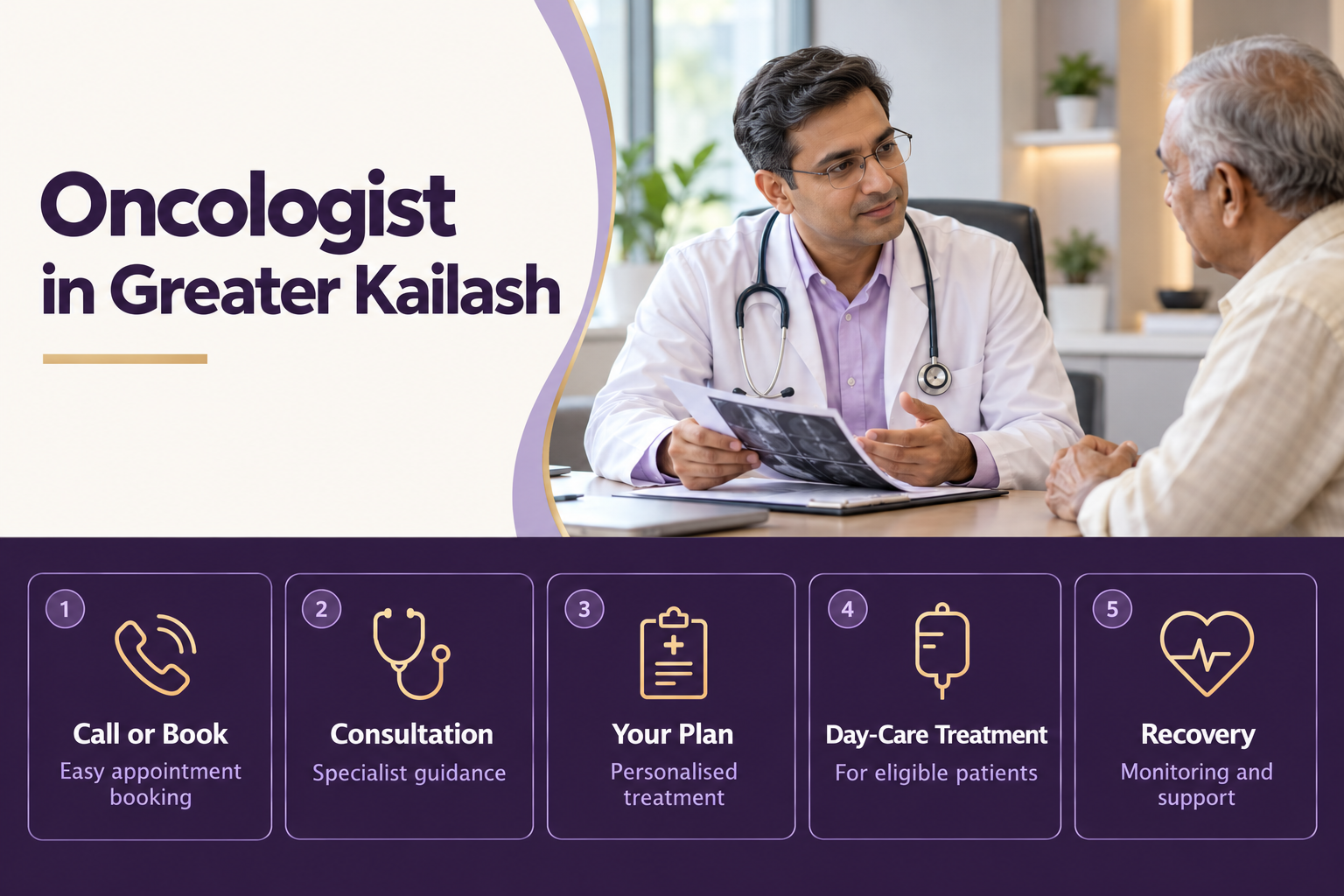
Shichim's Five-Step Care Journey
1. Call or Book
Shichim describes a booking process supported by a coordinator. Explain whether you need an initial consultation, treatment review, or another opinion.
Confirm the location, available specialist, and documents required before travelling.
2. Consultation
A senior oncologist listens to concerns, evaluates reports, and explains the findings. Use this stage to clarify what is known and whether further assessment is necessary.
3. Your Plan
The stated approach focuses on a personalised plan based on cancer type, stage, and condition. Discuss treatment goals, alternatives, monitoring, and possible effects on everyday life.
4. Day-Care Treatment
Eligible patients may receive suitable treatment without an overnight stay. Returning home depends on the regimen, medical assessment, and response during the appointment.
Ask about observation, discharge instructions, and arrangements if hospital care becomes necessary.
5. Recovery
Ongoing monitoring, nutrition, and support address recovery needs. Confirm what these services include and how to report concerns between scheduled reviews.
Choosing a Cancer Doctor Near Greater Kailash
When comparing a cancer doctor, Greater Kailash residents should consider expertise, communication, and access to required facilities. Convenience matters, but clinical suitability comes first.
Ask who coordinates care, what happens when the clinician is unavailable, and how updates reach other treating doctors.
Questions include:
-
Does the specialist regularly manage my cancer type and treatment needs?
-
Which services are available onsite, and which require referral elsewhere?
-
Who handles urgent concerns after an appointment or treatment session?
-
How are follow-up visits and necessary investigations organised?
A second opinion can clarify complex choices. Share complete records and coordinate timing to avoid unnecessarily delaying care.
Supporting Daily Life and Recovery
Treatment can affect appetite, energy, sleep, mobility, and emotional wellbeing. Report difficulties rather than assuming they must be tolerated.
Supportive care may include symptom management, nutrition advice, rehabilitation, and psychological support. Palliative care can also help with symptoms and quality of life alongside active cancer treatment.
Practical help matters. Someone balancing appointments with work might discuss temporary flexibility, while a caregiver could organise transport or medicines.
Keep an updated record of symptoms and treatment changes. Follow the team's instructions about urgent concerns, particularly fever or signs of infection during treatment.
Common Mistakes to Avoid
Do not compare your treatment directly with another patient's experience. Similar diagnoses can involve different medicines, schedules, and recovery needs.
Avoid changing prescribed medicines, starting supplements, or skipping reviews without discussing them. Advice intended for someone else may not suit your situation.
Keep reports organised when several facilities are involved. Ask for written instructions if responsibilities or next steps are unclear.
Why Consider Shichim?
Shichim's stated model connects consultation, personalised planning, eligible day-care treatment, and recovery support. These stages provide specific services to discuss when exploring nearby care.
Its listed centre is in Hauz Khas, rather than inside Greater Kailash. Confirm current availability, relevant specialist experience, and the required treatment facilities.
Choose according to how well the service matches your medical needs. Clear communication and continuity are valuable, but no provider can guarantee a particular outcome.
Future Directions in Oncology
Biomarker testing can help guide treatment for selected cancers. Findings may identify relevant targeted medicines, immunotherapy options, or clinical trials.
However, testing does not always reveal an actionable result. Ask whether a proposed investigation could change your care.
Personalised oncology means selecting an appropriate approach using evidence and individual needs. It does not automatically mean choosing the newest treatment.
Conclusion
Choosing an oncologist in Greater Kailash starts with finding relevant expertise, clear explanations, and follow-up. Understanding your diagnosis helps you participate in decisions and prepare for treatment.
Enquire about Shichim's consultation availability at its listed Hauz Khas centre. Review your reports, discuss your priorities, and take the next step towards a personalised care plan that supports your medical needs and daily life.