
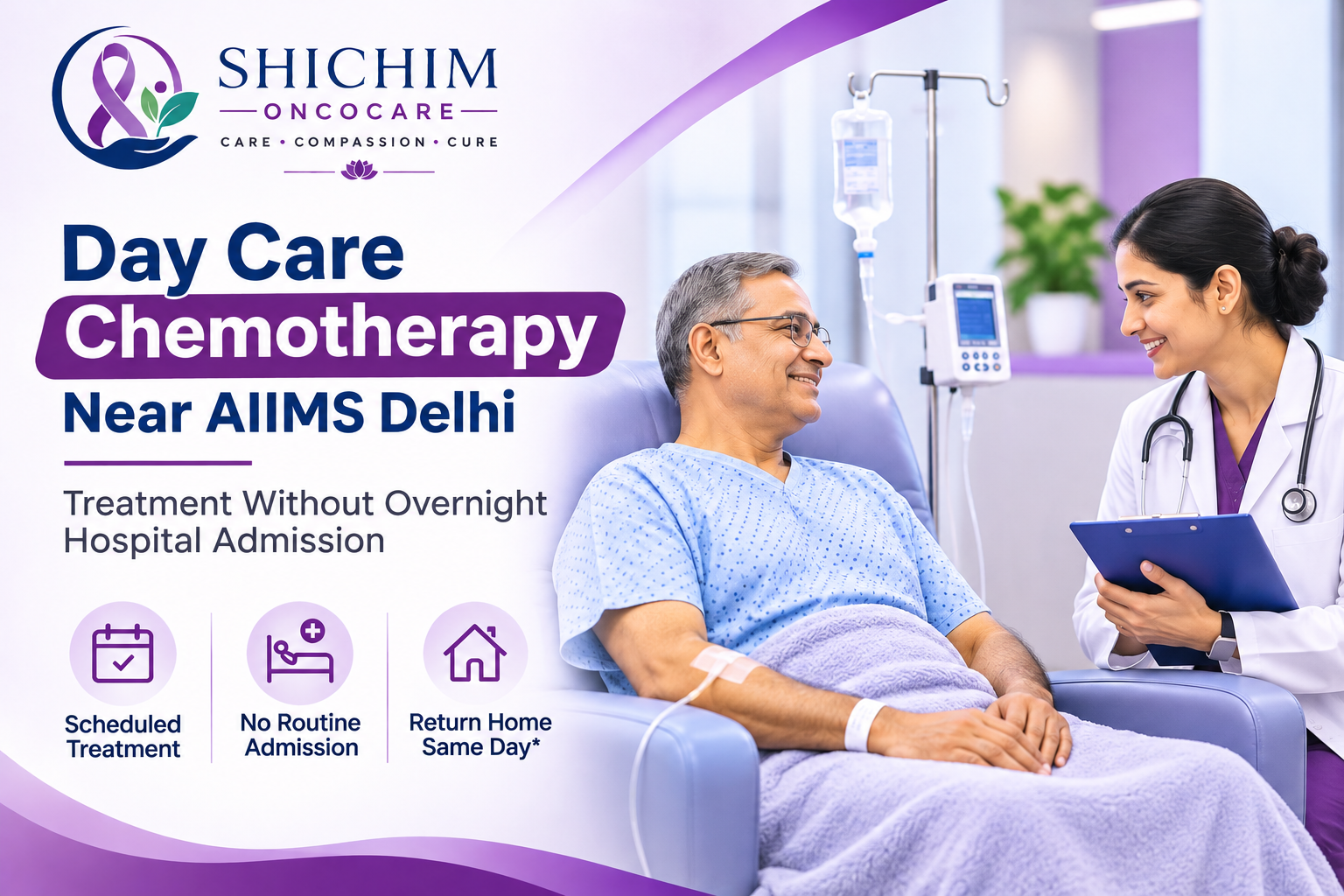
When searching for day care chemotherapy near AIIMS Delhi, patients and their families are often looking for a convenient way to receive cancer treatment without staying overnight in a hospital. They want access to oncology consultations, appropriate treatment facilities, medical monitoring and support throughout the treatment process.
Day-care chemotherapy is an outpatient treatment arrangement in which eligible patients receive prescribed chemotherapy at a medical facility and return home on the same day. It can be a practical option for patients whose medical condition and treatment protocol do not require overnight admission.
For people exploring outpatient chemotherapy near AIIMS, understanding how day-care treatment works, who may be eligible and what to consider before selecting a centre can help them make informed healthcare decisions.
What Is Day-Care Chemotherapy?
Day-care chemotherapy allows eligible cancer patients to receive prescribed chemotherapy without routine overnight hospital admission.
Patients visit a dedicated treatment facility for their scheduled session. The medical team assesses their condition, administers the prescribed treatment and monitors them according to the treatment protocol.
If the patient's condition is stable and the required observation is complete, they may return home on the same day.
This treatment arrangement is also known as:
-
Outpatient chemotherapy.
-
Same-day chemotherapy.
-
Chemotherapy without hospital admission.
-
Day-care chemo treatment.
However, day-care treatment is not suitable for every patient or every chemotherapy protocol. The treating oncologist must determine whether it is medically appropriate.
How Does Same-Day Chemotherapy Work?
Patients considering same-day chemotherapy in Delhi should understand the general process before scheduling their first appointment.
Although the exact procedure varies according to the prescribed treatment, the journey generally involves five stages.
1. Initial Consultation
The first step is an appointment with an oncologist. During this consultation, the doctor reviews the patient's diagnosis, medical history, previous treatment records and current health condition.
The oncologist may also review blood investigations and other reports to determine whether the patient is ready for the proposed treatment.
2. Personalised Treatment Planning
After evaluating the patient, the oncologist develops a treatment plan based on individual medical requirements.
The plan may include:
-
Type of chemotherapy prescribed.
-
Treatment schedule and frequency.
-
Required investigations before sessions.
-
Monitoring requirements.
-
Precautions during and after treatment.
Patients should understand their treatment schedule and discuss any concerns before beginning chemotherapy.
3. Preparation Before Chemotherapy
Before each session, the medical team may perform clinical checks to confirm that the patient is suitable for the scheduled treatment.
This may involve reviewing blood test results, checking vital signs and assessing symptoms or side effects from previous sessions.
If additional evaluation is required, treatment may be postponed based on the oncologist's recommendation.
4. Chemotherapy Administration
Once the patient is considered suitable, chemotherapy is administered according to the prescribed medical protocol.
The treatment method and duration depend on the medicines used, the patient's condition and the specific treatment schedule.
The medical team monitors the patient as required during the session.
5. Observation and Returning Home
After treatment, the patient may require observation before discharge.
If the patient's condition allows and the medical team considers it appropriate, they can return home on the same day.
Patients receive instructions about medication, precautions, follow-up appointments and symptoms that require medical attention.
Day-Care Chemotherapy vs Hospital Admission
One of the main reasons patients search for chemotherapy without hospital admission is the possibility of receiving treatment without staying overnight.
However, both day-care and inpatient chemotherapy have important roles in cancer treatment.
| Treatment factor | Day-care chemotherapy | Inpatient chemotherapy |
|---|---|---|
| Admission | No routine overnight admission | Hospital admission required |
| Treatment setting | Outpatient treatment facility | Hospital inpatient facility |
| Duration | Depends on the prescribed session | Depends on treatment requirements |
| Return home | Eligible patients may return home the same day | Patient stays admitted as required |
| Monitoring | According to treatment protocol | According to inpatient medical requirements |
| Suitability | Selected patients and protocols | Patients requiring admission or extended monitoring |
The choice should never be based only on convenience. Medical suitability, treatment requirements and patient safety should determine the appropriate arrangement.
Who Can Receive Day-Care Chemotherapy?
Not every cancer patient is automatically eligible for outpatient chemotherapy. The decision depends on several clinical factors.
Cancer Type and Treatment Protocol
Different cancers require different chemotherapy approaches. Some treatment protocols can be administered in a day-care setting, while others require hospital admission and extended monitoring.
Overall Health Condition
The patient's general health, existing medical conditions and ability to tolerate treatment are important considerations.
Previous Treatment Response
Patients who have already received chemotherapy may require an assessment of previous treatment response, side effects and recovery before another session.
Medical Monitoring Requirements
Some treatments require closer observation or specialised medical support. If these requirements cannot be safely managed through an outpatient arrangement, inpatient care may be recommended.
The oncologist makes the final decision after reviewing the patient's medical condition and prescribed treatment.
What Should You Look for in a Day-Care Chemotherapy Centre Near AIIMS Delhi?
Choosing a chemotherapy session centre near AIIMS involves more than checking its location. Patients should evaluate the medical facilities, consultation process and continuity of care.
Experienced Oncology Consultation
Look for a centre where an oncologist can review the diagnosis, explain treatment options and answer questions about the proposed chemotherapy.
A proper consultation helps patients understand why a particular treatment is recommended and what to expect.
Personalised Treatment Planning
The centre should follow a treatment approach based on the patient's cancer type, stage and medical condition rather than applying the same plan to everyone.
Appropriate Treatment Facilities
Confirm whether the centre can provide the specific chemotherapy protocol prescribed by the treating oncologist. Not every outpatient facility can administer every type of cancer treatment.
Patient Monitoring and Safety
Ask how patients are monitored during treatment and what arrangements are available if an unexpected medical complication occurs.
Patients should also understand the process for contacting the medical team after returning home.
Follow-Up and Recovery Support
Cancer treatment involves more than individual chemotherapy sessions. Regular monitoring, nutritional guidance and follow-up consultations may be important throughout the treatment journey.
What Happens Between Chemotherapy Sessions?
The period between chemotherapy sessions is an important part of treatment. Patients may experience different side effects depending on the prescribed medicines and their individual response.
Common side effects can include:
-
Fatigue or weakness.
-
Nausea or vomiting.
-
Changes in appetite.
-
Mouth ulcers.
-
Hair loss with certain chemotherapy medicines.
-
Changes in blood cell counts.
-
Increased risk of infection.
Not every patient experiences all these effects.
Important Precautions After Treatment
Patients should follow the instructions provided by their oncology team.
Some important precautions include:
-
Take prescribed medicines according to medical advice.
-
Maintain adequate hydration if permitted by the treating doctor.
-
Follow the recommended nutritional plan.
-
Maintain appropriate personal hygiene.
-
Attend scheduled blood tests and follow-up appointments.
-
Contact the medical team if unusual symptoms develop.
Fever during chemotherapy can indicate a potentially serious infection. Patients should follow their oncology team's emergency instructions and seek immediate medical advice.
How Does a Day-Care Chemotherapy Journey Support Patients?
A structured treatment journey helps patients understand what happens from their first enquiry to ongoing recovery.
| Care journey stage | What happens | Purpose |
|---|---|---|
| Call or Book | Contact the helpline or submit an appointment form | Initiates the appointment process |
| Consultation | A senior oncologist evaluates the patient | Helps understand the medical condition |
| Your Plan | A personalised treatment plan is prepared | Addresses individual medical requirements |
| Day-Care Treatment | Eligible patients receive treatment without overnight admission | Allows same-day return home when appropriate |
| Recovery | Monitoring, nutrition and support continue | Maintains continuity of care |
Patients and caregivers can ask questions at every stage to understand the treatment process and their responsibilities.
Is Day-Care Chemotherapy Convenient for Patients?
For eligible patients, day-care chemotherapy may offer several practical advantages, particularly when repeated overnight hospital admissions are not medically necessary.
No Routine Overnight Stay: Patients who meet the medical requirements can receive scheduled chemotherapy and return home on the same day.
Appointment Planning: Outpatient treatment can help patients and caregivers organise travel and appointments around their treatment sessions.
Family Involvement: Family members can accompany patients during appointments and support them after treatment.
Continuity of Treatment: A structured day-care arrangement can help patients attend scheduled sessions and follow-up appointments.
Recovery at Home: When medically suitable, patients can recover at home after completing the required observation and receiving discharge instructions.
These advantages do not mean that day-care treatment is suitable for everyone. Some patients will continue to require inpatient care.
Preparing for Your First Day-Care Chemotherapy Appointment
Being prepared can make the initial consultation and treatment planning process easier.
Before visiting a chemotherapy centre, organise the following documents:
-
Biopsy and pathology reports.
-
Previous chemotherapy or cancer treatment records.
-
Blood investigation reports.
-
CT, MRI or PET-CT reports, if available.
-
Current medication details.
-
Information about existing medical conditions.
-
Previous oncologist prescriptions and recommendations.
You should also prepare questions about the treatment schedule, expected session duration, possible side effects and post-treatment precautions.
If you are already receiving treatment at another hospital, discuss the transition with your existing oncologist and share relevant medical records with the new treating team.
Conclusion
Day-care chemotherapy can be a practical treatment arrangement for selected cancer patients who do not require overnight hospital admission. It allows eligible patients to receive prescribed treatment at a medical facility and return home on the same day after the required observation.
Patients searching for day care chemotherapy near AIIMS Delhi should consider oncology consultation, personalised treatment planning, medical monitoring and follow-up support before selecting a facility.
The most appropriate treatment arrangement should always be based on the patient's clinical condition and the oncologist's recommendation.