Finding the right chemotherapy centre near Panchsheel Park is an important part of the cancer treatment journey. Chemotherapy may involve multiple sessions, medical assessments, blood tests, monitoring, supportive medicines, and follow-up appointments. For patients and families, choosing an organised oncology facility can make this journey easier to understand and manage.
People looking for chemotherapy near Panchsheel Park often need more than a place where medicines are administered. Specialist consultation, personalised treatment planning, professional supervision, side-effect management, nutrition guidance, and ongoing monitoring are also important parts of cancer care.
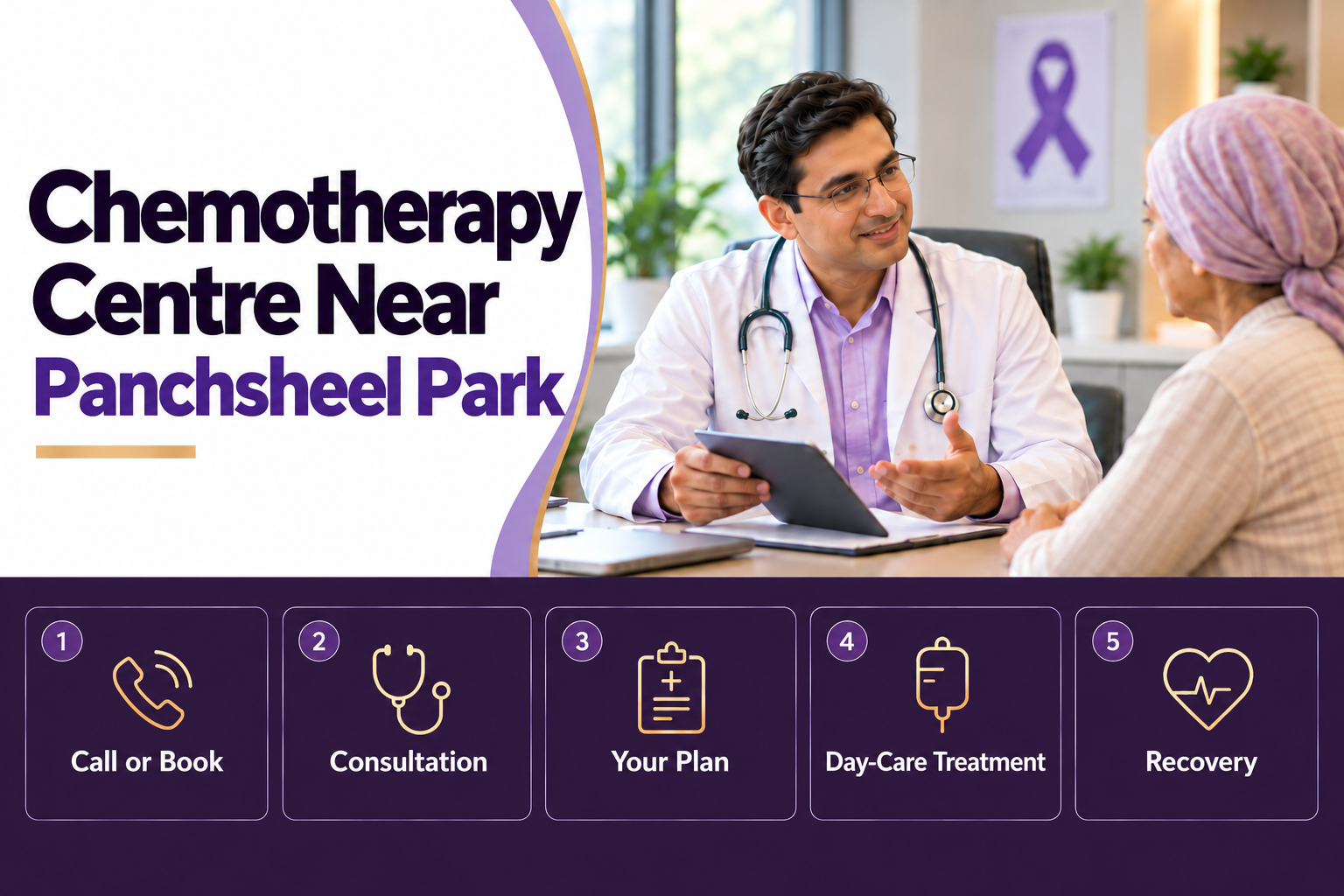
Shichim follows a structured care pathway beginning with booking and consultation with a senior oncologist. A personalised treatment plan is then developed according to the patient's cancer type, stage, condition, and clinical needs. Eligible patients can receive day-care treatment without routine overnight admission, followed by monitoring, nutrition, recovery, and ongoing support.
What Is a Chemotherapy Centre Near Panchsheel Park?
A chemotherapy centre near Panchsheel Park is an oncology facility where suitable patients can receive prescribed chemotherapy and related supportive care under professional supervision.
Chemotherapy uses anti-cancer medicines to destroy cancer cells or interfere with their ability to grow and divide. Because many chemotherapy medicines travel through the bloodstream, they can treat cancer cells in different areas of the body.
However, chemotherapy is not one standard treatment. Different cancers may require different medicines, combinations, schedules, and treatment durations.
The treatment strategy depends on factors such as cancer type, stage, pathology findings, overall health, previous treatment, and individual clinical requirements.
A well-organised chemo centre near Panchsheel Park should therefore connect specialist consultation, treatment planning, chemotherapy administration, monitoring, and recovery support.
Why Is Chemotherapy Used?
Chemotherapy can have different purposes depending on the patient's diagnosis.
In some cases, chemotherapy is used as a primary cancer treatment. It may also be given before surgery to reduce the size of a tumour. This is commonly called neoadjuvant chemotherapy.
Chemotherapy given after surgery may be used to address microscopic cancer cells that could remain after the primary tumour has been removed. This is known as adjuvant chemotherapy.
In other situations, chemotherapy may be combined with radiation therapy, targeted therapy, immunotherapy, or other treatment approaches.
For advanced cancers, systemic treatment may sometimes be used to control disease, manage symptoms, or support quality of life.
The treating oncologist determines the purpose of chemotherapy according to the individual clinical situation.
Personalised Chemotherapy Planning
Modern chemotherapy near Panchsheel Park should be based on individual clinical needs rather than a one-size-fits-all approach.
Before recommending treatment, an oncologist may review pathology reports, imaging, blood investigations, previous treatments, medical history, existing health conditions, and current medicines.
For certain cancers, biomarker or molecular testing may also help guide treatment decisions.
The final plan can determine which medicines are used, how they are administered, the treatment schedule, monitoring requirements, and supportive care.
At Shichim, the treatment plan is personalised according to the patient's cancer type, stage, condition, and clinical requirements.
Types of Chemotherapy
Intravenous Chemotherapy
Intravenous chemotherapy involves administering prescribed anti-cancer medicines through a vein.
Treatment duration varies according to the medicines and protocol. Patients are monitored during administration, and supportive medicines may also be provided when required.
Oral Chemotherapy
Certain chemotherapy medicines are available as tablets or capsules.
Although these medicines may be taken at home, they still require appropriate medical supervision. Patients should follow the prescribed schedule carefully and should not change their dose without medical advice.
Combination Chemotherapy
Some treatment plans use multiple anti-cancer medicines together. Different medicines may act on cancer cells through different mechanisms.
The combination is selected according to the cancer diagnosis and treatment objectives.
Neoadjuvant and Adjuvant Chemotherapy
Neoadjuvant chemotherapy is administered before another primary treatment, such as surgery, in selected situations.
Adjuvant chemotherapy is generally given after primary treatment when clinically appropriate.
Both approaches are selected according to individual treatment requirements.
Understanding Day Care Chemotherapy Panchsheel Park
Day care chemotherapy Panchsheel Park allows eligible patients to receive prescribed treatment without routine overnight hospital admission.
Patients arrive for their scheduled therapy and undergo appropriate clinical checks. The medical team may review recent investigations, symptoms, current medicines, and overall condition before treatment begins.
Once the patient is medically suitable to proceed, the prescribed treatment can be administered under professional supervision.
After treatment and the required observation are completed, eligible patients can return home following medical clearance.
Day-care chemotherapy can make repeated treatment cycles easier to manage. However, it is not appropriate for every patient or treatment protocol. Some patients may require extended monitoring or hospital-based care.
Chemotherapy Journey at Shichim
1. Call or Book
The journey begins with booking. A coordinator reaches out and helps guide the patient through the next steps.
Patients can keep pathology reports, imaging, laboratory investigations, prescriptions, and previous treatment records ready for their consultation.
2. Consultation
A senior oncologist listens to the patient's concerns, evaluates the available medical information, and explains the condition and treatment options clearly.
Additional investigations may be recommended when more clinical information is required.
3. Your Personalised Plan
A treatment plan is developed according to the patient's cancer type, stage, condition, previous treatment, and other relevant clinical factors.
Patients should understand why chemotherapy is recommended, how it will be administered, and what monitoring may be required.
4. Day-Care Treatment
Eligible patients can receive prescribed therapy through the day-care model.
Treatment is provided under professional supervision without routine overnight admission. After appropriate observation and medical clearance, the patient can return home.
5. Recovery
Cancer care continues after the treatment session.
Shichim's pathway includes ongoing monitoring, nutrition, recovery guidance, and support throughout the treatment journey.
What Happens Before and During Chemotherapy?
Before chemotherapy, the oncology team may review blood investigations, symptoms, current medicines, previous side effects, and overall health.
These assessments help determine whether treatment can proceed as planned.
During intravenous chemotherapy, medicines are administered according to the prescribed protocol. Supportive medicines may sometimes be given before treatment to help manage expected effects.
Patients are monitored during therapy and should immediately inform the medical team if they experience unusual symptoms.
At an outpatient chemotherapy Panchsheel Park facility, eligible patients can return home after treatment and appropriate medical clearance.
Day-Care vs Inpatient Chemotherapy
| Care Factor | Day-Care Chemotherapy | Inpatient Chemotherapy |
|---|---|---|
| Treatment setting | Outpatient oncology facility | Hospital-based admission |
| Overnight stay | Usually unnecessary for eligible patients | Available when medically required |
| Monitoring | During therapy and observation | Extended monitoring available |
| Flexibility | Suitable for planned outpatient treatments | Suitable for intensive treatment needs |
| Recovery | Usually continues at home | May initially continue in hospital |
| Suitability | Selected patients and therapies | More complex clinical situations |
Neither approach is automatically better. The patient's medical condition and treatment requirements should determine the appropriate setting.
Managing Chemotherapy Side Effects
Chemotherapy affects every patient differently.
Possible side effects can include fatigue, nausea, appetite changes, hair loss, mouth problems, bowel changes, and changes in blood cell counts. The exact effects depend on the medicines being used.
Patients should report new, persistent, or worsening symptoms to their oncology team.
Supportive care can help manage many treatment-related effects, but patients should avoid changing medicines or using unverified remedies without medical guidance.
Nutrition and Recovery During Chemotherapy
Cancer treatment may affect appetite, taste, digestion, body weight, and energy levels.
Good nutritional support can therefore become an important part of recovery.
There is no single cancer diet suitable for everyone. Nutritional guidance should consider the patient's treatment, symptoms, medical condition, and individual needs.
Shichim includes nutrition and ongoing support within its recovery pathway.
Patients should also discuss supplements with their healthcare team because some products may interfere with cancer medicines.
Monitoring Treatment Response
Chemotherapy requires regular monitoring.
Depending on the cancer and treatment plan, monitoring may include blood investigations, imaging, physical examinations, and symptom assessments.
These evaluations help the oncology team understand how the patient is tolerating therapy and how the disease is responding.
This is why choosing a chemotherapy centre near Panchsheel Park should involve looking at the complete care pathway rather than only the treatment session itself.
How to Choose a Chemo Centre Near Panchsheel Park
When selecting a chemo centre near Panchsheel Park, convenience is important, but it should not be the only consideration.
Patients should look for specialist oncology consultation, personalised treatment planning, appropriate supervision, regular monitoring, supportive care, nutrition guidance, and continuity.
Clear communication is equally important. Patients should understand why chemotherapy is being recommended, what happens during treatment, what side effects may occur, and how treatment response will be monitored.
Why Choose Shichim?
Patients searching for a chemotherapy centre near Panchsheel Park may benefit from Shichim's structured and personalised approach.
The process begins with booking and coordination, followed by consultation with a senior oncologist. The patient's medical information is evaluated and a personalised treatment strategy is developed.
When clinically appropriate, eligible patients can receive treatment through a day-care model without routine overnight admission.
Shichim also focuses on what happens after each treatment session through monitoring, nutrition, recovery guidance, and ongoing support.
This helps connect consultation, chemotherapy, and recovery within one organised care journey.
Future of Chemotherapy Care
Cancer treatment continues to evolve through advances in molecular diagnostics, biomarker testing, targeted therapies, immunotherapy, and supportive care.
Chemotherapy is increasingly integrated with other cancer treatments according to individual disease characteristics.
Day-care oncology is also becoming an important part of modern cancer care because suitable treatments can be delivered in an organised outpatient environment.
However, newer therapies are not automatically suitable for every patient. Specialist evaluation and personalised treatment planning remain essential.
Conclusion
Choosing a chemotherapy centre near Panchsheel Park involves more than finding a nearby facility. Effective chemotherapy care includes specialist consultation, personalised planning, professional treatment administration, monitoring, side-effect management, nutrition, recovery, and follow-up.
Patients considering chemotherapy near Panchsheel Park, day care chemotherapy Panchsheel Park, a chemo centre near Panchsheel Park, or outpatient chemotherapy Panchsheel Park should focus on the overall quality and continuity of care.
Shichim follows a structured pathway beginning with consultation and personalised planning. Eligible patients can receive day-care treatment without routine overnight admission, followed by ongoing monitoring and recovery support.
If you or a family member is preparing for chemotherapy, consider starting with a specialist oncology consultation at Shichim. Understanding the treatment plan and having a structured care pathway can help you move through each stage with greater clarity and confidence.