
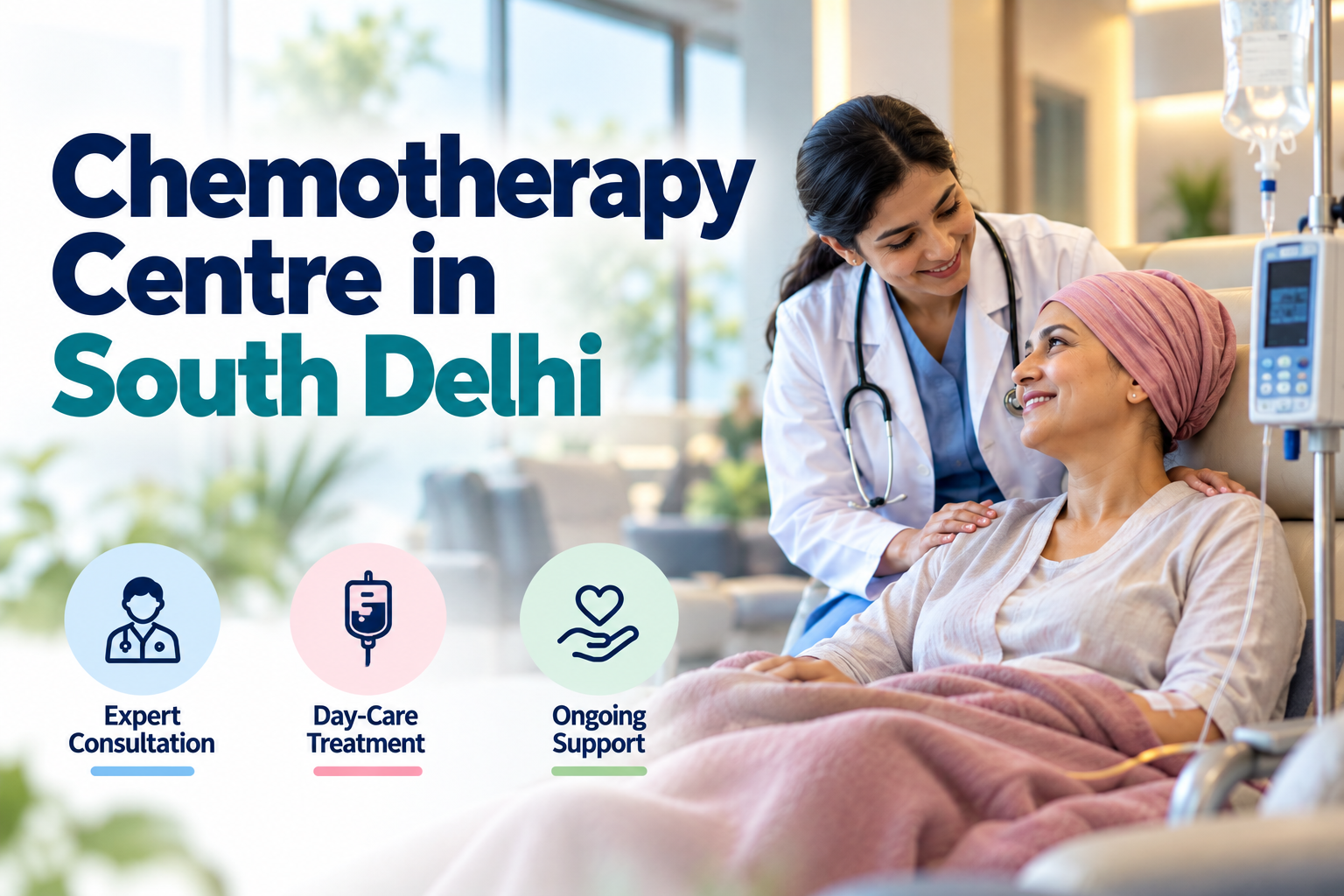
Finding the right chemotherapy centre in South Delhi is an important part of the cancer treatment journey. Patients and families often need more than a place where medicines are administered. They may also need specialist oncology consultation, personalised treatment planning, medical monitoring, clear guidance, and continued support throughout treatment and recovery.
Modern chemotherapy South Delhi services increasingly focus on personalised care. The treatment plan may vary according to cancer type, stage, pathology findings, overall health, previous treatment, laboratory results, and other individual clinical factors.
For suitable patients, day-care oncology can also make certain treatments possible without routine overnight hospital admission. At SHICHIM, the care journey connects senior oncologist consultation, personalised treatment planning, day-care treatment when clinically appropriate, and ongoing recovery support.
What Is a Chemotherapy Centre in South Delhi?
A chemotherapy centre in South Delhi is a healthcare facility where prescribed chemotherapy can be administered under appropriate medical supervision.
However, chemotherapy care involves more than administering medicines.
Before treatment begins, an oncologist may review the patient's diagnosis, pathology reports, scans, laboratory investigations, symptoms, previous treatment, current medicines, and overall health.
Based on this information, an individual treatment plan can be developed.
Patients may also require monitoring during and after chemotherapy. Follow-up consultations can help evaluate symptoms, review investigations, monitor treatment progress, and determine whether changes are medically necessary.
A structured chemotherapy clinic South Delhi therefore forms part of a wider cancer care pathway.
Understanding Chemotherapy South Delhi
Chemotherapy uses medicines to destroy cancer cells, slow their growth, or control the disease.
Not every cancer patient requires chemotherapy. The decision depends on the cancer type, stage, treatment goals, pathology findings, previous therapies, overall health, and other medical considerations.
Chemotherapy may be used before surgery in some situations or after surgery in others. It can also be used as a primary treatment or combined with radiation therapy and other cancer treatments.
Patients exploring chemotherapy South Delhi should therefore receive an individual oncology assessment before treatment is planned.
The medicines, combinations, treatment schedule, and duration can differ considerably between patients.
What Is Day Care Chemotherapy South Delhi?
Day care chemotherapy South Delhi allows eligible patients to receive prescribed cancer treatment without routine overnight hospital admission.
Patients generally arrive at the centre, complete the required assessment, receive their treatment under medical supervision, and remain under observation as necessary.
After treatment and medical clearance, suitable patients can return home the same day.
Day-care chemotherapy is not appropriate for every patient or every treatment protocol.
The treating oncologist considers the patient's overall condition, prescribed medicines, treatment duration, monitoring needs, and other clinical factors before deciding whether day-care treatment is suitable.
Outpatient Chemotherapy South Delhi
Outpatient chemotherapy South Delhi generally refers to cancer treatment delivered without an overnight hospital stay.
For suitable patients, this approach can allow treatment to fit more easily into their routine while maintaining appropriate medical supervision.
Outpatient treatment does not mean that monitoring is unnecessary.
Patients may still require laboratory investigations, pre-treatment assessment, symptom evaluation, monitoring during therapy, and follow-up consultations.
The main difference is that eligible patients can return home after completing treatment and the required observation period.
How Chemotherapy Treatment Is Planned
Chemotherapy planning begins with oncology evaluation.
The oncologist reviews medical information and determines whether chemotherapy is appropriate. If recommended, the treatment plan may specify the medicines, administration method, treatment schedule, monitoring requirements, and follow-up process.
The treatment plan may also be reviewed over time.
If new test results become available, symptoms change, or the patient's medical condition changes, the oncology team may reassess the existing strategy.
This personalised approach helps ensure treatment remains aligned with the patient's current clinical requirements.
SHICHIM's Chemotherapy Care Journey
SHICHIM follows a structured pathway that connects consultation, treatment, monitoring, and recovery.
Call or Book
The journey begins when a patient requests an appointment. A coordinator helps guide the patient through the initial process.
Patients can prepare pathology reports, imaging reports, laboratory investigations, prescriptions, and previous treatment records before consultation.
Consultation
A senior oncologist listens to the patient's concerns, evaluates available medical information, and explains the possible next steps.
Patients and families can use this consultation to ask questions about the diagnosis and recommended treatment.
Your Personalised Plan
After evaluation, a personalised treatment plan can be developed according to the cancer type, stage, overall condition, previous treatment, and other relevant clinical factors.
If chemotherapy is recommended, the treatment process and monitoring requirements can be explained.
Day-Care Treatment
When clinically appropriate, eligible patients can receive prescribed treatment in a day-care environment.
Treatment is provided under medical supervision. Following the required observation and medical clearance, suitable patients can return home.
Recovery
Cancer care continues beyond the chemotherapy session.
Ongoing monitoring, nutrition guidance, follow-up consultations, symptom assessment, and supportive care can form part of the recovery process.
Day-Care vs Inpatient Chemotherapy
Patients searching for a chemo centre South Delhi may encounter both day-care and inpatient treatment options.
| Care Factor | Day-Care Chemotherapy | Inpatient Chemotherapy |
|---|---|---|
| Treatment setting | Dedicated day-care facility | Hospital admission |
| Overnight stay | Usually not required for eligible patients | May be required |
| Monitoring | During treatment and observation | Extended monitoring |
| Daily routine | Suitable patients may return home after clearance | Patient remains admitted as required |
| Suitability | Selected protocols and medically suitable patients | Cases requiring greater medical support |
| Follow-up | Connected with ongoing oncology care | Continues after hospital discharge |
Neither setting is automatically better. The appropriate option depends on the patient's treatment protocol and medical requirements.
What to Look for in a Chemotherapy Centre in South Delhi
Choosing a chemotherapy centre in South Delhi should involve more than finding the nearest facility.
Patients should consider oncology expertise, personalised treatment planning, appropriate treatment supervision, monitoring, communication, and continuity of care.
A good chemotherapy clinic South Delhi should allow patients to understand why chemotherapy has been recommended and what happens before, during, and after treatment.
Continuity is especially important because chemotherapy may involve repeated cycles, investigations, consultations, and follow-up appointments.
A structured system can help keep these stages connected.
Preparing for a Chemotherapy Appointment
Patients should follow the specific instructions provided by their oncology team because preparation requirements can vary according to the treatment protocol.
Keep pathology reports, laboratory results, prescriptions, and treatment records organised.
Patients should also provide an accurate list of medicines, vitamins, supplements, and herbal products they currently use.
Any new or worsening symptoms should be communicated to the healthcare team before treatment.
Patients should avoid changing prescribed medicines or using new supplements without discussing them with their treating professionals.
Common Challenges During Chemotherapy
Chemotherapy affects patients differently.
Depending on the treatment, some patients may experience fatigue, nausea, appetite changes, hair changes, changes in blood counts, or other effects.
The oncology team can explain which effects may be associated with the specific treatment being administered.
One common mistake is comparing treatment experiences too closely with another cancer patient. Even patients receiving similar medicines can respond differently.
Patients should communicate treatment-related concerns to their healthcare team rather than relying only on online advice or another person's experience.
Monitoring During Chemotherapy
Monitoring is an important part of chemotherapy South Delhi.
Before certain treatment sessions, the healthcare team may review laboratory results, symptoms, general health, and other relevant information.
Patients are monitored during treatment according to their individual requirements.
Follow-up can help the oncology team evaluate symptoms, review treatment progress, and determine the next steps.
Patients should also understand which symptoms require prompt medical attention and follow the guidance provided by their treating team.
Why Consider SHICHIM for Chemotherapy Care?
For patients looking for a chemotherapy centre in South Delhi, SHICHIM focuses on providing a connected and personalised care journey.
The process begins with consultation by a senior oncologist who evaluates the patient's medical information and listens to their concerns.
A personalised treatment plan is then developed based on the cancer type, stage, overall condition, and other relevant clinical factors.
When chemotherapy is appropriate for day-care administration, eligible patients can receive treatment under medical supervision and return home after the required observation and medical clearance.
SHICHIM's pathway also includes ongoing monitoring, nutrition guidance, and recovery support.
This helps connect consultation, treatment, and follow-up instead of treating each stage as a separate experience.
Best Practices During Chemotherapy
Patients should follow their oncology team's treatment schedule and medication instructions carefully.
Keep medical reports, prescriptions, laboratory results, and treatment records organised and available.
Report significant symptoms or changes in health to the healthcare team.
Do not independently stop prescribed medicines or change treatment schedules.
Supplements, herbal remedies, and significant dietary changes should also be discussed with healthcare professionals.
Reliable communication with the oncology team can help patients manage questions and concerns throughout their treatment journey.
Conclusion:
Choosing the right chemotherapy centre in South Delhi is an important part of cancer care. Chemotherapy involves more than receiving medicines. Specialist assessment, personalised treatment planning, medical supervision, monitoring, patient education, and continued recovery support are all important.
Whether you are searching for chemotherapy South Delhi, day care chemotherapy South Delhi, a chemo centre South Delhi, outpatient chemotherapy South Delhi, or a chemotherapy clinic South Delhi, the focus should remain on medically appropriate and personalised care.
SHICHIM follows a structured pathway connecting senior oncologist consultation, personalised treatment planning, day-care treatment when clinically appropriate, and ongoing monitoring and recovery support.
If chemotherapy has been recommended for you or a family member, consider scheduling an oncology consultation to better understand the treatment plan and available care options. A specialist assessment can help clarify the recommended therapy and create a personalised pathway for ongoing cancer care.