Cancer treatment can be physically and emotionally challenging for patients and their families. When chemotherapy becomes part of the treatment plan, choosing the right chemotherapy centre in Green Park can help make the journey more organised, comfortable, and easier to understand. Patients need more than a place where medicines are administered. They need medical supervision, personalised treatment planning, monitoring, supportive care, and clear guidance throughout the treatment journey.
Modern cancer care has made it possible for many eligible patients to receive chemotherapy in a day-care setting. Instead of staying in a hospital overnight, patients can receive their prescribed treatment under medical supervision and return home the same day when clinically appropriate.
At Shichim, the care journey includes consultation with an oncologist, personalised treatment planning, day-care treatment, recovery monitoring, nutrition guidance, and ongoing support. For patients searching for chemotherapy Green Park, understanding how this complete process works can help them prepare for treatment with greater clarity.
What Is a Chemotherapy Centre in Green Park?
A chemotherapy centre in Green Park is a specialised healthcare facility where cancer patients receive prescribed anti-cancer medicines under professional medical supervision. Chemotherapy may be given intravenously, orally, through injections, or through other medically appropriate methods depending on the patient's treatment plan.
Chemotherapy works by destroying cancer cells or interfering with their ability to grow and divide. However, there is no single chemotherapy plan suitable for every patient.
The type of cancer, stage, overall health, previous treatments, laboratory findings, and treatment objectives can all influence the therapy recommended by an oncologist.
A well-organised chemo centre Green Park therefore focuses not only on administering chemotherapy but also on evaluating the patient before treatment, monitoring during therapy, managing possible side effects, and planning follow-up care.
Understanding Day Care Chemotherapy Green Park
Day care chemotherapy Green Park allows eligible patients to receive cancer treatment without routine overnight hospital admission. The patient visits the centre, completes the required medical assessment, receives the prescribed treatment, remains under observation when necessary, and may return home after the medical team determines that it is appropriate.
This model can be particularly helpful for treatments that do not require prolonged hospitalisation.
Patients can recover in their familiar home environment while continuing to receive scheduled cancer treatment. It may also reduce disruption to everyday family routines.
However, day-care chemotherapy is not suitable for every person or every chemotherapy regimen. The oncologist must determine whether outpatient treatment is clinically appropriate based on the patient's health, treatment type, monitoring requirements, and possible risks.
How Chemotherapy Works
Chemotherapy uses medicines that target rapidly growing cancer cells. These medicines may destroy cancer cells, slow their growth, or prevent them from multiplying.
Because some healthy cells also grow quickly, chemotherapy can affect them as well. This is why patients may experience side effects such as fatigue, nausea, appetite changes, hair loss, digestive problems, mouth sensitivity, or changes in blood-cell counts.
The effects vary significantly from one patient to another.
Chemotherapy is commonly organised into treatment cycles. A patient receives treatment according to a planned schedule followed by a recovery period. Before another cycle begins, the oncology team may evaluate symptoms, laboratory results, overall health, and treatment tolerance.
This makes continuous monitoring an important part of care at a chemotherapy clinic Green Park.
Personalised Chemotherapy Treatment Planning
Cancer treatment should be personalised because every patient's condition is different.
Before developing a chemotherapy plan, an oncologist may evaluate the cancer type and stage, pathology results, previous treatment history, general health, organ function, other medical conditions, and treatment objectives. Biomarker or molecular information may also be considered when relevant.
Based on this information, a personalised treatment strategy can be developed.
The plan may define which medicines will be used, how they will be administered, the treatment schedule, required investigations, supportive medications, and follow-up.
Treatment plans may also change over time. If laboratory findings, symptoms, side effects, or treatment response change, the oncology team may reassess the treatment approach.
This is why personalised and ongoing assessment is an important consideration when selecting a chemotherapy centre in Green Park.
The Shichim Chemotherapy Care Journey
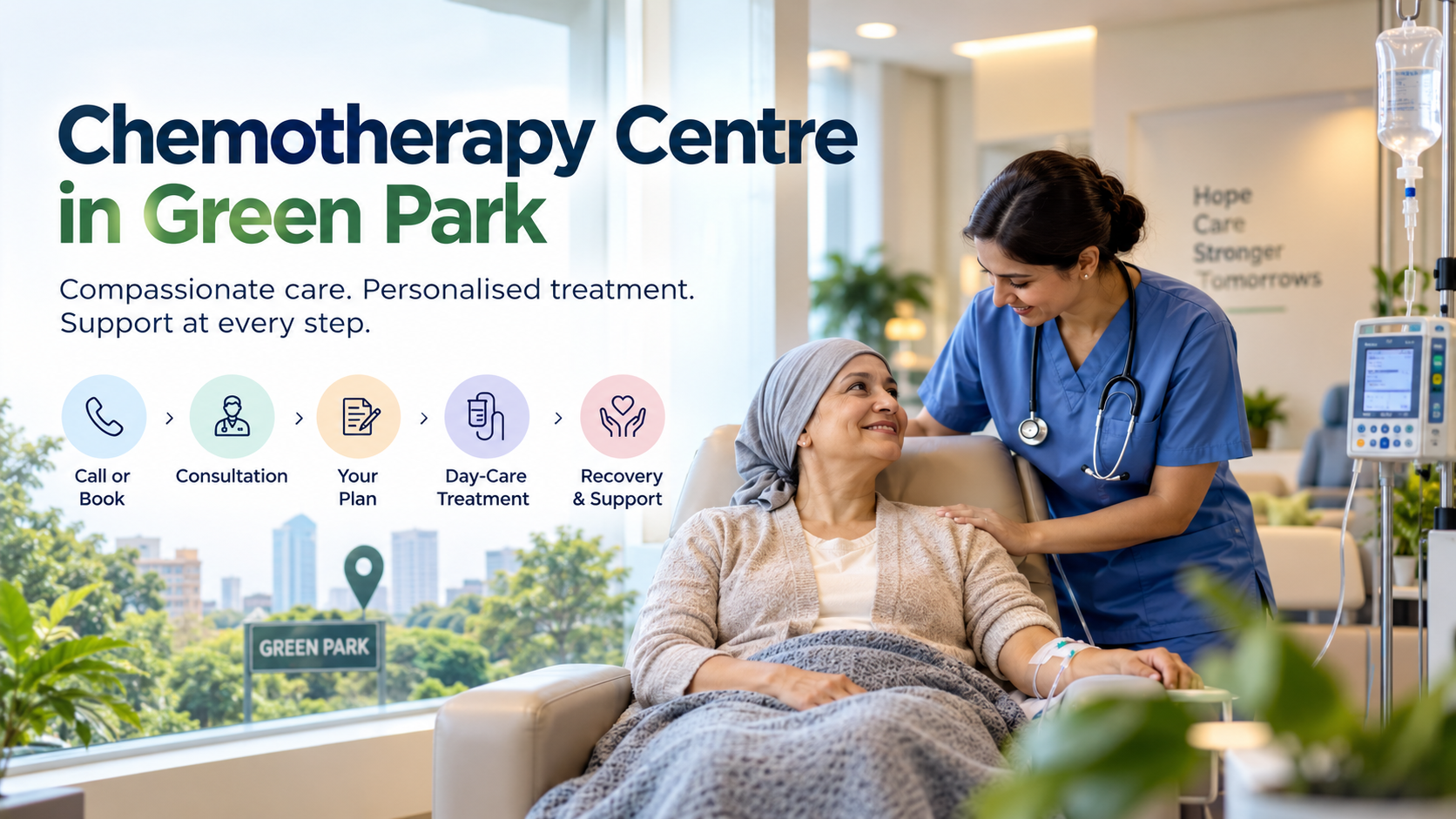
Shichim follows a structured care journey designed to support patients from their initial appointment through treatment and recovery.
1. Call or Book
The journey begins when the patient or family requests an appointment. A coordinator helps guide the patient towards the appropriate next step.
Patients should keep their previous medical records, pathology reports, scans, prescriptions, and treatment history organised for the consultation.
2. Consultation
A senior oncologist listens to the patient, reviews available medical information, evaluates the condition, and explains the treatment approach.
This is also an opportunity for patients and families to ask questions about chemotherapy, possible side effects, treatment duration, monitoring, and supportive care.
3. Personalised Treatment Plan
After evaluation, a treatment plan is developed according to the patient's cancer type, stage, health condition, and clinical needs.
This helps ensure that treatment decisions are based on the individual patient rather than a standard approach.
4. Day-Care Treatment
Eligible patients receive their prescribed chemotherapy at the centre under medical supervision.
With outpatient chemotherapy Green Park, suitable patients can complete their treatment without routine overnight admission and return home the same day when medically appropriate.
5. Recovery and Support
Care continues after the chemotherapy session.
Patients may require symptom monitoring, nutritional guidance, laboratory investigations, supportive medicines, and follow-up consultations. Shichim's approach includes ongoing monitoring, nutrition, and support during recovery.
What Happens During a Chemotherapy Session?
Knowing what to expect can reduce uncertainty, especially before the first chemotherapy session.
Before treatment begins, the healthcare team may review the patient's current symptoms, medical history, recent investigations, vital signs, and laboratory reports. Certain blood tests or other assessments may be required before treatment depending on the prescribed regimen.
If the patient is ready for treatment, supportive medicines may be administered when prescribed. These can help manage treatment-related symptoms such as nausea or certain reactions.
The chemotherapy medicine is then administered according to the oncologist's prescribed plan. During treatment, healthcare professionals monitor the patient's condition.
After the therapy is completed, the patient may remain under observation if necessary. Before leaving, the care team may provide guidance regarding medicines, food, hydration, activity, possible side effects, and warning symptoms.
This structured workflow is an important aspect of day care chemotherapy Green Park.
Day-Care vs Inpatient Chemotherapy
The appropriate treatment setting depends on the patient's clinical needs.
| Feature | Day-Care Chemotherapy | Inpatient Chemotherapy |
|---|---|---|
| Treatment setting | Dedicated outpatient/day-care facility | Hospital setting |
| Overnight admission | Usually not needed for eligible patients | Required |
| Monitoring | During treatment and observation as needed | Extended hospital monitoring |
| Routine flexibility | Patient may return home after treatment | Patient remains admitted |
| Suitability | Appropriate treatments and stable patients | More complex cases or intensive monitoring needs |
| Recovery environment | Usually at home | Hospital |
| Clinical support | Treatment and follow-up based | Continuous inpatient care available |
Neither approach is automatically better for every patient. The treatment setting should be determined according to the patient's condition and medical requirements.
Benefits of Day Care Chemotherapy
One of the main advantages of outpatient chemotherapy Green Park is that eligible patients can receive treatment without unnecessary overnight hospitalisation.
Returning home after treatment may allow patients to recover in a familiar environment. It can also reduce disruption to everyday routines.
A dedicated day-care model can create a more streamlined treatment process where assessment, preparation, therapy, monitoring, and discharge guidance are coordinated efficiently.
However, convenience should never replace clinical safety. A responsible chemo centre Green Park should determine whether day-care treatment is medically appropriate for each patient.
Safety and Monitoring During Chemotherapy
Safety is one of the most important considerations during cancer treatment.
Depending on the chemotherapy regimen, healthcare professionals may monitor blood counts, kidney and liver function, vital signs, symptoms, hydration, treatment tolerance, and other clinically relevant factors.
Patients should also understand which symptoms require medical attention.
Fever, breathing difficulties, severe weakness, persistent vomiting, unusual bleeding, dehydration, or other concerning symptoms should be communicated promptly to the treating medical team.
The exact precautions vary depending on the patient's treatment, so individual instructions from the oncology team should always be followed.
Managing Chemotherapy Side Effects
Chemotherapy affects every patient differently. Some people experience mild symptoms, while others may need additional supportive care.
Common effects can include fatigue, nausea, vomiting, appetite changes, altered taste, hair loss, bowel changes, mouth problems, or changes in blood-cell counts. Not every chemotherapy medicine causes the same effects.
Modern supportive care can help manage many treatment-related symptoms.
Patients receiving chemotherapy Green Park should communicate new or worsening symptoms rather than assuming they are unavoidable. Early reporting allows the healthcare team to evaluate the problem and recommend appropriate support.
Nutrition and Recovery During Chemotherapy
Nutrition can become challenging during cancer treatment. Nausea, reduced appetite, altered taste, digestive problems, mouth sensitivity, and fatigue can affect normal eating habits.
Patients should follow nutrition advice appropriate to their individual condition rather than adopting restrictive diets without medical guidance.
Hydration, adequate nutrition, rest, and symptom management can all form part of supportive care.
Shichim includes nutrition and ongoing recovery support within its broader cancer care journey, recognising that patient care continues beyond the chemotherapy session itself.
How to Prepare for Your First Chemotherapy Session
Patients visiting a chemotherapy centre in Green Park should prepare their medical documents and follow any instructions provided by the oncology team.
Relevant pathology reports, scans, prescriptions, previous treatment records, and recent investigations can help the medical team understand the patient's history.
Patients should also prepare questions about their treatment. Important areas to discuss include how chemotherapy will be administered, what the treatment aims to achieve, possible side effects, required tests, supportive medicines, follow-up, and symptoms requiring urgent attention.
Clear communication helps patients become active participants in their treatment journey.
How to Choose a Chemotherapy Centre in Green Park
Location is important, but it should not be the only factor when selecting a cancer treatment facility.
Patients should consider the availability of oncology expertise, personalised treatment planning, clinical monitoring, day-care facilities, supportive care, communication, and continuity of treatment.
A good chemotherapy clinic Green Park should clearly explain how treatment is planned, administered, monitored, and followed up.
For day-care treatment, patients should also understand what happens if symptoms occur after returning home and when medical assistance should be sought.
Why Consider Shichim for Chemotherapy in Green Park?
Shichim follows a coordinated approach that supports patients through different stages of cancer care.
The journey begins with booking and coordination, followed by consultation with a senior oncologist. The patient's condition is evaluated and the proposed treatment is explained clearly.
A personalised plan is then developed according to the cancer type, stage, and individual condition.
Suitable patients can receive day-care treatment without routine overnight admission. The care pathway then continues with ongoing monitoring, nutrition, and recovery support.
For patients looking for a chemotherapy centre in Green Park, this approach connects consultation, treatment planning, therapy, and follow-up within one structured patient journey.
The Future of Chemotherapy and Cancer Care
Cancer treatment is becoming increasingly personalised.
Advances in pathology, biomarkers, molecular testing, targeted therapies, immunotherapy, treatment monitoring, and supportive care are helping oncology teams develop more individualised treatment strategies.
Chemotherapy continues to play an important role in the management of many cancers, but it may also be combined with other therapies when clinically appropriate.
Day-care oncology is another important development. Suitable treatments can increasingly be delivered in outpatient environments while maintaining appropriate medical supervision.
The future of outpatient chemotherapy Green Park is therefore centred on personalisation, coordinated care, patient convenience, appropriate monitoring, and improved supportive treatment.
Conclusion
Choosing a chemotherapy centre in Green Park involves much more than finding a facility where chemotherapy medicines are administered. Patients need oncology expertise, personalised treatment planning, appropriate monitoring, supportive care, and clear guidance throughout their treatment journey.
For eligible patients, day care chemotherapy Green Park can provide a convenient treatment approach without routine overnight hospital admission. However, the decision should always be based on clinical suitability and an oncologist's assessment.
Shichim's care journey brings together consultation, personalised planning, day-care treatment, recovery monitoring, nutrition, and ongoing support. This structured approach helps patients and families understand each stage of treatment and move through the cancer care journey with greater clarity.
If you are exploring chemotherapy Green Park, chemo centre Green Park, chemotherapy clinic Green Park, or outpatient chemotherapy Green Park, consider discussing your medical reports and treatment requirements with an oncology professional. Explore Shichim's approach and request a consultation to understand the treatment pathway that may be appropriate for your individual needs.