
Chemotherapy Centre in Greater Kailash: Planning Your Care with Shichim
Finding a chemotherapy centre in Greater Kailash involves more than choosing a convenient location. Patients need to understand their treatment, know who supervises it, and feel confident about the support available between appointments.
Chemotherapy uses medicines to destroy cancer cells or slow their growth, requiring careful specialist supervision. Some people can receive chemotherapy during scheduled outpatient visits. Others need hospital admission.
For Greater Kailash residents exploring nearby care, Shichim lists a Hauz Khas centre and describes a consultation-led day-care model. Its website currently indicates an upcoming opening. Confirm consultation availability, operational status, and the specific treatment service before making arrangements.
Why Chemotherapy May Be Recommended
Before Surgery or Radiation
Neoadjuvant chemotherapy is given before another main treatment. In suitable situations, it can shrink a tumour and support the next stage of care.
Ask how response will be assessed and whether the findings could change subsequent treatment.
After Surgery
Adjuvant chemotherapy may be recommended to address cancer cells that could remain after surgery. Its purpose is to reduce recurrence risk when evidence supports this approach.
Feeling well after an operation does not necessarily mean additional treatment has no value. Discuss the expected benefit for your diagnosis.
To Control Disease or Symptoms
For some advanced cancers, chemotherapy aims to slow growth, reduce tumour-related problems, or help relieve symptoms.
The decision should consider quality of life as well as disease control. Ask how the team will review whether continuing treatment remains beneficial.
How Chemotherapy Can Be Delivered
Intravenous Treatment
Intravenous chemotherapy enters a vein through a cannula or another access device. Some patients use a port or catheter, depending on their treatment needs.
Appointment duration varies. Preparation, supportive medicines, infusion time, and observation may all contribute.
Before the first visit, ask how treatment will be delivered and what sensations or changes should be reported immediately.
Oral Treatment
Some chemotherapy medicines come as tablets, capsules, or liquids. Taking medicine at home does not remove the need for clinical supervision.
Follow the prescribed schedule, storage instructions, and handling precautions. Ask what to do if you miss a dose or vomit after taking it.
Never assume an extra dose is the correct response. Contact your team for medicine-specific instructions.
Other Routes
Selected treatments use injections or specialised delivery methods. These require facilities and expertise appropriate to the procedure.
Confirm that a proposed centre can provide your exact regimen.
Day-Care Versus Inpatient Chemotherapy
For people considering day care chemotherapy, Greater Kailash families should understand that eligibility depends on medical assessment.
Day-care treatment allows suitable patients to return home after their appointment and clearance. Hospital admission provides care when longer supervision or intensive support is needed.
| Consideration | Day-Care Chemotherapy | Inpatient Chemotherapy |
|---|---|---|
| Typical suitability | Selected regimens for clinically stable patients | Complex treatment or conditions requiring admission |
| Stay | Discharge after treatment and assessment | Overnight care when required |
| Monitoring | During the visit and planned follow-up | Continued monitoring during admission |
| Home arrangements | Transport and suitable support may be needed | Care provided within the hospital |
| Practical advantage | May reduce disruption to everyday routines | Access to prolonged medical supervision |
| Main limitation | Unsuitable for some treatments or complications | Time away from usual home routines |
For example, one patient may receive a planned infusion and recover at home. Another may need admission because of the regimen or an unexpected complication.
Same-day discharge is a clinical decision, not a guarantee.
Your Care Journey with Shichim
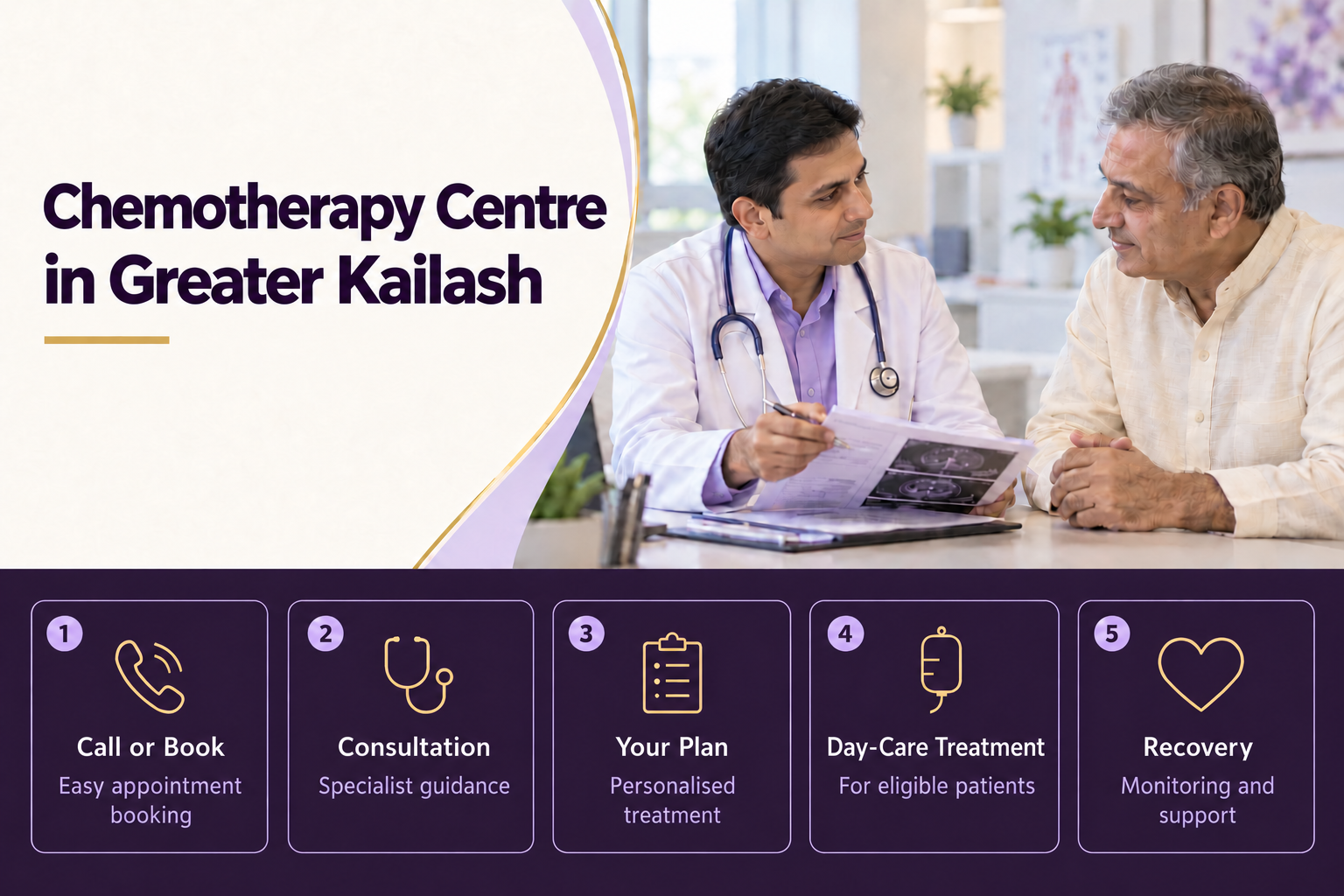
Shichim describes five stages that connect initial contact with ongoing support. Ask how each stage applies to your situation and which services are currently available.
1. Call or Book
Begin by requesting an appointment. A coordinator can explain the booking process, location, and documents needed.
Mention whether you have a confirmed diagnosis, an existing prescription, or a request for another opinion.
2. Consultation
A senior oncologist reviews your history and available reports, listens to concerns, and explains the findings.
Use this discussion to clarify treatment goals and whether additional investigations are needed before a decision.
3. Your Plan
The proposed approach considers the cancer type, stage, and condition. Ask how the schedule fits with other treatments and who coordinates care.
Request an explanation of preparation and monitoring requirements.
4. Day-Care Treatment
Eligible patients may receive suitable treatment without an overnight stay. Medical clearance determines whether returning home is appropriate.
Confirm observation arrangements, discharge instructions, and the process if hospital care becomes necessary.
5. Recovery
Ongoing monitoring, nutrition guidance, and support address needs during recovery. Ask when reviews are due and how to report concerns between appointments.
Choosing a Chemotherapy Clinic Near Greater Kailash
When evaluating a chemo centre, Greater Kailash residents should compare clinical capability and communication before considering convenience.
Ask who prescribes treatment, who administers it, and which clinician is available to assess problems. Confirm arrangements for treatment reactions and emergency transfer.
Before selecting a chemotherapy clinic, Greater Kailash families can use this checklist:
-
Relevant specialist experience with the diagnosis.
-
Capability to deliver the prescribed regimen.
-
Clear pretreatment testing requirements.
-
Written instructions for home care.
-
Defined arrangements for urgent concerns.
-
Coordination with other treating doctors.
Also discuss accessibility, appointment scheduling, and caregiver needs. A centre should explain which services are provided onsite and which require another facility.
Preparing for Your First Visit
Bring pathology reports, scans, recent blood tests, treatment summaries, and prescriptions. Include a list of medicines, supplements, allergies, and existing conditions.
Write down symptoms and questions in advance. This helps ensure that important concerns are discussed.
Ask whether normal medicines should be taken before the appointment and whether any eating instructions apply. Follow individual guidance rather than assuming fasting is necessary.
For outpatient chemotherapy, Greater Kailash residents should plan transport with flexibility. Tests, assessment, or observation may extend the visit.
A companion can help organise documents and remember instructions, while your own preferences remain central.
Managing Side Effects and Home Recovery
Nausea and Appetite Changes
Take prescribed anti-sickness medicines according to instructions. Report nausea or vomiting that prevents you from eating, drinking, or taking necessary medicines.
Ask for nutrition support if appetite changes or mouth discomfort make meals difficult. Advice should reflect your symptoms and medical needs.
Fatigue
Fatigue can affect concentration, work, and household tasks. Tell your team if tiredness becomes difficult to manage.
Plan essential activities around your energy and discuss appropriate activity levels. Arrange help with practical tasks when needed.
Infection Concerns
Some chemotherapy medicines reduce infection-fighting blood cells. Fever, chills, or other signs of infection require prompt contact with your care team.
Do not wait for the next appointment. Follow the urgent-care instructions provided and ask before taking medicine that could mask a fever.
Other Symptoms
Report new or worsening problems, including bowel changes, numbness, unusual bruising, or discomfort around an infusion site.
Keep a brief symptom diary. Record when symptoms started, how they affect daily life, and any medicines taken.
Common Mistakes to Avoid
Do not compare your treatment directly with another patient's experience. Different medicines and diagnoses can produce different effects.
Avoid these mistakes:
-
Changing doses without medical advice.
-
Starting supplements without checking interactions.
-
Missing reviews because you feel better.
-
Ignoring symptoms until the next cycle.
-
Assuming stronger side effects mean better treatment results.
Response is assessed through appropriate reviews and investigations. Side effects alone cannot show whether chemotherapy is working.
If seeking another opinion, share complete records and coordinate timing so necessary treatment is not unintentionally delayed.
Chemotherapy and Other Treatment Options
Chemotherapy is not interchangeable with every other cancer treatment. Surgery and radiation have different roles, while targeted therapy, immunotherapy, and hormone therapy suit selected situations.
Sometimes these approaches are combined. In other cases, a different treatment may be more appropriate.
Ask why a recommended option fits your diagnosis and what evidence supports it. Treatment should be chosen for expected clinical benefit, rather than because it sounds newer or more convenient.
Why Consider Shichim?
Shichim's stated approach combines consultation, individual planning, eligible day-care treatment, and recovery support. These stages give patients specific questions to discuss when considering nearby services.
Its listed centre is in Hauz Khas, rather than within Greater Kailash. Confirm opening status, appointments, and regimen availability directly.
The most useful consultation should leave you understanding the next step, the responsible clinician, and the support arrangements.
Future Directions in Chemotherapy Care
Biomarker testing can help guide treatment choices for selected cancers. Results may support the use of targeted medicines, immunotherapy, or relevant clinical trials.
Chemotherapy remains part of many treatment plans. Newer options require assessment against evidence, suitability, and potential harms.
Ask whether additional testing would meaningfully change your plan. Personalised care means selecting an appropriate approach, not automatically choosing the newest medicine.
Conclusion
Choosing a chemotherapy centre in Greater Kailash requires attention to specialist supervision, treatment capability, monitoring, and practical support. Clear information helps patients prepare for appointments and understand recovery needs.
Contact Shichim to discuss consultation availability and suitable services at its listed Hauz Khas centre. Review your reports, clarify your options, and take the next step towards a personalised treatment plan.