
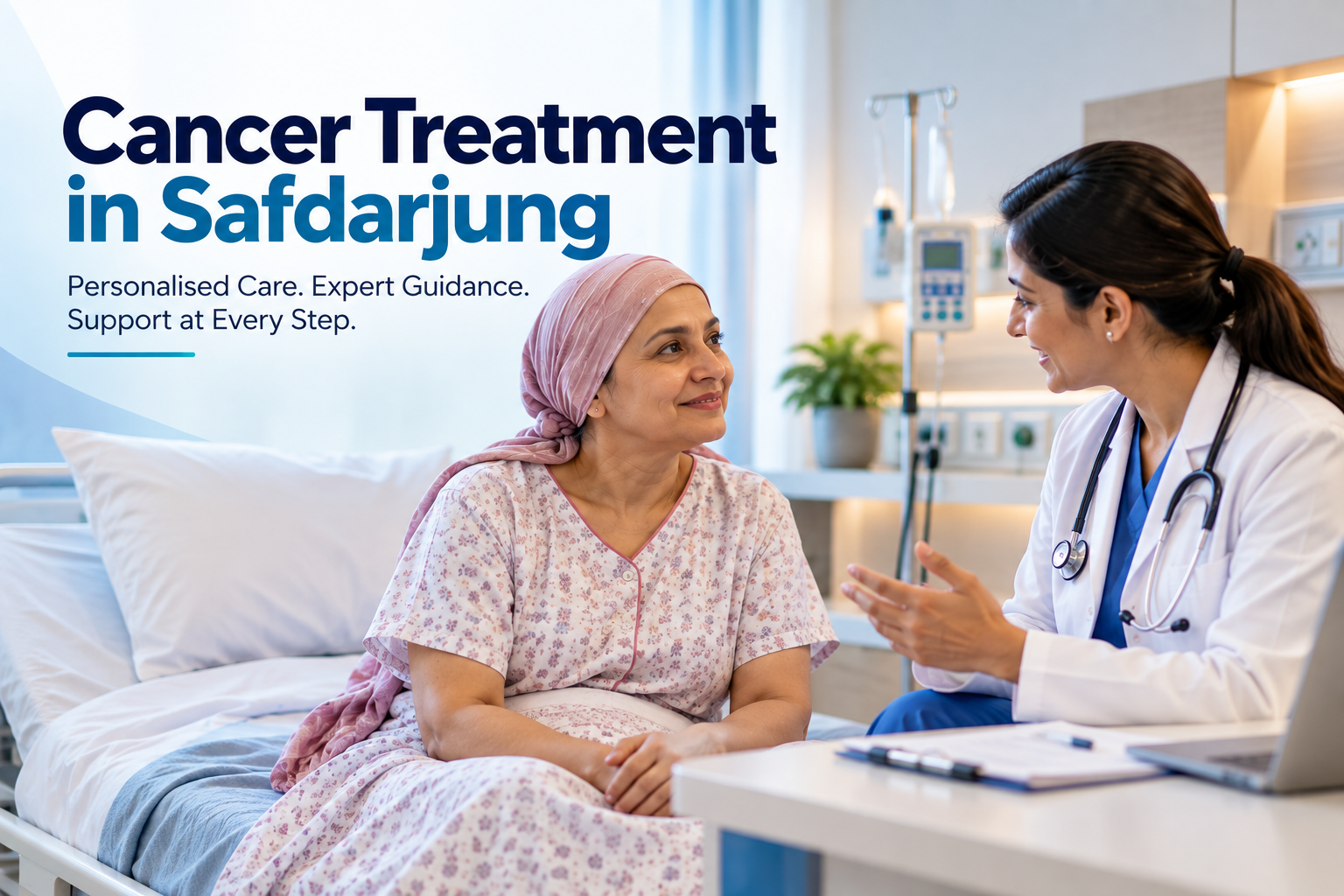
A cancer diagnosis can bring many questions for patients and their families. Understanding the disease, choosing the right treatment, managing side effects, and planning recovery can feel complicated. Finding reliable cancer treatment in Safdarjung is therefore not only about receiving medical treatment. It is also about getting specialist guidance, personalised planning, proper monitoring, and ongoing support throughout the cancer care journey.
Modern cancer treatment is increasingly personalised. The appropriate treatment can depend on the type of cancer, its stage, tumour characteristics, overall health, previous treatments, and individual medical requirements. Shichim follows a structured care pathway that includes consultation with a senior oncologist, personalised treatment planning, suitable day-care treatment, ongoing monitoring, nutrition guidance, and recovery support.
For patients searching for a cancer centre Safdarjung, cancer clinic Safdarjung, oncology centre Safdarjung, chemotherapy centre Safdarjung, or an oncologist Safdarjung, understanding how the treatment journey works can help them make more informed healthcare decisions.
What Is Cancer Treatment in Safdarjung?
Cancer treatment refers to medical approaches used to remove, destroy, control, or slow the growth of cancer cells. There is no single treatment that is appropriate for every patient. Even two people with cancer affecting the same organ may require different treatment strategies.
Effective cancer treatment in Safdarjung therefore begins with a detailed evaluation. An oncologist may review pathology reports, imaging studies, laboratory results, symptoms, medical history, current health, and previous treatments.
Depending on the diagnosis, additional investigations may also be recommended. These findings help the oncology team understand the disease and develop an appropriate treatment strategy.
Cancer treatment can involve chemotherapy, surgery, radiation therapy, targeted therapy, immunotherapy, hormone therapy, or a combination of different approaches.
Why Personalised Cancer Treatment Matters
Cancer is a broad group of diseases rather than one single condition. Different cancers can behave differently and respond differently to treatment.
Personalised cancer treatment in Safdarjung considers the characteristics of both the disease and the individual patient.
An oncologist Safdarjung may consider the cancer type and stage, pathology findings, relevant biomarkers, previous treatments, existing health conditions, current medications, and the patient's overall condition before recommending a treatment strategy.
Treatment may also need to change over time. Doctors can evaluate treatment response, side effects, laboratory findings, imaging results, and the patient's general condition throughout therapy.
This ongoing assessment allows cancer care to remain responsive to the patient's medical needs.
Types of Cancer Treatment in Safdarjung
Cancer care may involve one treatment method or several approaches used at different stages of the patient's journey.
Chemotherapy
Chemotherapy uses medicines designed to destroy cancer cells or interfere with their growth and division. It remains an important treatment for many types of cancer.
Depending on the diagnosis, chemotherapy may be used alone or alongside surgery, radiation therapy, immunotherapy, targeted therapy, or other treatments.
At a suitable chemotherapy centre Safdarjung, certain chemotherapy regimens can potentially be delivered through day-care treatment when medically appropriate. This means eligible patients can receive treatment under clinical supervision and return home after the required monitoring instead of staying overnight.
However, not every chemotherapy regimen or patient is suitable for day-care treatment. The oncologist determines the appropriate treatment setting.
Targeted Therapy
Targeted therapy focuses on specific molecules, proteins, or pathways that contribute to the growth of certain cancers.
Some patients may require biomarker or molecular testing to determine whether their cancer has characteristics that can potentially be targeted with specific medicines.
This approach demonstrates why personalised oncology is important. Two patients with apparently similar cancers may have different tumour characteristics and therefore require different treatment plans.
Immunotherapy
Immunotherapy helps the immune system recognise or respond to cancer in specific ways.
It has become an important treatment option for selected cancers. However, immunotherapy is not suitable for every patient. Cancer type, stage, biomarkers, previous treatments, and general health may influence whether it is considered.
Patients should discuss the potential benefits, limitations, side effects, and monitoring requirements with their treating oncologist.
Surgery and Radiation Therapy
Surgery may be recommended when a tumour can be removed and the procedure is clinically appropriate. It can sometimes be combined with treatment before or after the operation.
Radiation therapy uses carefully targeted high-energy radiation to damage cancer cells. It may be used independently or alongside chemotherapy, surgery, or other treatments.
A coordinated oncology centre Safdarjung can help patients understand how different treatment methods may fit into their overall care plan.
Shichim's Cancer Care Journey
Shichim follows a structured pathway designed to guide patients through different stages of cancer care.
Step 1: Call or Book
The journey begins when the patient or family contacts Shichim or submits a booking request. A coordinator can then help guide them toward the next step.
Patients can prepare relevant medical documents such as pathology reports, imaging reports, blood tests, previous treatment records, prescriptions, and current medication information before consultation.
Step 2: Consultation
A senior oncologist listens to the patient's concerns, reviews available medical information, evaluates the condition, and explains the situation as clearly as possible.
This consultation is also an opportunity to discuss treatment options, objectives, possible side effects, monitoring requirements, and the expected treatment journey.
Step 3: Personalised Treatment Plan
Following evaluation, an individual treatment plan can be developed according to the patient's cancer type, stage, condition, previous treatment, test findings, and other relevant medical factors.
The plan may include one treatment or a combination of therapies.
Cancer treatment plans can also evolve. If the patient's condition, treatment response, or test results change, the oncology team may reassess the strategy.
Step 4: Day-Care Treatment
When medically appropriate, eligible patients may receive treatment through a day-care model.
At a chemotherapy centre Safdarjung, this can allow suitable patients to receive prescribed therapy, remain under required medical supervision, and return home on the same day following clinical clearance.
Day-care treatment can make scheduled cancer therapy more convenient for appropriate patients without unnecessary overnight admission.
Step 5: Recovery and Ongoing Support
Cancer care does not necessarily finish when a treatment session ends.
Patients may require follow-up appointments, laboratory tests, imaging, symptom monitoring, nutrition guidance, and supportive care throughout recovery.
Shichim's approach includes ongoing monitoring and support to help patients navigate these stages.
Day-Care vs Inpatient Cancer Treatment
The right treatment setting depends on the patient's medical requirements. Day-care treatment can be suitable for selected therapies, while complex procedures or medical conditions may require hospital admission.
| Feature | Day-Care Treatment | Inpatient Treatment |
|---|---|---|
| Admission | Usually no overnight admission for suitable patients | Hospital admission may be required |
| Treatment environment | Structured outpatient setting | Hospital-based setting |
| Monitoring | Before, during, and after treatment as clinically required | Extended monitoring available when required |
| Flexibility | Useful for selected scheduled treatments | Suitable for treatments requiring longer observation |
| Recovery | Patient may return home after medical clearance | Recovery begins under hospital supervision |
| Suitability | Based on treatment and patient condition | Based on medical complexity and clinical requirements |
| Support | Oncology and nursing support during scheduled treatment | Broader inpatient support where necessary |
Neither option is universally better. The safest and most appropriate setting should be determined by the treating medical team.
What Happens at a Chemotherapy Centre Safdarjung?
Before chemotherapy, the clinical team may review blood tests, symptoms, medications, previous reactions, and the patient's general condition.
The oncologist determines whether treatment can proceed according to the prescribed protocol. Supportive medicines may sometimes be administered before or alongside chemotherapy to help manage treatment-related symptoms.
During treatment, the patient is monitored according to clinical requirements. After the prescribed therapy is completed, additional observation may be required before the patient is allowed to return home.
Patients should also receive guidance about expected side effects, medicines, nutrition, and symptoms that require medical attention.
A chemotherapy centre Safdarjung should therefore focus on much more than administering medicines. Appropriate evaluation, supervision, communication, and follow-up are important parts of the treatment process.
Importance of an Oncologist Safdarjung
An oncologist plays a central role throughout the cancer treatment journey.
The oncologist evaluates medical reports, develops treatment strategies, monitors treatment response, manages side effects, and modifies treatment when clinically necessary.
Communication is equally important.
Patients should understand why a treatment has been recommended, what it aims to achieve, how response will be monitored, and what symptoms should be reported.
An oncologist Safdarjung who communicates clearly can help patients and families better understand the medical decisions involved in their care.
Supportive Care During Cancer Treatment
Cancer treatment can affect more than the disease itself. Patients may experience changes in appetite, energy, digestion, sleep, activity levels, or general wellbeing.
Supportive care can help address some of these challenges.
Nutrition guidance may be useful for patients experiencing treatment-related dietary difficulties. Symptoms should also be communicated to the oncology team so they can determine whether additional evaluation or supportive treatment is needed.
Patients should avoid changing prescribed medicines or starting supplements without discussing them with their treating team. Even products described as natural may interact with cancer medicines.
A patient-focused cancer clinic Safdarjung should therefore combine cancer-directed treatment with appropriate supportive care and monitoring.
Monitoring Treatment and Recovery
Monitoring is an important part of cancer treatment in Safdarjung because the oncology team needs to understand how the patient is responding.
Depending on the diagnosis and treatment, monitoring may include physical examinations, symptom assessments, laboratory investigations, imaging studies, or other disease-specific tests.
These results help doctors determine whether treatment should continue as planned or whether changes need to be considered.
Follow-up also remains important after active treatment. Patients may require ongoing monitoring and supportive care depending on their diagnosis and individual circumstances.
How Modern Cancer Care Is Evolving
Cancer treatment continues to become increasingly precise and personalised.
Molecular diagnostics and biomarker testing can provide additional information about certain cancers. These findings may sometimes help doctors determine whether targeted treatments or immunotherapy could be appropriate.
Technology is also improving cancer care coordination. Digital medical records and better communication systems can help clinical teams maintain continuity between consultations and treatment sessions.
At the same time, oncology is placing greater emphasis on supportive care, nutrition, symptom management, recovery, and survivorship.
A modern oncology centre Safdarjung therefore needs to consider both cancer treatment and the broader patient journey.
Why Consider Shichim for Cancer Treatment in Safdarjung?
Shichim follows a structured cancer care pathway designed to provide clarity at each stage of the journey.
The process begins with booking and consultation with a senior oncologist. The patient's condition is evaluated before a personalised treatment plan is developed.
When clinically appropriate, eligible patients can receive day-care treatment without unnecessary overnight admission. The care journey then continues with monitoring, nutrition guidance, and support during recovery.
The pathway can be summarised as:
Call or Book → Consultation → Personalised Plan → Day-Care Treatment When Appropriate → Recovery and Ongoing Support
For patients exploring a cancer centre Safdarjung, cancer clinic Safdarjung, oncology centre Safdarjung, chemotherapy centre Safdarjung, or an oncologist Safdarjung, a coordinated pathway can make a complex treatment journey easier to understand and navigate.
Conclusion:
Choosing cancer treatment in Safdarjung is an important healthcare decision. Because every cancer and every patient can be different, treatment should begin with professional evaluation and an individualised care plan.
Modern cancer care may combine chemotherapy, targeted therapy, immunotherapy, surgery, radiation therapy, supportive care, and ongoing monitoring depending on the patient's diagnosis and medical requirements.
Shichim provides a structured journey from initial consultation and personalised planning through suitable day-care treatment and recovery support. The focus is on helping patients understand each stage while receiving care based on their individual condition.
If you are considering cancer treatment in Safdarjung, explore Shichim's cancer care services and request a consultation with an oncology professional. A specialist evaluation can help you understand the available treatment options and determine the appropriate next steps for your individual cancer care journey.