
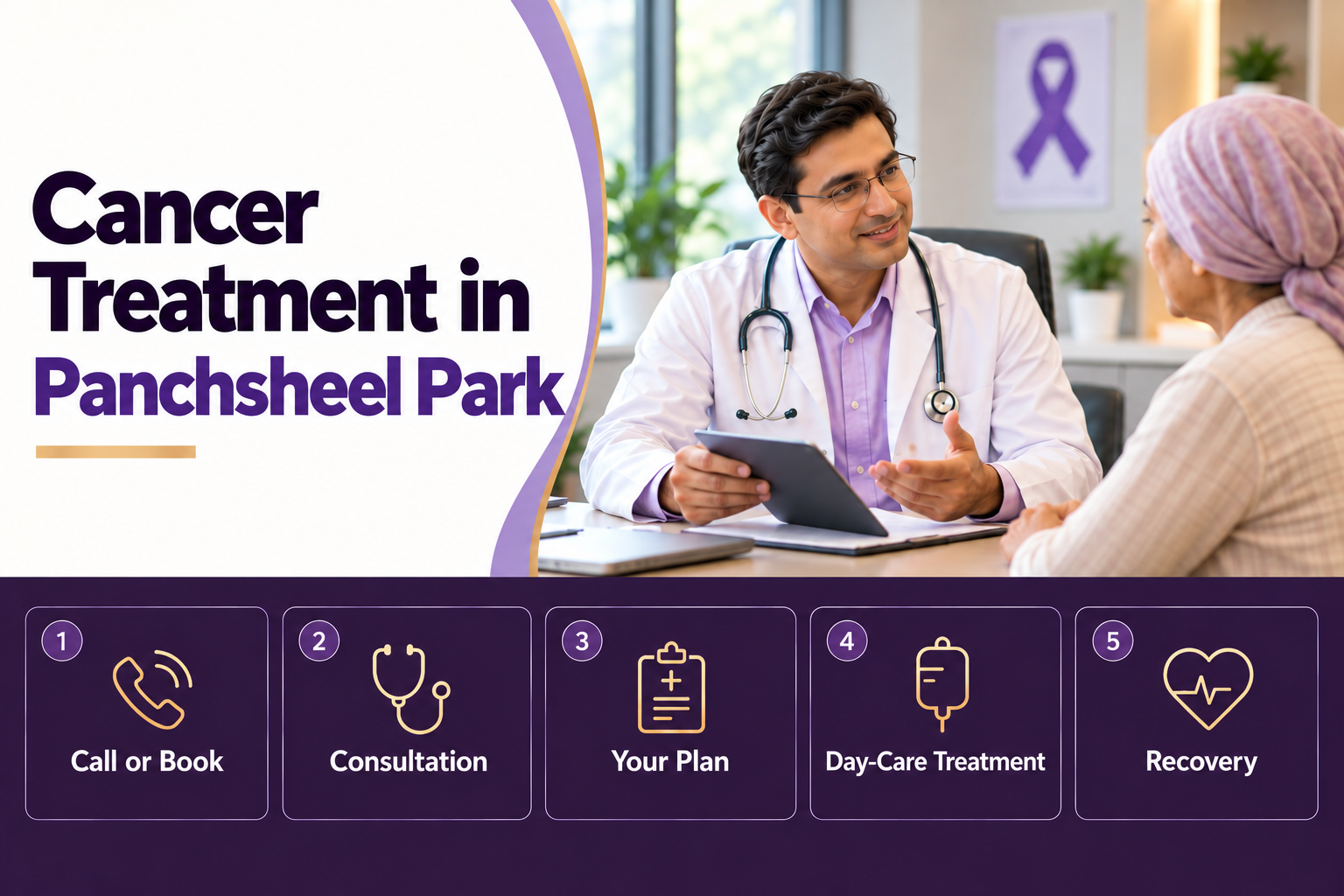
Cancer Treatment in Panchsheel Park: Personalised and Comprehensive Cancer Care
Finding the right cancer treatment in Panchsheel Park is an important step for patients and families facing a cancer diagnosis. Cancer care can involve diagnosis, staging, specialist consultation, treatment planning, therapy, monitoring, and recovery. A well-organised treatment pathway can help patients understand each stage and make informed decisions about their care.
Modern oncology focuses increasingly on personalised treatment. Two patients with the same broad type of cancer may require different therapies because their cancer stage, pathology, biological characteristics, overall health, and previous treatments may differ.
For people looking for cancer care Panchsheel Park, the goal should therefore be to find a care pathway that combines specialist evaluation, personalised planning, appropriate treatment, monitoring, and ongoing support.
At Shichim, the patient journey begins with booking and consultation with a senior oncologist. It continues through personalised treatment planning, day-care treatment when clinically appropriate, and ongoing monitoring, nutrition, recovery, and support.
Understanding Cancer Treatment in Panchsheel Park
Cancer treatment in Panchsheel Park refers to medical care designed to diagnose, manage, and treat different types of cancer. There is no single treatment suitable for every cancer patient.
Before recommending therapy, an oncologist may review pathology reports, imaging, laboratory investigations, symptoms, medical history, previous treatments, and the patient's overall health.
Depending on the type of cancer, additional molecular or biomarker testing may sometimes provide information that helps guide treatment decisions.
A suitable cancer centre Panchsheel Park should therefore focus on individual clinical needs rather than using the same treatment approach for every patient.
Why Personalised Cancer Care Matters
Cancer is a broad group of diseases with different biological characteristics and treatment requirements.
Personalised cancer care Panchsheel Park considers the individual characteristics of both the cancer and the patient.
For example, two patients may have cancer affecting the same organ but be diagnosed at different stages. Their pathology findings or general health may also differ. As a result, one patient may require surgery followed by systemic treatment, while another may need a different sequence of therapies.
At Shichim, treatment planning considers the patient's cancer type, stage, condition, and other relevant clinical factors.
This personalised approach helps create a clear treatment pathway suited to the patient's individual requirements.
Major Types of Cancer Treatment
Different treatment approaches may be used independently or in combination.
Chemotherapy
Chemotherapy uses anti-cancer medicines to destroy cancer cells or interfere with their growth and division.
It may be used before surgery, after surgery, alongside other treatments, or as a primary systemic therapy depending on the diagnosis.
The medicines, schedules, and number of treatment cycles vary according to the individual treatment plan.
Targeted Therapy
Targeted therapy focuses on specific biological features involved in the growth or survival of certain cancers.
Not every patient is suitable for targeted therapy. Biomarker or molecular testing may sometimes be required to determine whether an appropriate target is present.
Immunotherapy
Immunotherapy helps the immune system recognise or respond to cancer in specific clinical situations.
Its suitability depends on factors such as cancer type, biomarkers, previous treatment, and the patient's medical condition.
Hormonal Therapy
Some cancers depend on hormones for their growth. Hormonal therapy can interfere with these signals when medically appropriate.
Surgery and Radiation Therapy
Surgery may be used to remove a tumour or affected tissue, while radiation therapy uses high-energy radiation to target cancer cells in a particular area.
Patients may require one or several treatment approaches depending on their diagnosis.
Cancer-Care Journey at Shichim
Patients exploring cancer treatment in Panchsheel Park can benefit from understanding what happens at each stage of their care.
1. Call or Book
The journey starts when a patient or family member books a consultation. A coordinator reaches out and helps guide the next steps.
Patients can prepare their pathology reports, imaging results, laboratory investigations, prescriptions, and previous treatment records before the consultation.
2. Consultation
A senior oncologist listens to the patient's concerns, evaluates available medical information, and explains the situation clearly.
The doctor may review the cancer diagnosis, stage, previous treatment, symptoms, medical history, and general health.
Additional investigations may sometimes be recommended before treatment begins.
3. Your Personalised Plan
A personalised treatment strategy is developed according to the patient's cancer type, stage, medical condition, and clinical requirements.
The plan may involve systemic cancer treatment, supportive care, monitoring, or coordination with other oncology specialists.
4. Day-Care Treatment
When clinically appropriate, prescribed treatment may be provided through a day-care model.
Eligible patients receive treatment under professional supervision without routine overnight admission. They can return home on the same day after medical clearance.
5. Recovery
Cancer care continues beyond the treatment session.
Ongoing monitoring, nutrition guidance, symptom management, recovery support, and follow-up can remain important throughout the patient's treatment journey.
Day-Care Cancer Treatment
Day-care oncology can provide an organised treatment setting for suitable patients.
Instead of routine overnight hospital admission, eligible patients can arrive for their scheduled therapy, receive treatment under supervision, complete the necessary observation, and return home when medically cleared.
This approach can make repeated treatment cycles more manageable.
However, not every patient or therapy is appropriate for day-care treatment. Patients requiring extended monitoring or hospital-level support may need inpatient care.
The oncology team should determine the most appropriate treatment setting based on clinical requirements.
Day-Care vs Inpatient Cancer Treatment
| Factor | Day-Care Treatment | Inpatient Treatment |
|---|---|---|
| Setting | Outpatient oncology environment | Hospital admission |
| Overnight stay | Usually unnecessary for eligible patients | Available when medically required |
| Monitoring | During treatment and as required | Extended monitoring available |
| Flexibility | Suitable for planned outpatient therapy | Suitable for intensive treatment |
| Recovery | Usually continues at home | May initially continue in hospital |
| Suitability | Selected patients and treatments | More complex clinical situations |
Neither option is automatically better. The right setting depends on the patient's medical condition and treatment requirements.
Monitoring During Cancer Treatment
Monitoring is an important part of cancer treatment in Panchsheel Park.
Depending on the therapy, doctors may use blood investigations, imaging, physical examinations, and symptom assessments to evaluate treatment response and safety.
Patients should attend recommended follow-up appointments even if they feel well.
They should also report new or worsening symptoms to their medical team rather than assuming that every symptom is a normal treatment effect.
A structured cancer clinic Panchsheel Park should connect treatment with regular monitoring and follow-up rather than treating each session as an isolated appointment.
Managing Cancer Treatment Side Effects
Different cancer therapies can cause different side effects.
Chemotherapy, for example, may be associated with fatigue, nausea, appetite changes, hair loss, mouth problems, or changes in blood cell counts depending on the medicines being used.
Other therapies can have different effects.
Patients should follow personalised guidance from their oncology team rather than comparing their experience directly with another cancer patient's treatment.
Some treatment-related effects can be managed with supportive care, while others may require medical evaluation.
Nutrition and Recovery
Nutrition can become challenging during cancer treatment.
Some patients experience changes in appetite, taste, digestion, energy levels, or body weight. Appropriate nutritional guidance can help address individual needs.
Shichim includes nutrition and ongoing support within its recovery pathway.
Patients should avoid starting restrictive diets or supplements based only on online information. During active cancer treatment, major dietary changes and supplements should be discussed with appropriate healthcare professionals.
How to Choose a Cancer Centre Panchsheel Park
When choosing a cancer centre Panchsheel Park, location should not be the only consideration.
Patients should look for specialist oncology evaluation, personalised treatment planning, clear communication, appropriate monitoring, supportive care, and continuity.
A patient should understand why a treatment is recommended, what happens during therapy, how response will be monitored, and what support is available afterward.
An organised oncology centre Panchsheel Park should also recognise when additional specialist or hospital-based care is required.
Common Mistakes to Avoid
Patients should avoid making treatment decisions based solely on online information or another person's cancer experience.
Do not start, stop, or change prescribed medicines without consulting the treating medical team.
Patients should also avoid ignoring new or worsening symptoms and should follow the guidance provided by their oncology team.
Another common mistake is skipping follow-up appointments after treatment. Monitoring remains an important part of cancer care even after a treatment session has been completed.
Why Choose Shichim for Cancer Care?
For patients exploring cancer treatment in Panchsheel Park, Shichim provides a structured care pathway focused on individual needs.
The process begins with booking and consultation with a senior oncologist. The patient's diagnosis, cancer stage, overall condition, previous treatment, and other relevant medical information are evaluated.
A personalised treatment plan is then developed according to clinical requirements.
When appropriate, eligible patients can receive day-care treatment without routine overnight admission.
The care journey continues through ongoing monitoring, nutrition, recovery guidance, and support.
This approach connects consultation, treatment, and recovery instead of treating them as separate stages.
Future of Personalised Cancer Care
Cancer treatment continues to become more personalised.
Advances in biomarker testing, molecular diagnostics, targeted therapies, immunotherapy, and supportive care are helping oncologists better understand and manage certain cancers.
Day-care oncology is also allowing suitable therapies to be delivered without routine hospital admission for eligible patients.
However, newer treatment options are not automatically suitable for everyone. Specialist evaluation remains essential when selecting the appropriate treatment strategy.
Conclusion
Choosing the right cancer treatment in Panchsheel Park involves much more than finding a nearby treatment facility. Effective cancer care requires specialist evaluation, personalised planning, appropriate therapy, regular monitoring, supportive care, nutrition guidance, recovery, and follow-up.
Shichim follows a structured pathway beginning with booking and consultation with a senior oncologist. A personalised treatment plan is then developed according to the patient's cancer type, stage, medical condition, and clinical requirements.
For eligible patients, day-care treatment can provide an organised way to receive prescribed therapy without routine overnight admission, followed by ongoing monitoring and recovery support.
If you or a family member is exploring cancer care Panchsheel Park, a cancer centre Panchsheel Park, cancer clinic Panchsheel Park, or oncology centre Panchsheel Park, consider beginning with a specialist consultation at Shichim. Understanding the diagnosis and developing a personalised care pathway can help you make informed decisions about the next stage of treatment.