
Cancer Treatment in Lajpat Nagar: A Complete Guide to Personalised Cancer Care
Finding reliable cancer treatment in Lajpat Nagar is an important step for patients and families dealing with a cancer diagnosis. Cancer care is not limited to receiving medicines or undergoing a procedure. It involves specialist consultation, accurate assessment, personalised treatment planning, regular monitoring, supportive care, and recovery guidance. A well-organised treatment pathway can help patients understand what happens at every stage and make the overall journey easier to manage.
Modern oncology has become increasingly personalised. Two patients with the same type of cancer may require different treatment approaches depending on the cancer stage, tumour characteristics, overall health, previous treatments, and other medical factors. For people looking for cancer care Lajpat Nagar, choosing a centre that focuses on individual needs and continuity of care is therefore important.
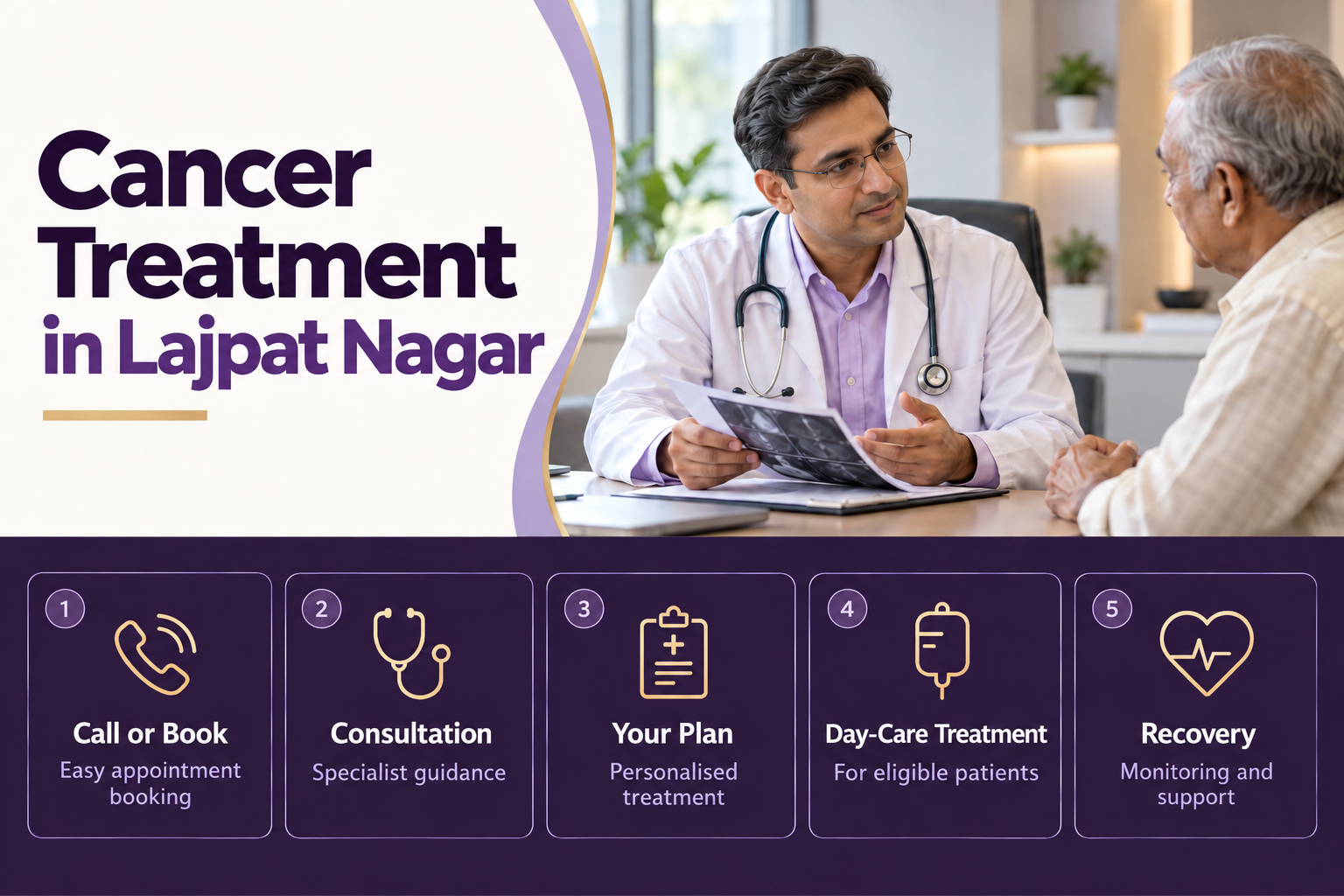
SHICHIM follows a structured cancer care pathway that begins with consultation and progresses through personalised planning, day-care treatment when clinically appropriate, and ongoing recovery support.
Understanding Cancer Treatment in Lajpat Nagar
Cancer treatment in Lajpat Nagar can involve different medical approaches depending on the diagnosis. Cancer is not a single disease, and every type behaves differently. This is why an oncologist must carefully evaluate the patient's condition before recommending treatment.
The evaluation may include pathology reports, blood investigations, imaging results, previous medical records, symptoms, current medicines, and overall health. In some cases, additional diagnostic or molecular tests may be recommended to better understand the cancer.
After evaluation, the oncologist can create an appropriate treatment strategy. This may involve chemotherapy, targeted therapy, immunotherapy, hormonal therapy, surgery, radiation therapy, supportive treatment, or a combination of different approaches.
Patients searching for a cancer treatment centre Lajpat Nagar should therefore focus on finding organised oncology care where treatment decisions are based on proper clinical evaluation rather than a standard approach for every patient.
Why Personalised Cancer Care Matters
Personalisation has become one of the most important principles of modern cancer treatment. Even patients with apparently similar cancers can respond differently to treatment.
A personalised treatment plan considers the cancer type and stage along with the patient's overall health, diagnostic findings, previous treatment history, existing medical conditions, and treatment goals.
For example, one patient may be suitable for chemotherapy delivered through a day-care setting. Another may require a different medicine, additional monitoring, surgery, radiation therapy, or hospital-based treatment.
An organised cancer clinic Lajpat Nagar pathway should therefore focus on matching the treatment strategy to the individual patient.
Personalised treatment also allows the medical team to review progress over time. If the patient's response, laboratory results, symptoms, or medical condition changes, the treatment strategy can be reassessed when necessary.
Major Types of Cancer Treatment
Chemotherapy
Chemotherapy uses medicines to destroy cancer cells or prevent them from growing and dividing. It remains an important treatment for many types of cancer.
Chemotherapy may be given alone or combined with other treatments. It is usually administered according to planned cycles, with the treatment schedule depending on the cancer type, medicine, treatment objective, and patient's condition.
Many chemotherapy sessions can be provided through day-care oncology when medically appropriate. This means the patient receives treatment under professional supervision and can usually return home after treatment and the required observation period.
For patients seeking cancer treatment in Lajpat Nagar, day-care chemotherapy can provide a practical approach for treatments that do not require overnight hospitalisation.
Targeted Therapy
Targeted therapy focuses on specific biological characteristics or pathways involved in cancer growth. Some cancers contain particular molecular changes that can potentially be targeted with specialised medicines.
However, targeted therapy is not suitable for every patient. Biomarker or molecular testing may sometimes be required to determine whether a particular targeted treatment is appropriate.
Immunotherapy
Immunotherapy helps the body's immune system recognise or respond to cancer cells more effectively. It has become an important treatment option for selected cancers.
The suitability of immunotherapy depends on factors such as cancer type, stage, biomarkers, previous treatments, and overall medical condition. Patients receiving immunotherapy also require monitoring because immune-related side effects can sometimes affect different organs.
Hormonal Therapy
Certain cancers depend on hormones for their growth. Hormonal therapy works by reducing hormone production or interfering with hormone activity.
It is commonly considered for selected hormone-sensitive cancers and may be used alone or together with other forms of cancer therapy Lajpat Nagar patients may receive.
Surgery and Radiation Therapy
Surgery can be used to remove cancerous tissue when clinically appropriate, while radiation therapy uses controlled high-energy radiation to damage cancer cells.
These approaches can be combined with systemic treatments depending on the diagnosis. A day-care oncology centre may also coordinate with appropriate hospitals or specialists when surgery, radiation, advanced imaging, or inpatient treatment is required.
Day-Care Cancer Treatment in Lajpat Nagar
Not every cancer treatment requires hospital admission. Many systemic therapies can be administered through day-care oncology when the patient is medically suitable.
The patient generally arrives at the centre for the scheduled treatment, undergoes the necessary assessment, receives the prescribed therapy under medical supervision, completes the required observation period, and then returns home.
For people exploring cancer care Lajpat Nagar, this approach can make repeated treatment sessions easier to manage while avoiding unnecessary overnight stays.
However, day-care treatment is not suitable for every situation. Some patients may require inpatient monitoring because of their medical condition, treatment complexity, or risk of complications. The decision should always be based on clinical judgement and patient safety.
The Cancer Care Journey at SHICHIM
SHICHIM follows a structured pathway designed to make cancer treatment easier for patients and caregivers to understand.
1. Call or Book
The journey begins by requesting an appointment. A coordinator can then guide the patient through the next steps.
Patients should ideally keep their medical documents organised, including pathology reports, prescriptions, scans, previous treatment records, blood investigations, and discharge summaries.
2. Consultation
A senior oncologist reviews the patient's medical history, diagnosis, symptoms, reports, and overall condition.
This consultation is an important part of cancer treatment in Lajpat Nagar because it allows the oncologist to understand the complete clinical situation before recommending treatment.
Patients and caregivers can also use this opportunity to understand the treatment goals, expected process, possible side effects, and monitoring requirements.
3. Personalised Treatment Plan
After assessment, an individualised treatment plan is created according to the cancer type, stage, medical condition, and other relevant clinical factors.
The plan may include treatment type, schedule, monitoring requirements, supportive medicines, and follow-up recommendations.
4. Day-Care Treatment
When clinically suitable, treatment can be delivered through SHICHIM's day-care model. Patients receive their prescribed therapy under medical supervision without routine overnight admission.
After completing treatment and the required observation, suitable patients can return home the same day.
5. Recovery and Ongoing Support
Cancer care continues beyond the treatment session. Patients may require follow-up consultations, blood investigations, symptom management, nutritional guidance, treatment-response assessment, and supportive care.
SHICHIM's approach includes ongoing monitoring, nutrition, and support throughout the treatment journey.
Day-Care Oncology vs Inpatient Cancer Care
Both day-care and inpatient oncology have important roles. The right setting depends on the patient's treatment and medical condition.
| Factor | Day-Care Oncology | Inpatient Cancer Care |
|---|---|---|
| Treatment setting | Designed for suitable outpatient cancer treatments | Designed for patients requiring hospital admission |
| Hospital stay | Usually no overnight stay | Hospital stay may be necessary |
| Monitoring | Treatment-specific monitoring and observation | Continuous monitoring can be provided when needed |
| Routine | Patients can generally return home after treatment | Daily routine is structured around hospital care |
| Flexibility | Suitable for many scheduled treatment cycles | Better suited to complex or intensive medical needs |
| Efficiency | Avoids unnecessary admission when medically appropriate | Provides extensive hospital support when required |
| Support | Focused oncology and supportive care | Broader inpatient medical support |
| Best suited for | Clinically stable patients receiving suitable therapies | Patients requiring intensive treatment or monitoring |
A responsible oncology centre Lajpat Nagar pathway should recommend the setting according to medical needs rather than convenience alone.
Managing Common Challenges During Cancer Treatment
Cancer treatment can cause different side effects depending on the therapy and individual patient. Common concerns can include fatigue, nausea, appetite changes, weakness, digestive problems, and changes in blood cell counts.
Patients should discuss symptoms with their medical team instead of assuming that every problem is a normal part of treatment. Some symptoms may require supportive medicines, investigations, treatment adjustments, or urgent medical attention.
Nutrition is also important. Cancer and treatment can sometimes affect appetite, taste, digestion, and body weight. Nutritional advice should be personalised because different patients have different requirements.
Patients should also avoid taking herbal products, supplements, or alternative medicines without informing their oncology team because some substances may interact with cancer medicines.
Importance of Monitoring and Follow-Up
Regular monitoring is an essential part of cancer treatment in Lajpat Nagar.
Before certain treatment sessions, blood investigations may be required to evaluate blood cell counts, kidney function, liver function, or other important parameters.
Imaging and other assessments may also be recommended at appropriate stages to evaluate how the cancer is responding.
Monitoring helps oncologists determine whether treatment should continue as planned or whether modifications are necessary.
Patients should also report significant new symptoms between appointments. Clear communication between the patient and medical team can support safer treatment and better symptom management.
Why Choose SHICHIM for Cancer Care Near Lajpat Nagar?
Choosing a cancer treatment centre Lajpat Nagar should involve more than simply selecting the closest facility. Patients should consider the quality of clinical evaluation, treatment planning, monitoring, communication, and continuity of care.
SHICHIM follows a patient-focused process beginning with senior oncologist consultation. The patient's condition is evaluated before a personalised treatment strategy is developed.
When clinically appropriate, patients can receive treatment through a day-care model rather than undergoing unnecessary hospital admission.
The care pathway can be understood simply as:
Call or Book → Consultation → Personalised Plan → Day-Care Treatment → Recovery and Ongoing Support
Another important part of the approach is continuity. Cancer treatment often involves multiple cycles and follow-up appointments. Monitoring, nutritional guidance, symptom management, and recovery support help connect these different stages.
For patients considering cancer care Lajpat Nagar, this structured approach can make the treatment journey easier to understand and manage.
Best Practices During Cancer Treatment
Patients should maintain organised medical records and bring relevant reports to consultations. Keeping a list of current medicines can also help the oncology team understand the complete medical situation.
It is equally important to follow the prescribed treatment schedule and medicine instructions carefully. Patients should never stop or change cancer medicines without discussing the decision with their doctor.
Symptoms and side effects should be reported clearly. Keeping a simple treatment diary containing symptoms, appetite changes, medicines, and questions can make follow-up consultations more productive.
Patients should also understand which symptoms require urgent medical attention. The exact warning signs can vary depending on the treatment, so individual instructions from the oncology team should always be followed.
The Future of Cancer Treatment
Cancer care continues to evolve as researchers learn more about genetics, tumour biology, biomarkers, and the immune system.
Precision oncology is helping doctors understand cancers at a molecular level. Targeted medicines and immunotherapies are creating additional treatment possibilities for selected patients.
At the same time, day-care oncology is becoming increasingly important for therapies that can safely be delivered without hospital admission.
The future of cancer therapy Lajpat Nagar and across modern oncology is likely to involve increasingly personalised treatment, improved diagnostics, better supportive care, stronger coordination between specialists, and more efficient outpatient treatment models.
Technology will continue to support cancer care, but clinical expertise and personalised decision-making will remain essential.
Conclusion:
Finding appropriate cancer treatment in Lajpat Nagar means looking beyond a single treatment session. Comprehensive cancer care includes specialist consultation, personalised treatment planning, appropriate therapy, careful monitoring, supportive care, and continued recovery guidance.
Modern oncology provides several treatment approaches, including chemotherapy, targeted therapy, immunotherapy, hormonal therapy, surgery, and radiation. The appropriate option depends on the individual diagnosis and should be selected through professional medical evaluation.
SHICHIM provides a structured cancer care pathway that begins with consultation, moves to personalised planning and day-care treatment when appropriate, and continues with monitoring, nutrition, and recovery support.
If you or a family member is exploring cancer treatment in Lajpat Nagar, consider taking the next step with an oncology consultation. Understanding the diagnosis, available treatment options, and personalised care pathway can help you make informed decisions and move forward with greater clarity and confidence.