
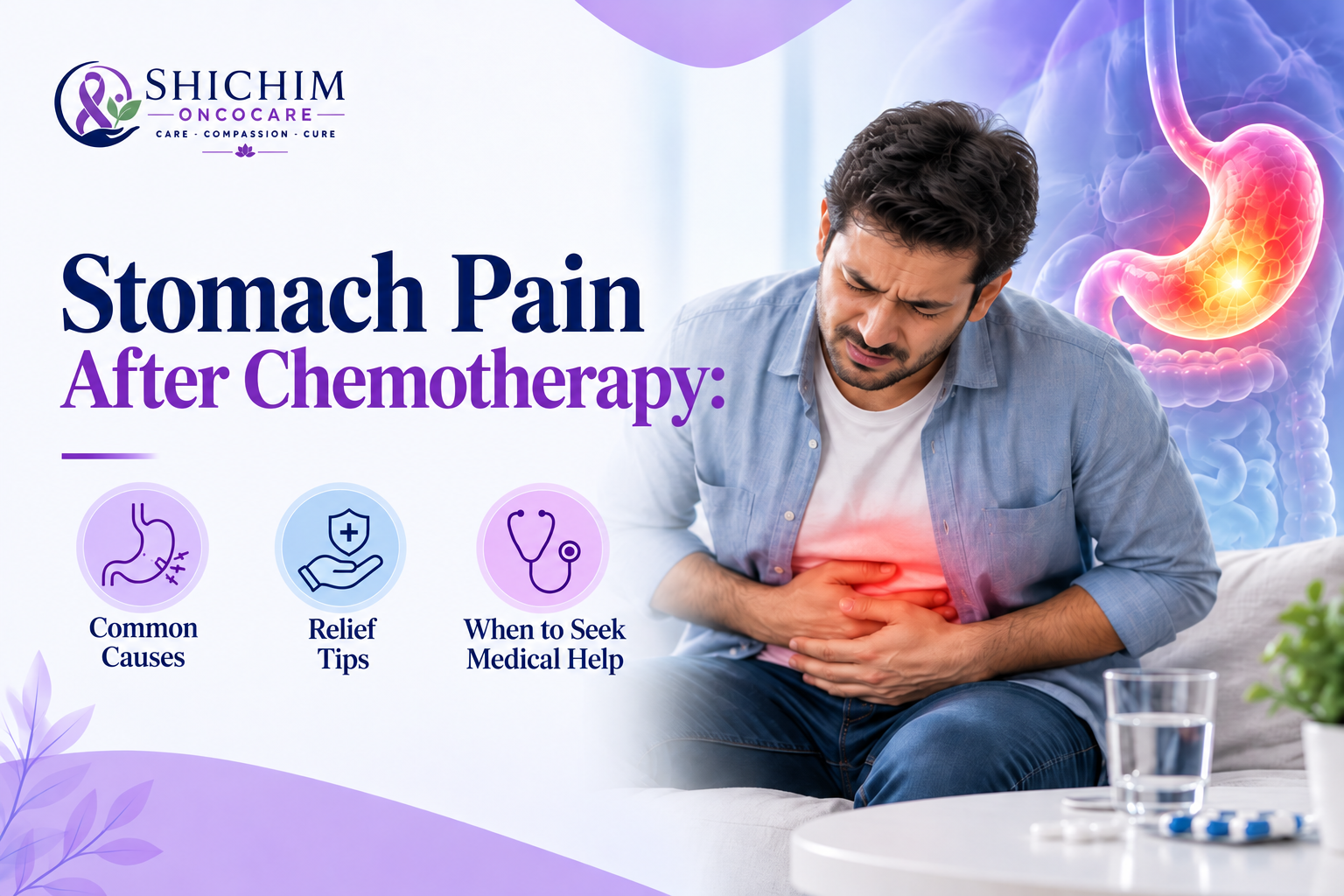
Stomach Pain After Chemotherapy: Why It Sometimes Happens
Stomach pain after chemotherapy can sometimes occur because cancer treatment may affect the digestive system and cause problems such as constipation, diarrhoea, gas, nausea, or irritation of the stomach and intestines. However, stomach pain does not happen to every patient after chemotherapy. Some patients may experience mild and temporary discomfort, while others may not experience it at all. Severe or persistent abdominal pain can sometimes indicate a complication that requires urgent medical attention.
If you experience stomach pain after chemo, pay attention to where the pain occurs, how severe it is, and whether you have other symptoms. Not every episode of pain is a normal side effect of treatment. Understanding why stomach pain sometimes happens after chemotherapy and knowing when to contact your oncology team can help you respond safely.
Why Does Stomach Pain Sometimes Happen After Chemotherapy?
Chemotherapy medicines target cancer cells but may also affect healthy cells, including those lining the digestive tract. This can lead to changes in digestion, bowel movements, and appetite. However, not everyone experiences these effects. The cause of stomach pain after chemotherapy varies depending on the medicines used, your treatment schedule, and your overall health.
1. Irritation of the Digestive Tract
Some chemotherapy medicines can irritate the lining of the stomach or intestines. This may cause abdominal discomfort, nausea, cramps, or reduced appetite.
The discomfort may be mild in some patients and more noticeable in others. Some patients may not experience these symptoms at all. Tell your oncology team if the pain continues, becomes worse, or makes eating and drinking difficult.
2. Constipation
Constipation can cause pressure, bloating, and cramping in the abdomen. It may occur because of certain anti-nausea medicines, reduced physical activity, changes in diet, or dehydration.
Common symptoms include hard stools, difficulty passing stool, and abdominal discomfort. Contact your healthcare team if constipation persists. Severe pain, vomiting, abdominal swelling, or an inability to pass stool or gas requires urgent medical assessment.
3. Diarrhoea and Intestinal Cramping
Chemotherapy may affect the intestinal lining and cause diarrhoea. Frequent loose stools can lead to cramping, weakness, and dehydration.
Not every patient develops diarrhoea during chemotherapy. Contact your oncology team if diarrhoea is severe or persistent, or if you experience fever, blood in your stool, dizziness, or difficulty drinking fluids. Do not take anti-diarrhoeal medicines without checking whether they are suitable for your condition.
4. Gas and Bloating
Changes in digestion, diet, and bowel movements can contribute to gas and bloating during chemotherapy. You may experience pressure in your abdomen or pain that comes and goes.
Although gas may cause mild discomfort, do not assume it is the cause of new or severe abdominal pain. Persistent or worsening symptoms need medical advice.
5. Nausea and Vomiting
Nausea and vomiting are common side effects of some chemotherapy treatments. However, not every patient experiences them. Repeated vomiting can contribute to abdominal discomfort and dehydration.
If you cannot keep fluids down or have repeated vomiting with stomach pain, contact your oncology team promptly. Severe abdominal pain with repeated vomiting needs urgent medical assessment.
When Is Stomach Pain After Chemotherapy Serious?
Severe stomach pain after chemo should never be ignored. Although some patients experience mild digestive discomfort, severe or persistent pain may indicate a more serious problem. Cancer treatment can sometimes weaken the body's ability to fight infections. In some cases, abdominal pain may also be associated with serious intestinal complications.
Seek immediate medical assessment if you experience:
-
Severe, sudden, or rapidly worsening abdominal pain
-
A temperature of 38°C (100.4°F) or higher, or the fever threshold specified by your oncology team
-
A swollen or hard abdomen with pain
-
Repeated vomiting or an inability to keep fluids down
-
Blood in your stool or black, tarry stools
-
Severe diarrhoea, particularly with weakness or dehydration
-
Inability to pass stool or gas along with abdominal pain or swelling
-
Fainting, confusion, or marked weakness
Fever during chemotherapy can be a medical emergency because it may indicate an infection when white blood cell counts are low. Follow your oncology team's emergency instructions and do not wait for a routine appointment if warning signs appear.
How to Relieve Stomach Pain During Chemotherapy
The right treatment depends on the cause of the pain. Not every patient needs the same treatment, and some patients may not experience stomach pain at all. Contact your oncology team about new, persistent, or worsening symptoms rather than trying to manage everything at home.
1. Drink Fluids as Recommended
Dehydration can worsen constipation and may develop due to diarrhoea or vomiting. If your healthcare team has not restricted your fluid intake, drink small amounts regularly.
If you cannot keep fluids down, seek medical advice promptly. People with certain heart or kidney conditions may need specific fluid instructions.
2. Eat Smaller, Easier-to-Tolerate Meals
Large meals may feel uncomfortable when you have nausea, bloating, or abdominal pain. Smaller meals and snacks may be easier to tolerate.
You can consider the following steps, depending on your symptoms and your care team's advice:
-
Eat slowly and take smaller portions.
-
Choose foods that you can tolerate without worsening symptoms.
-
Avoid foods that consistently trigger discomfort.
-
Keep a record of foods associated with pain, diarrhoea, or bloating.
-
Ask your oncology dietitian whether dietary changes would help.
There is no single diet that suits every patient receiving chemotherapy. The best food choices may differ depending on whether you have constipation, diarrhoea, nausea, or another digestive problem.
3. Rest and Adjust Your Activity
Chemotherapy can cause fatigue, and abdominal discomfort may make daily activities difficult. Allow yourself time to rest.
If symptoms are mild and your healthcare team has not advised otherwise, gentle movement may help with general comfort and bowel regularity. Avoid strenuous activity if you feel weak, dizzy, or unwell.
4. Take Medicines Only With Medical Guidance
Your oncology team may recommend treatment depending on whether the pain is related to constipation, diarrhoea, nausea, or another cause.
Do not start painkillers, laxatives, antacids, anti-diarrhoeal medicines, or herbal products without checking with your healthcare professional. Some medicines may interact with cancer treatment or be unsuitable when a serious complication is possible.
Do not change prescribed medicines or your chemotherapy schedule on your own.
What Should You Do Based on Your Symptoms?
The following table provides general guidance. It cannot diagnose the cause of your pain, and warning signs should always take priority over home-care measures.
| Symptoms | Possible explanation | Recommended action |
|---|---|---|
| Mild bloating or occasional cramps | Gas or digestive changes | Monitor symptoms and report them if they persist or worsen |
| Hard stools with abdominal discomfort | Constipation | Ask your oncology team about suitable management |
| Frequent loose stools and cramps | Diarrhoea related to treatment or another cause | Contact your care team if symptoms continue or are severe |
| Nausea with vomiting | Treatment-related digestive effects or another problem | Seek advice if vomiting continues or fluids cannot be kept down |
| Severe or worsening abdominal pain | Possible serious complication | Seek urgent medical assessment |
| Fever of 38°C (100.4°F) or higher | Possible infection | Contact your oncology team immediately or follow emergency instructions |
| Pain with abdominal swelling and inability to pass stool or gas | Possible bowel obstruction or another serious problem | Seek emergency medical care |
| Blood in stool or black, tarry stools | Possible gastrointestinal bleeding | Seek urgent medical assessment |
How Long Can Stomach Pain Last After Chemotherapy?
There is no fixed duration for stomach pain after chemotherapy. Some patients may experience temporary digestive discomfort, while others may not develop stomach pain at all. How long it lasts depends on the cause, medicines used, treatment schedule, and your overall health.
Some mild digestive symptoms may settle as your body recovers from treatment. Other problems, such as constipation or diarrhoea, may continue until the underlying cause is addressed.
Do not rely on the number of days alone to decide whether the pain is safe to ignore. Report new, persistent, recurrent, or worsening pain to your oncology team. Seek urgent care if you develop severe pain, fever, repeated vomiting, blood in your stool, or an inability to pass stool or gas with abdominal swelling.
What Information Should You Share With Your Oncologist?
Clear information can help your care team assess your symptoms and decide whether you need an examination or further tests.
When contacting your oncology team, explain:
-
Location: Is the pain in the upper abdomen, lower abdomen, or one particular side?
-
Severity: Is it mild, moderate, severe, or getting worse?
-
Timing: When did it begin, and how does it relate to your chemotherapy session?
-
Other symptoms: Have you experienced fever, vomiting, diarrhoea, constipation, or bloating?
-
Medicines: What prescribed medicines and other products are you taking?
-
Food and fluids: Can you eat, drink, and pass urine normally?
Your clinician may review your treatment history, examine you, and recommend blood tests or imaging depending on your symptoms. Not every patient requires the same investigations.
Can Stomach Pain During Chemotherapy Be Prevented?
Not every episode of abdominal pain can be prevented, and not every patient will experience it. However, some practical steps may help reduce digestive problems.
-
Take prescribed medicines exactly as directed.
-
Follow the dietary and fluid guidance provided by your care team.
-
Report constipation or diarrhoea early.
-
Track symptoms and when they occur in relation to treatment.
-
Attend scheduled follow-up appointments.
-
Ask which symptoms require an immediate call for your specific chemotherapy regimen.
Avoid unverified supplements and home remedies that may interfere with treatment. Natural products can also cause side effects or interact with cancer medicines.
Conclusion
Stomach pain after chemotherapy sometimes occurs because of digestive irritation, constipation, diarrhoea, gas, nausea, or other treatment-related effects. However, it does not happen to every patient, and the presence or absence of pain alone cannot identify the cause. Some symptoms may indicate a serious complication.
For mild discomfort, follow your oncology team's advice about food, fluids, activity, and medicines. Report persistent or worsening pain, and seek immediate medical attention for severe abdominal pain, fever, repeated vomiting, blood in the stool, or an inability to pass stool or gas with abdominal swelling.